Mongibello Volcano: Sicily’s Living Giant
Imagine standing on Sicily’s eastern coast, the scent of strong Italian coffee in the air, while a towering mountain quietly releases thin streams of smoke into the sky. This is Mongibello, the name locals lovingly use for Mount Etna—Europe’s tallest and most active volcano. Far from being just a natural landmark, Mongibello is a powerful force that has shaped Sicily’s landscape, history, and culture for thousands of years.
Known for its frequent eruptions and constantly changing summit, Mount Etna remains one of the most closely monitored volcanoes on Earth. From ancient myths about fire gods beneath its slopes to real lava flows witnessed as recently as early 2026, Mongibello stands as a living reminder of nature’s raw power.It is Europe’s tallest active volcano and one that never really takes a break. Yet despite its fiery reputation, it also gives back generously, enriching the land with fertile soil and supporting thriving communities below.
In this article, you’ll discover what Mongibello really is, where its unique name comes from, how recent eruptions are reshaping the volcano, and what you need to know to explore Mount Etna safely. Whether you’re a traveler planning a Sicilian adventure or simply fascinated by active volcanoes, Mongibello’s story is one you won’t forget.
Key Takeaways
- Mongibello is the cozy local nickname for Mount Etna, basically meaning “mountain mountain” from mixing old Latin and Arabic words—because yeah, it’s that impressive.
- This thing stays busy, with fresh lava pouring out right at the start of 2026, following a super active 2025 that had everyone watching.
- It blesses the island with amazing soil for crops, but yeah, ash and flows can be a hassle—thankfully, constant checks keep things pretty safe.
- Old stories talk about gods hammering away underneath, mixing legends with real science today.
- You can hike up, ski a bit, or just admire from a distance—just peek at the latest updates first.
What Is Mongibello?
When Sicilians say Mongibello, they’re talking about Mount Etna, especially the top part with all the craters. It’s parked on the eastern side of Sicily, close to Catania—a lively city where over a million people go about their days under its watch.
This is a stratovolcano that sprawls over roughly 1,190 square kilometers. Imagine a huge footprint on the map! Its base circles around 140 km, touching villages, vineyards, and fruit groves that love the nutrient-packed dirt from past eruptions. It’s been a UNESCO World Heritage spot since 2013 because it basically teaches scientists everywhere how volcanoes behave.
Think about driving through Sicily and bam—this giant pops into view, maybe with a little steam rising. That’s Mongibello—big, powerful, and full of life.
Location and Basics
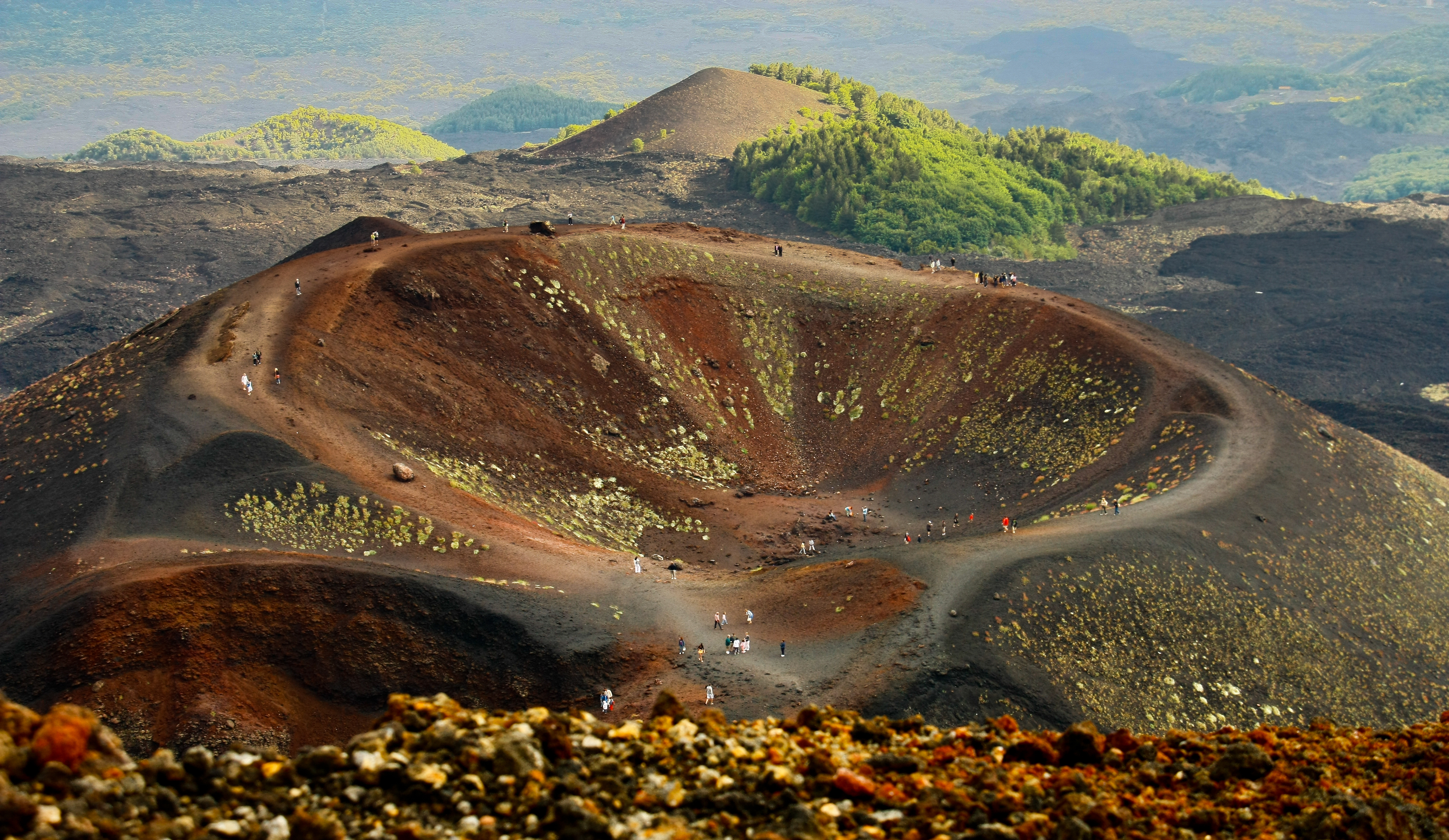
Etna sits proudly near Catania and Messina, dwarfing Italy’s other famous active volcano, Vesuvius—it’s more than twice as tall. The lower slopes are dotted with towns and farms that rely on its gifts. Up top, you’ve got four main craters: the Central one (home to Bocca Nuova), plus North-East, South-East, and Voragine. They shift and grow with every burst of activity.
Height and Features
The height changes all the time because of what it spits out. Late in 2024, it reached 3,403 meters (around 11,165 feet) from fresh buildup, but by early 2026, flows and little collapses had nudged it around 3,369 meters in places.
One cool feature is the Valle del Bove—this massive bowl on the east side from old collapses. It acts like a natural trap for lava, steering it safely away from houses most times.
Here are some jaw-dropping shots of Mount Etna lighting up the night with glowing lava and ash clouds—pure drama that locals know all too well.

And check this aerial look at the Valle del Bove, that huge basin that helps contain the flows.
Mongibello Name Origin
So why the two names? Etna comes from an old Greek word for “I burn,” which makes total sense. But everyday folks here go with Mongibello (or “Muncibbeḍḍu” in the dialect).
It blends Latin “mons” (mountain) and Arabic “gebel” (mountain too), so “mountain mountain.” That popped up after the Arab period in Sicily, when people really wanted to say how massive it is.
Folks often call it the “beautiful mountain” in stories—scary but loved. It’s a nice nod to Sicily’s blended history: Greek, Roman, and Arab influences all mixed in.
Geological Formation
Way back, Mongibello started building underwater, then grew into a gentler shield shape before stacking up into the steep stratovolcano we see now. The clash of African and Eurasian plates keeps sending up fresh magma.
Warmer weather from climate change might loosen things up more, causing extra slips. Back in 2025, one flank gave way kind of like Mount St. Helens did, rushing pyroclastic stuff downhill.
Unlike Hawaii’s smooth, flowing shields, Etna’s sharper sides make things feel more intense.
Eruption History
People have written about Etna’s outbursts for 2,700 years—crazy long record. The nasty one in 1669 sent lava all the way to the sea and wrecked chunks of Catania. Closer to now, 2001-2002 brought flows plus a flank shift of up to 2 meters. Since 1950, it’s had more than 54 episodes. Those classic Strombolian pops—short, sharp explosions—happen a lot from places like the South-East crater. Pro tip: Grab the INGV app for a heads-up so you’re not caught off guard.
Recent Mongibello Activity
2025 was wild, and 2026 kicked off with a bang. Right on New Year’s Day (January 1), a new fissure cracked open around 2,100 meters in the Valle del Bove, sending lava rivers down the slope. By early January, flows pushed to about 1,420 meters before slowing and cooling—INGV said the main front stopped advancing around January 6-9, with things winding down to a low hum. Ash popped up, too, but nothing hit towns hard. The INGV team keeps a super close watch—they catch changes early. Always hit their site for the freshest scoop instead of old news.
Here’s a closer peek at those busy summit craters.

Tourism and Safety Tips
Tons of people head up every year—hiking paths, jeep rides, even winter skiing. Cable cars whisk you to 2,500 meters, then guides take over for the higher bits.
Safety comes first, though. Sudden ash or slips happen. After the latest flows, rules got stricter—some guides even protested, saying slow lava is okay to see if you’re careful.
Handy tips:
- Peek at INGV before any plans.
- Pack masks for dusty ash; stick to marked trails.
- Go with a guide—it’s smarter (and often cheaper long-term) than winging it.
- Compared to far-off spots like Kilauea, Etna feels more reachable, but guided wins for peace of mind.
Cultural Significance
Legends say Vulcan’s forge sits right under it—his hammer bangs cause the shakes. There’s Typhon, the monster, buried her,e too.
To locals, it’s a bit cheeky but protective. It pops up in art, food (those volcanic wines are amazing), and just daily pride. For Sicily’s 5 million residents, it’s like family.
Environmental Impacts
The ash turns soil incredibly rich—perfect for grapes and orchards. Special plants and critters thrive in the protected zones. On the flip side, fallout can mess with crops or breathing. Rivers like the Alcantara shift around. But good monitoring helps everyone enjoy the upsides while handling the tough bits.
Frequently Asked Questions (FAQs)
Why is Mount Etna also called Mongibello?
Mount Etna is called Mongibello by locals due to its deep historical and linguistic roots. The name comes from a combination of the Latin word “mons” and the Arabic word “gebel,” both meaning “mountain.” When Arab influence spread across Sicily between the 9th and 11th centuries, this blended name emerged, essentially meaning “mountain of mountains.” Over time, Mongibello became the affectionate local name, especially for the volcano’s upper craters. The name reflects both Etna’s massive size and Sicily’s layered cultural history shaped by Greek, Roman, and Arab civilizations.
Is Mongibello Volcano currently active in 2026?
Yes, Mongibello (Mount Etna) remains active in 2026, continuing its long-standing pattern of frequent eruptions. At the start of January 2026, a new fissure opened within the Valle del Bove area, producing lava flows that traveled downslope before gradually cooling and slowing within the first week of the month. While this activity did not pose a major threat to nearby towns, it confirmed that Etna is constantly evolving. Scientists from Italy’s National Institute of Geophysics and Volcanology (INGV) monitor the volcano around the clock, making Mount Etna one of the most closely observed volcanoes in the world.
How dangerous is Mongibello compared to other active volcanoes?
Mongibello is considered one of the safest active volcanoes to study and visit, despite its frequent eruptions. Unlike explosive volcanoes that erupt violently without warning, Mount Etna usually shows clear early signs of activity. Lava flows are often slow-moving and predictable, giving authorities time to close access areas when needed. Advanced monitoring systems track seismic movement, gas emissions, and ground deformation, reducing risks to residents and tourists. While hazards such as ash fall, lava flows, and landslides do exist, serious incidents are rare when safety guidelines are followed.
Can tourists safely visit Mount Etna during volcanic activity?
Yes, tourists can safely visit Mount Etna even during periods of mild activity, as long as they follow official safety regulations. Many areas on the lower and mid-slopes remain open during eruptions, and guided tours are adjusted based on real-time volcanic conditions. Access to summit craters may be restricted when activity increases, but cable cars, lava field walks, and observation points are often still accessible. Visitors are strongly advised to check official updates, wear proper footwear, and book licensed guides who understand the volcano’s changing behavior.
What is the Valle del Bove and why is it important?
The Valle del Bove is a massive natural basin on Mount Etna’s eastern flank, formed by ancient collapses thousands of years ago. It plays a crucial role in protecting nearby towns by acting as a natural barrier that channels lava flows away from populated areas. Many eruptions, including recent ones in 2025 and 2026, release lava into this valley, reducing direct danger to communities. The Valle del Bove is also a popular destination for hikers and researchers due to its dramatic landscape and visible volcanic layers.
Conclusion
Mongibello, better known as Mount Etna, is far more than just Europe’s tallest active volcano—it’s a living symbol of Sicily’s history, culture, and resilience. From ancient myths and fertile volcanic soil to real-time eruptions shaping the land even in 2026, Etna continues to influence life around it in powerful ways. Whether you’re a science enthusiast, a traveler seeking adventure, or someone fascinated by nature’s raw force, Mongibello offers an unforgettable experience. Just remember to stay informed, respect safety guidelines, and let this remarkable volcano leave you with stories that last a lifetime.