Vanguard Mutual Funds: Simple Guide for 2025
You’re sitting on the couch with your phone, wondering where to put the money you’ve finally started saving. You keep hearing “Vanguard mutual funds” everywhere, but the website feels confusing, and everyone mentions those $3,000 minimums. Sound familiar? Don’t worry—I’ve been there. Let’s walk through Vanguard mutual funds together like two friends figuring this out over coffee.
Here are the three things you’ll know by the time you finish reading this. Vanguard mutual funds still have the absolute lowest costs in America, with an average expense ratio of just 0.07%. Over the past ten years, 84% of Vanguard mutual funds have outperformed their peers. And here’s the truth most articles won’t tell you—in 2025, for the majority of regular investors, the ETF version of Vanguard mutual funds is actually the smarter choice unless your money is sitting inside a retirement account.
What Are Vanguard Mutual Funds?
Vanguard mutual funds pool money from thousands of everyday investors to buy huge baskets of stocks or bonds. The company was founded in 1975 by John Bogle, who was fed up with Wall Street taking massive fees from ordinary people. His revolutionary idea was that the investors themselves should own the company, so every dollar saved on expenses goes straight back to the people who own Vanguard mutual funds instead of to fancy executive bonuses. That’s why Vanguard mutual funds remain the cheapest way for normal people to own the entire stock market.
Think of Vanguard mutual funds like Costco for investing: you pay an almost invisible fee and get wholesale prices on thousands of companies at once.
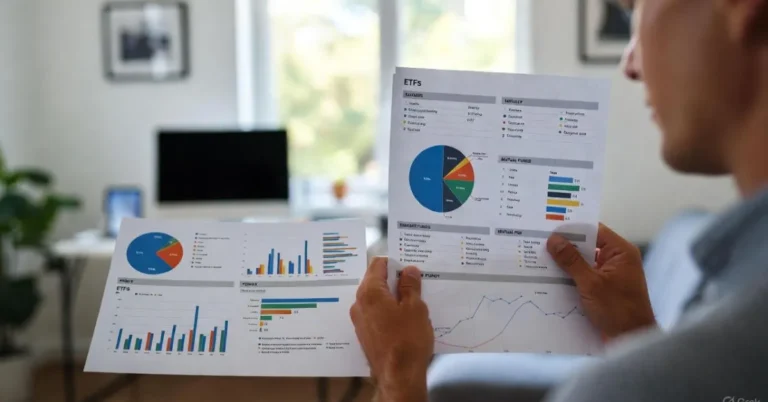
In 2025, the difference between Vanguard mutual funds and Vanguard ETFs comes down to packaging. Vanguard mutual funds are priced once per day after the market closes and usually require $3,000 to get the very best share class. Vanguard ETFs trade all day long like individual stocks and you can buy just one share with whatever money you have today.
Admiral Shares are the lower-cost version of Vanguard mutual funds—you need $3,000 to $100,000, depending on the fund, to qualify for the lowest expense ratios. Investor Shares let you start with less money but charge slightly higher fees.
Why Vanguard Mutual Funds Are Still the Champion in 2025
The numbers speak for themselves, and they’re almost unbelievable. The average expense ratio across all Vanguard mutual funds is 0.07%—that means you pay just $7 a year on every $10,000 invested. The rest of the industry charges an average of 0.44%, which is six times more. In 2025 alone, Vanguard cut fees on 168 different Vanguard mutual funds and handed investors back $350 million in savings. Vanguard now manages $11 trillion in total assets, and that massive scale lets Vanguard mutual funds negotiate rock-bottom trading costs that no one else can match.
The Best Vanguard Mutual Funds Right Now in 2025
When people ask me which Vanguard mutual funds to buy, I always point them to the same proven winners that millions of regular investors already own.
VTSAX, the Vanguard Total Stock Market Index Fund Admiral Shares, literally owns a tiny piece of every public company in America with an expense ratio of just 0.04%. VFIAX, the Vanguard 500 Index Fund Admiral Shares, owns the 500 largest U.S. companies—also 0.04% expense ratio—and this is the exact fund Warren Buffett tells average investors to buy.
For international exposure, VTIAX, the Vanguard Total International Stock Index Fund Admiral Shares, gives you more than 8,000 companies outside the United States because putting all your money in just American stocks is unnecessarily risky. VBTLX, the Vanguard Total Bond Market Index Fund Admiral Shares, is the safe parking spot for money you’ll need in the next few years and has been paying around 4.5–5% interest throughout 2025 with very little price movement.
Target-date Vanguard mutual funds like VTIVX (Vanguard Target Retirement 2045 Fund) automatically become more conservative as you approach retirement, making them perfect for people who never want to think about rebalancing. Among the few actively managed Vanguard mutual funds that actually beat their benchmarks after fees, VPMCX Vanguard PRIMECAP Fund Admiral Shares stands out—it’s usually closed to new investors, so grab it when the doors open.
Vanguard Mutual Funds vs Vanguard ETFs (2025)
| Feature | Vanguard Mutual Funds | Vanguard ETFs |
|---|---|---|
| Minimum Investment | $1,000–$3,000 (Admiral Shares $3,000+) | Buy 1 share (no minimum) |
| Trading | Priced once per day | Trades all day like a stock |
| Taxes | Can trigger capital gains | Rarely triggers capital gains |
| Automatic Investments | Yes (simple) | Depends on the broker |
| Costs | Low (0.04%–0.10%) | Equal or slightly lower |
| Best For | Retirement accounts | Taxable accounts, beginners |
| Conversions | Can convert to an ETF tax-free | Cannot convert ETFs to mutual funds |
Vanguard Mutual Funds vs. Vanguard ETFs: The Real 2025 Answer
Let me tell you about Sarah and Mike, both 32 years old and both saving $500 a month. Sarah buys Vanguard mutual funds with the $3,000 minimum and sets up automatic investments. Mike buys the identical ETF versions with whatever money he has that week. Five years later, Mike has paid zero surprise capital gains taxes in his taxable brokerage account, while Sarah got hit with a $400 tax bill one year, even though they own essentially the same investments.
The reason is simple: Vanguard ETFs seldom trigger capital gains distributions because of how they’re structured, while some Vanguard mutual funds—especially target-date Vanguard mutual funds—still do. That’s why in 2025, the ETF versions of Vanguard mutual funds are winning for most people unless the money is in a 401(k) or IRA where taxes don’t matter.
The Hidden Downsides of Vanguard Mutual Funds That Nobody Advertises
The $3,000 minimum for Admiral Shares stops a lot of beginners in their tracks, but there’s an easy workaround—you can buy the ETF version of the same Vanguard mutual funds today with $50 and later convert to the mutual fund shares tax-free once you hit the minimum.
Target-date these funds can still hand you surprise capital gains distributions even in years when the market falls, and some investors got tax bills in early 2025 on money they never actually pocketed. Customer service for Vanguard mutual funds gets consistently poor reviews in 2025—Reddit threads and Trustpilot are filled with complaints about long hold times and website glitches.
The good news? Vanguard now lets you convert most flagship Vanguard mutual funds into their ETF versions completely tax-free. Thousands of smart investors did exactly that in 2024 and 2025 and never looked back.
How to Actually Start Investing in Vanguard Mutual Funds Today
Opening an account takes about ten minutes. Link your bank account, search for the fund ticker you want, and if you have less than $3,000, just buy the ETF version of the same Vanguard mutual fund instead. Then set up automatic investments every payday—that single habit is more important than which exact these fund you pick.
Most long-term investors I know use some version of the simple three-fund portfolio using these funds: roughly 60% in VTSAX or its ETF twin VTI for U.S. stocks, 20% in VTIAX or VXUS for international stocks, and 20% in VBTLX or BND for bonds. Rebalance once a year, and the total cost is about $8 per year on a $100,000 portfolio.
Should You Choose Something Other Than Vanguard Mutual Funds?
Fidelity now offers zero-fee index funds and a much better app experience. Schwab gives you free robo-advisors and faster money transfers. If you value friendly customer service and modern tools more than saving an extra 0.01–0.03% in fees, those companies are absolutely worth considering.
But if your goal is simply the absolute lowest-cost way to own the entire world stock and bond market and never touch it again, these funds (or their ETF versions) still win by the smallest of margins.
Conclusion
These funds remain one of the smartest, lowest-cost ways to invest in 2025. Whether you’re building long-term wealth, planning for retirement, or just starting with your first $50, Vanguard gives you simple, trusted, and beginner-friendly options. Mutual funds make automation easy, while ETFs offer better tax efficiency and zero minimums—so most beginners do best with ETFs first and convert later.
The important part? Start. Even tiny consistent investments grow into real wealth over time. Pick your fund, automate your contributions, and let the power of low fees and compounding do the work quietly in the background. Your future self will thank you.
FAQs
- Are Vanguard mutual funds still worth it in 2025? Yes. These funds remain some of the lowest-cost and highest-performing options in the U.S., especially inside retirement accounts.
- What is the minimum to start investing in Vanguard mutual funds? Most Vanguard mutual funds require $1,000–$3,000. But beginners can buy the ETF versions of the same funds starting with the price of one share.
- Which is better in 2025 — Vanguard mutual funds or ETFs? For taxable accounts, ETFs are usually better due to superior tax efficiency. Inside a 401(k) or IRA, the difference doesn’t matter much—pick whichever is easier.
- What is the best Vanguard mutual fund for beginners?
Most beginners start with:
VTSAX (or VTI ETF) for U.S. stocks
VTIAX (or VXUS) for international stocks
VBTLX (or BND) for bonds
- Do these funds still give surprise capital gains? Some target-date funds and actively managed funds do. This is why ETFs often win in taxable accounts.
- Can I convert my Vanguard mutual funds to ETFs? Yes—Vanguard allows tax-free conversions for most flagship funds, and thousands of investors have done it in 2024–2025.