
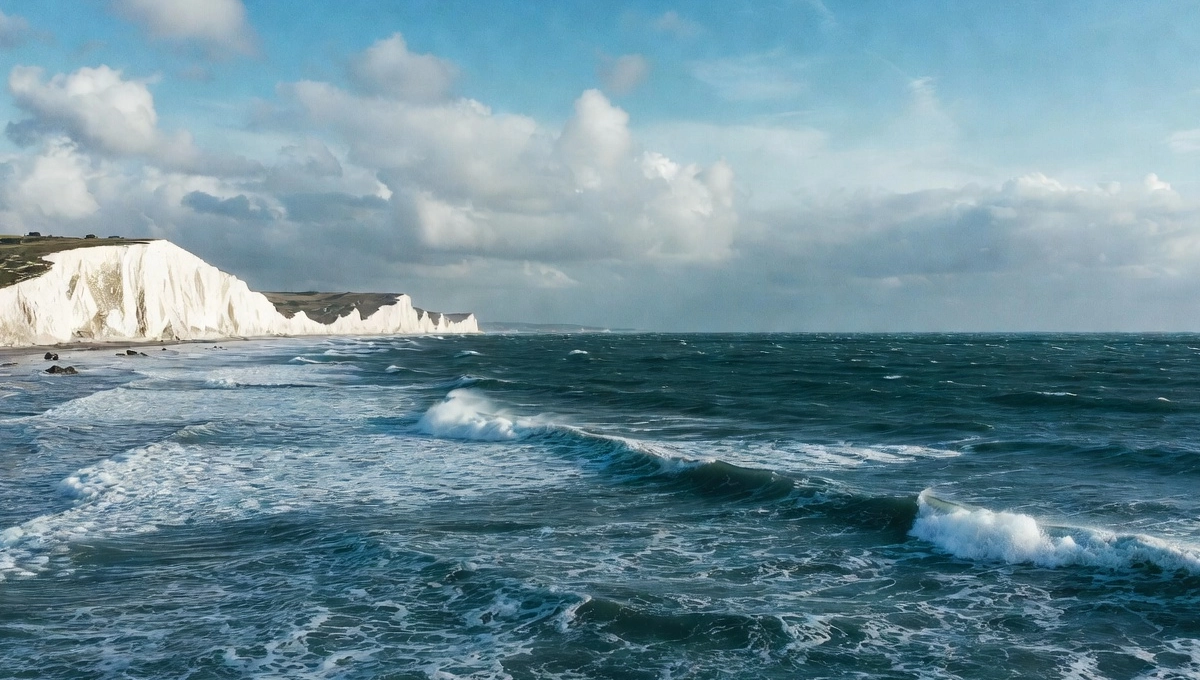
You are on the white cliffs of Dover on a clear day, staring over at the French coast. The water in between might look peaceful right now, but back in Roman times, people treated it with real respect – and a bit of fear. They called it Oceanus Britannicus, which basically just means the British Ocean. That old name tells us a lot about how the Romans saw Britain: as this distant, island place cut off by a big, moody body of water.
These days, we just say English Channel, but going back to the Roman version feels like flipping open an old history book that still has something to say. If you’re into Roman stuff, curious about old maps, or just wondering why names change over time, stick with me. I’ll walk you through it the way I’d explain it over coffee.
Key Takeaways on Oceanus Britannicus
- Oceanus Britannicus was what the Romans called the English Channel – the sea splitting Britain from France.
- A guy named Ptolemy put the name on the map in the second century, mixing in some old myths about a water god.
- For the Romans, this wasn’t a calm lake; wild tides and storms made every crossing an adventure.
- The name shows how they thought about empire and identity – Britain felt far away and different.
- You still see bits of it today in history classes, old maps, and the occasional online chat about where “Britain” even comes from.
What Is Oceanus Britannicus?
Oceanus Britannicus is just the Latin way of saying “British Ocean.” That’s what the Romans named the body of water we know as the English Channel – the one running roughly 560 km long, stretching up to 240 km wide in spots, and pinching down to only 34 km at the narrowest bit near Dover. Deep down, it hits about 174 meters.
Back then, there were no quick ferries or underwater trains. Crossing meant climbing onto wooden boats and hoping the weather played nice. The name carried that feeling – a huge, wild ocean right at the edge of their world.
Etymology and Meaning
Let’s break the words apart. “Oceanus” comes from an old myth about a Titan god who basically ruled every river, spring, and sea. Then slap on “Britannicus,” which means something like “belonging to the Britons” or just “British.” Put them together, and you’ve got the ocean that borders or belongs to Britain.
The person most responsible for spreading the name was Claudius Ptolemy, a geographer working around 150 CE. Before him, Julius Caesar wrote about these waters when he tried to invade Britain, though he didn’t use the exact phrase.
Related Ancient Names
The Romans sometimes switched it up and called it Mare Britannicum – the British Sea. Later on, in medieval maps, you’d see “British Ocean” or plain “British Sea.” On the French side, they went (and still go) with La Manche, which means “the sleeve” because of how skinny and long it looks. People in Brittany spoke Celtic and called it Mor Breizh – the Breton Sea. Same water, totally different feelings depending on where you stood.
Origins in Roman Geography
The Romans didn’t look at Oceanus Britannicus the way we look at a ferry route. To them, it was a real frontier – Britain sat out there beyond this restless water, almost like another world. The tides swing hard, sometimes 14 meters, and sudden storms could flip everything upside down.
Julius Caesar found that out fast during his quick raids in 55 and 54 BCE. He complained in his own writing about crazy currents and winds tearing his fleet apart. Later emperors realized if they could master the crossing, they could hold Britain.
Ptolemy’s Contribution
Ptolemy was based in Alexandria, and around 150 C,E he put together this huge geography book with coordinates for places all over. He included spots around Oceanus Britannicus, which helped people draw better maps. When folks rediscovered his work in the 1400s and 1500s, those old maps popped up again, showing “Oceanus Britannicus” right there.
One cool example: a map from around 1450 in Italy labels it “britanicus oceanus nunc canalites Anglie” – basically British Ocean, now called the English Channel. Shows the name hung around even after new words started taking over.
Mythological Links
That “Oceanus” bit wasn’t accidental. In stories, Oceanus was a giant encircling river holding the whole world together. When Romans set out across the channel, they’d often make little offerings to gods like Mercury, asking for a safe trip. Sailors had all sorts of superstitions – spot a bad sign, and some would just turn around. That layer of awe and worry is something modern explanations usually skip.
Historical Role in Crossings
Getting across Oceanus Britannicus was serious business. The Romans put together fleets like the Classis Britannica to guard the route and move soldiers and supplies. Places like Gesoriacum (Boulogne today) turned into main jumping-off points, and they built lighthouses so ships could find their way in the murk.
It’s wild to think that even now, around 500 ships go back and forth every day, moving about 20% of world trade. Back then, it was wine, grain, enslaved people, troops – same idea of a super-busy highway, just slower and riskier.
Famous Roman Expeditions
Take Caesar’s first go in 55 BCE – he brought hundreds of ships, but storms scattered them like toys. He came back the next year smarter and more ready. Then in 43 CE, Claudius sent a proper army – four legions, plus elephants for show – and got a real foothold.
Those weren’t pleasure cruises. Men dealt with rough seas first, then fought once they hit land. The fleet kept everything supplied for years afterward.
Navigation Challenges
The tides pull hard – anywhere from 1.5 to 14 meters – and fog can hide whole coastlines. Romans relied on guides like the Antonine Itinerary to plot routes. They watched the stars, made offerings, and stuck close to shore when they could.
A few handy tips if you’re into this stuff today:
- Look up free online versions of Ptolemy’s Geographia to read what he actually said.
- Pull up old digitized maps from places like the British Library or Wikimedia to spot the differences.
- When digging deeper, bounce between Wikipedia, Britannica, and Historic UK – each one adds something the others miss.
Now compare that to hopping the Channel Tunnel since 1994 – 35 minutes under the water, no waves, no waiting on weather.
Comparisons of Oceanus Britannicus to Modern Names
So why drop Oceanus Britannicus? After Rome fell apart and Anglo-Saxon groups took over, names started shifting to fit local views. By the 1500s English maps were using “English Channel,” putting the focus on England’s side. The French kept La Manche for its shape.
The old Roman name shows their mindset: Britain as an outpost past a big ocean. Today’s names feel more about who owns which shore.
English vs. French Perspectives
English accounts tend to look from Dover toward Calais. French ones flip it the other way. Doesn’t change the facts, though – this water still handles massive trade, fishing, and now offshore wind farms.
Britannica points out how the tides and currents keep shaping life here, just as ever.
Alternatives in Other Cultures
Folks in Brittany saw the sea more as something that joined their people together, not split them apart. That’s a big contrast to the Roman idea of it as a defensive moat. Looking at those different angles helps round out the picture beyond just what the Romans wrote.
Modern Revivals and Relevance
You don’t hear Oceanus Britannicus tossed around casually, but it shows up in school lessons about Roman Britain, history podcasts, and sometimes in online arguments about what “British” even means. A few posts on X bring it up when people debate whether the whole idea of Britain feels Roman-made.
Climate stuff adds another layer – seas rising from way-back floods are still eating away at old coastal spots.
In Education and Media
Teachers pull out Ptolemy’s maps to explain how ancient knowledge built our view of the world. Modern swimming records (some under seven hours) bring back that sense of the channel as a tough challenge.
Quick ways to get into it easier:
- Download free PDFs of ancient texts instead of hunting for expensive books.
- Watch short YouTube videos on Roman crossings – the visuals help a ton.
- Jump into history forums or subreddits to ask questions without hitting paywalls.
Cultural Identity Debates
The name sometimes sneaks into bigger talks about British roots. It reminds us that names aren’t neutral – whoever gets to name the sea gets to shape the story.
Environmental and Economic Insights
The water stays pretty salty – about 35.5 parts per thousand – which keeps all sorts of fish and seals happy. Money-wise, it’s huge: trade, ferries, tourists.
The old trade routes in things like wine feel a lot like today’s shipping lanes. Rising seas from ancient changes are bringing fresh worries now – old Roman sites along the coast are slowly disappearing.
Quick side-by-side:
- Then: wooden boats, seasonal trips, lots of luck involved.
- Now: tunnels, ferries all year, weather forecasts on your phone.
Next time you’re looking at a map or maybe even crossing the Channel yourself, think about that old name. It turns a plain bit of sea into something that connects us straight back to people worrying about the same water two thousand years ago.
Conclusion about Oceanus Britannicus
Oceanus Britannicus is more than an old Latin label—it reflects how the Romans understood geography, danger, and identity at the edge of their empire. To them, the English Channel was not just water but a powerful boundary separating the known world from a distant island. Tracing this name through maps, myths, and modern comparisons shows how place names evolve with politics, culture, and perspective. Looking back at Oceanus Britannicus reminds us that even familiar waters carry stories shaped by those who first tried to cross them.
FAQs
1. What did the Romans call the English Channel?
The Romans called the English Channel Oceanus Britannicus, meaning “the British Ocean.” This name reflected how the Romans viewed the waterway as a powerful, unpredictable sea separating Britain from mainland Europe rather than a narrow channel.
2. Why was the English Channel important to the Roman Empire?
Oceanus Britannicus was crucial because it acted as both a natural barrier and a supply route. Controlling it allowed Rome to move troops, trade goods, and maintain power in Roman Britain while also protecting the empire from invasions.
3. Who first recorded the name Oceanus Britannicus?
The name is most clearly recorded by Claudius Ptolemy in the 2nd century CE. His geographical works helped preserve Roman place names and later influenced medieval and Renaissance maps of Europe.
4. How dangerous was Oceanus Britannicus for Roman sailors?
Crossing Oceanus Britannicus was risky due to strong tides, sudden storms, fog, and limited navigation tools. Roman fleets often relied on coastal routes, seasonal travel, and religious offerings for safe passage.
5. Why is Oceanus Britannicus no longer used today?
After the fall of the Roman Empire, local languages and political identities reshaped place names. By the early modern period, English maps favored “English Channel,” while the French used La Manche, reflecting regional perspectives rather than Roman geography.