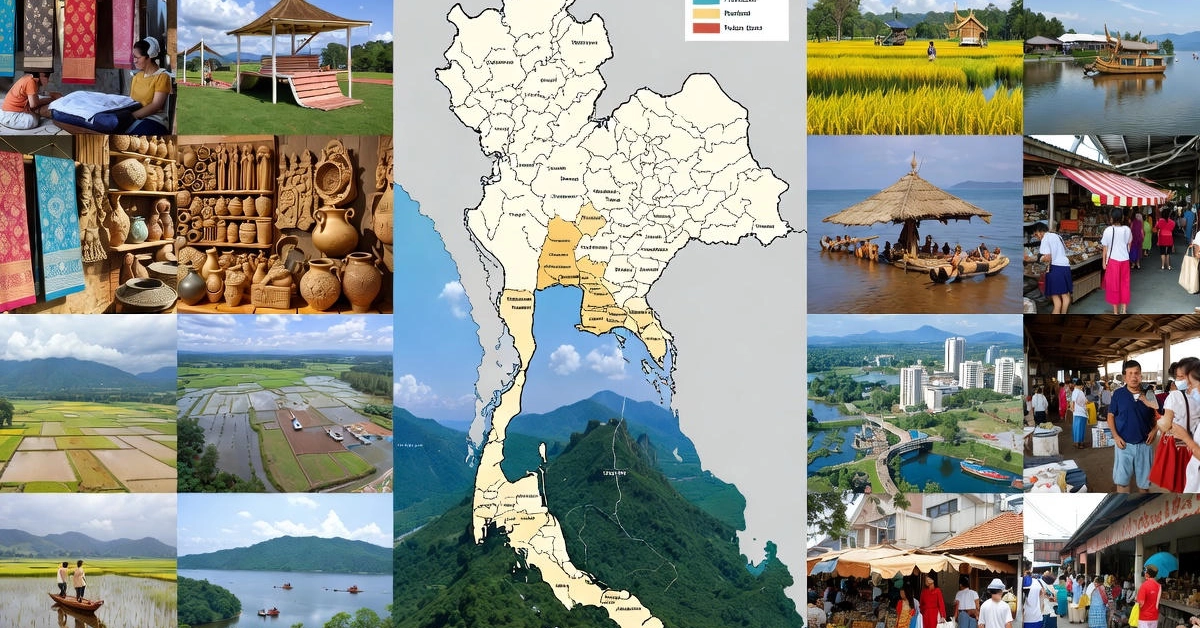
Tumbons Guide: Thailand’s Tambons in 2025
Have you ever looked at a Thai address and seen the word “tumbon” or “tambon” and had no clue what it meant? You’re not alone. I’ve been there – staring at a hotel booking that says “Tambon Bo Phut, Koh Samui” and wondering if that’s a street, a village, or what. Turns out it’s the key to understanding how Thailand actually works on the ground. Let me explain it like we’re chatting over iced coffee.
Key Takeaways
- Tumbons = tambons: the small local areas that keep Thailand running at the community level.
- There are 7,425 of them in 2025, each with its own elected council and often one famous local product.
- They’re the reason you can buy amazing handmade stuff through OTOP and why villages still feel like real communities.
- Urban Tumbons feel like city neighborhoods; rural ones are where the real Thai countryside magic happens.
- Knowing how tambons work makes traveling, moving, or shopping in Thailand way easier.
What Are Tumbons?
First things first: “tumbons” is just how many people spell the Thai word ตำบล when they hear it (tam-bon). The correct English spelling is usually tambon, but both mean the same thing – a subdistrict. Think of Thailand like this: 76 provinces → 878 districts (amphoe) → 7,425 Tumbons → 74,944 tiny villages (muban).
A Tumbons is a group of villages run by its own little local government called a Tambon Administrative Organization, or TAO for short. Each tambon has an elected president and council who look after roads, rubbish collection, markets, and even small health clinics. In 2025, the average Tumbons has about 9,600 people and covers 70 square kilometers – roughly the size of 9,000 football fields.
Tumbons History Overview
Tumbons aren’t new. They started way back in the late 1800s when King Rama V modernized the country and needed a way to organize villages outside Bangkok. For a long time, the central government controlled everything. Then in 1997, Thailand said, “Let’s give power back to the people,” and turned almost every Tumbons into a proper mini-government with its own budget and elections. That was a big deal – suddenly, villagers could decide for themselves where the streetlights should go.
Tumbons Structure Explained
Here’s the simple ladder again:
- Province (changwat) – like Chiang Mai province
- District (amphoe) – like Mueang Chiang Mai district
- Tumbons – like Tambon Si Phum (the one around the old city)
- Village (muban) – the smallest named area inside the tambon
Most districts have 8–12 tambons. Some Tumbons in Bangkok feel like city neighborhoods with 7-Elevens on every corner. Others in Isaan or the south feel like pure countryside with rice fields and water buffalo.
Governance in Tumbons
Every Tumbon has a TAO office – usually a small two-story building with the Thai flag out front. The president gets elected every four years, and the job is to spend the budget on things locals actually need. Want a new playground? Ask your TAO. Broken bridge after the rains? TAO fixes it (or at least tries).
In villages without enough people to form their own municipality, the tambon chief (called kamnan) still plays a big role – they’re the person everyone goes to when they need paperwork stamped or a community meeting called.
OTOP Program Role
This is my favorite part. In 2001, the government started One Tumbons One Product – OTOP for short. The idea was simple: every tambon picks one thing they’re really good at making and turns it into a brand.
Tumbons Ban Thawai in Chiang Mai became famous for wood carving. Tumbon Na Ton Chan in Si Sa Ket makes the best silk scarves you’ll ever touch. Tambon Bang Nam Priao in Chachoengsao is all about coconut sugar sweets. Today, there are over 7,400 OTOP products, and the program keeps more than a million rural jobs alive. When you buy that cute bag at the night market, chances are it came from someone’s living room in a tambon.
Tumbons Challenges Today
Life isn’t perfect. Rural Tumbons often get less money than they need, so roads stay bumpy, and the internet is slow or nonexistent. Young people move to Bangkok, leaving grandparents behind. And when the big floods come – like the crazy 2024 floods in the south – over 200 Tumbons were underwater for weeks. Power went out, shops closed, and people shared addresses on social media just to get rescue boats to the right village.
But tambons are tough. Neighbors help each other, TAOs organize sandbags, and OTOP groups quickly switch to making things tourists still want even after a disaster.
Tumbons Case Studies
- Urban example – Tumbons Hat Yai (Songkhla). This Tumbon is basically the heart of Hat Yai city. It has shopping malls, universities, and night markets, yet it’s still officially just one tambon. When floods hit in 2024, the TAO worked 24/7 with the army to pump water and deliver food.
- Rural star – Tumbons Tha Pho (Northeast) A classic Isaan tambon famous for hand-woven cotton. After COVID almost killed sales, the local OTOP group started Instagram and TikTok. Income jumped 10–15% in two years. Proof that even small tambons can adapt.
Tips for Tumbons Navigation
Traveling or moving to Thailand? Here’s how to make tumbons work for you:
- Hotel bookings – The tambon name is usually more useful than the village name. Search “Tambon Mae Win” instead of trying to spell the village correctly.
- Getting a driver’s license or registering a motorbike – You’ll go to the district (amphoe) office, but the address on your paperwork will be your tambon.
- Finding the best food and souvenirs – Google “OTOP + [tambon name]” and you’ll discover hidden gems tourists never see.
- Mail and packages – Always include the tambon on the address. Thai postmen deliver by tambon first, then by village number.
- Flood or emergency season – Follow the Facebook page of the tambon you’re in. That’s where the real-time warnings and help info appear first.
Conclusion
Tambons aren’t just administrative boxes on an address—they’re the heartbeat of Thailand. Each one has its own stories, flavors, crafts, and community spirit. Whether you’re traveling, moving, or shopping online, understanding tambons helps you see Thailand the way locals do. Explore one, support its OTOP makers, and enjoy the hidden parts of Thai life that tourists often miss.