Best Budget Tents Under $200 Australia 2026
Disclosure: We may earn a small commission if you purchase through our links, at no extra cost to you.
Not everyone needs a $1,000 touring tent. If you camp a few weekends a year in fair weather, a sub-$200 tent is one of the smartest buys in camping — provided you know what you’re getting. The best budget tents under $200 Australia has right now will keep you dry in normal rain, go up in 15 minutes, and last several seasons with basic care. They won’t survive a decade of touring, but they were never meant to.
This guide covers seven tents that genuinely cost under $200, with verified prices where I could confirm them and honest “check the catalogue” notes where prices move with sales cycles. I’ll also show you the $30 of extras that make a cheap tent punch far above its price. If you’re deciding between budget and mid-range, our 4-person tent guide and tent buying guide will help.
What $200 actually buys (and what it doesn’t)
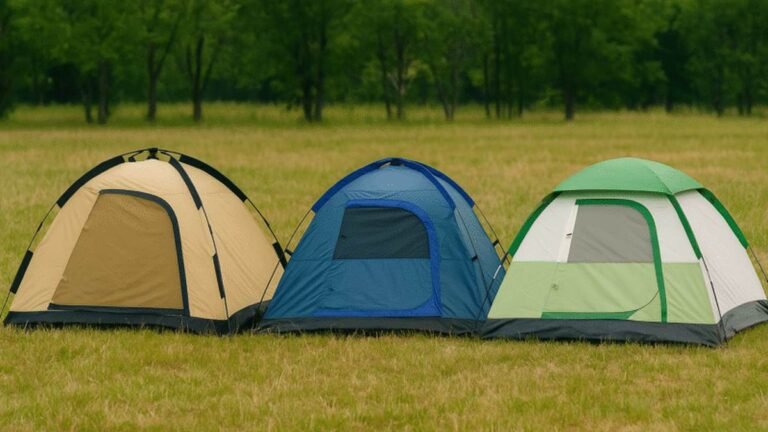
At this price you’re getting: a polyester fly rated 1000–1500mm (adequate for normal rain), fibreglass poles (fine in calm weather, flexy in wind), a sewn-in polyethylene floor, and a 1–2 year warranty. What you’re not getting: taped seams (seal them yourself), premium zips, blackout fabric, or fabrics that survive years of UV.
The honest truth: a $130 tent that’s seam-sealed, guyed properly and pitched on a footprint will outperform a $300 tent that’s neglected. Technique matters more than price at the budget end — which is good news, because technique is free.
Budget tents under $200 Australia: top 7 picks
1. OZtrail Tasman 4V — best overall budget tent
The Tasman 4V is the default answer to “what’s a decent cheap tent” in Australia. Four-person dome, 1500mm fly, fibreglass poles, sewn-in floor — all the basics done competently. At $129.99 it’s priced for first-time campers, scouts groups and festival-goers.
Four nominal means two-to-three in comfort. The fibreglass poles are the known weak point: fine in sheltered sites, not the tent for exposed coastal camping in a blow. Seam-seal it before first use, buy decent pegs, and it’ll give you several seasons of weekend camping.
2. OZtrail Tasman 3V — cheapest tent worth buying
At $84.99, the Tasman 3V is about as cheap as a usable tent gets. Three-person dome with the same basic construction as the 4V. Realistically it’s a two-person tent (or a solo tent with gear), but for under $85 that’s fair.
This is the tent for: trying camping once to see if you like it, a spare tent for the kids, festival camping where the tent might not come home. Don’t expect more than a couple of seasons — at this price, that’s fine.
3. BlackWolf Stealth Mesh Tent — best waterproofing under $200
The Stealth Mesh is interesting: a BlackWolf tent (with BlackWolf’s warranty backing) for $199.99, right at the top of this price bracket. The standout spec is the fly: polyester PU rated to 3000mm — double most budget tents — with an HD polyethylene floor.
It’s a 2-person tent (160 x 210cm), so it’s really for solo campers or couples who pack light. But if rain performance is your priority and your budget is capped at $200, the waterproof rating here is unmatched. The best cheap tent for campers who’ve been rained on before and never want it again.
4. Spinifex tents (Anaconda) — best Anaconda house brand
Spinifex is Anaconda’s house brand, and their dome tents are catalogue regulars under $200 — frequently much less on special. The myswag camping community regularly notes Spinifex tents as the sensible cheap option: basic but functional, with Anaconda’s store network behind them for warranty.
Check Anaconda’s current catalogue for pricing — house-brand tents move with sales cycles, and buying on special is the whole point. Expect 4–6 person domes with 1000–1500mm flys. Same advice as all budget tents: seam-seal, footprint, good pegs.
5. Wanderer dome tents (BCF) — best BCF house brand
Wanderer is BCF’s house brand and their tents are the equivalent play: catalogue-priced domes that regularly dip well under $200. BCF’s Club Price system often knocks another 20–40% off, making these among the cheapest tents from a national retailer.
The range changes with catalogues, so check BCF’s current tent lineup. What you’re buying is the same formula as the OZtrail Tasman: polyester dome, fibreglass poles, sewn-in floor. Perfectly good for fair-weather weekends.
6. Dune 4WD tents (Anaconda) — best for 4WD tourers on a budget
Dune 4WD is Anaconda’s 4WD-focused house brand, better known for swags but with tents in the range too. If you’re already shopping Anaconda for touring gear, matching a budget Dune tent keeps everything under one warranty roof.
As with all house brands, buy on catalogue special and check the specs that trip: fly rating, pole material, packed size. Dune gear tends to be honestly specced for the price.
7. Coleman basic dome tents — best brand-name budget option
Coleman’s entry domes sit at the top of the budget bracket — you’re paying a small premium over house brands for the Coleman name, WeatherTec system marketing, and a 1-year warranty from a global brand. When they’re on special (and they often are), they dip into genuine budget territory.
Worth it if you value brand warranty support over absolute lowest price. Not worth it at full RRP when the OZtrail Tasman 4V does the same job for less.
Make a $130 tent perform like a $300 tent
Here’s the $30 upgrade kit that transforms budget tent performance:
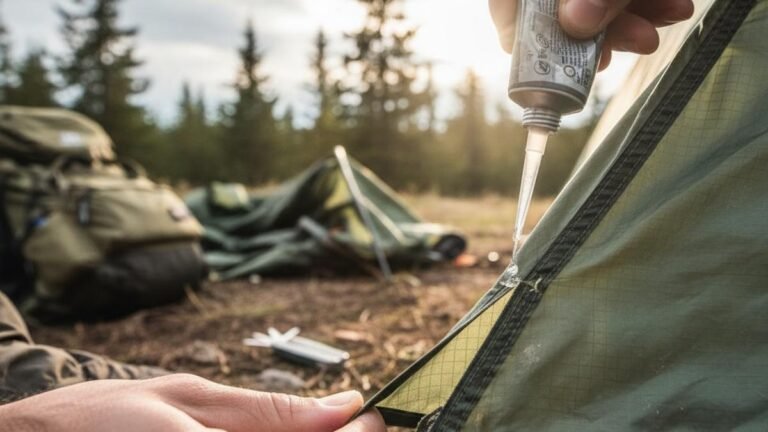
Seam sealer ($15–$20): budget tents aren’t seam-sealed at the factory. One tube of silicone seam sealer, an afternoon’s work, and you’ve fixed the #1 cause of budget-tent leaks. Non-negotiable — do it before the first trip.
A footprint or tarp ($10–$15): a cheap tarp under the tent protects the thin floor from stones and sticks, adds a moisture barrier, and extends floor life enormously. Cut it slightly smaller than the tent floor so it doesn’t channel rain underneath.
Better pegs: the wire pegs supplied with budget tents bend in hard ground and pull out in soft sand. A set of decent pegs matched to your ground type (sand pegs for beach, hard-ground pegs for inland) costs little and prevents the most common tent failures.
Guy it out properly: free, and the single biggest performance upgrade. Most budget-tent “failures” in wind are tents that were never guyed. Use every guy point, angle pegs away from the tent, and tension after the fly settles.
When to upgrade from a budget tent
Upgrade when: you’re camping 10+ nights a year (cost-per-night justifies it); you’ve had a tent fail in weather and want reliability; you need features budget tents don’t offer (blackout fabric, standing height, fast setup); or the faff of a 15-minute pitch is stopping you camping. The natural upgrade path is a $250–$450 instant tent (Coleman/OZtrail) or a $1,000 touring tent (BlackWolf) if you’re touring seriously.
Don’t upgrade just because the internet says budget tents are rubbish. A looked-after Tasman 4V that gets you camping is infinitely better than a $1,000 tent you can’t afford yet. The best tent is the one that gets you out there.
Budget tent brands compared
OZtrail: the established budget brand — widest range, 2-year warranty, decent parts availability. The Tasman domes are the reference budget tent. Build quality is consistent; you know what you’re getting.
Spinifex (Anaconda): Anaconda’s house brand — sharp catalogue pricing, Anaconda’s store network for warranty. Quality is comparable to OZtrail at the price; the range is smaller but the specials are sharper.
Wanderer (BCF): BCF’s house brand — similar to Spinifex, with BCF’s Club Price system often making them the cheapest option. Good for the “tent that lives in the car boot” role.
Coleman: the global brand’s entry models cost slightly more than house brands but bring better design refinement and a 1-year warranty from a major manufacturer. Worth the small premium if the price is close.
BlackWolf: barely in this price bracket — the Stealth Mesh at $199.99 is the exception, and it shows what an extra $70 over the cheapest options buys: 3000mm fly, better warranty backing. For specifications, see BlackWolf’s Stealth Mesh page.
The honest summary: at sub-$200, brand matters less than condition and care. A seam-sealed, well-pitched Spinifex outperforms a neglected Coleman. Buy on price, then invest the savings in seam sealer and decent pegs.
Secondhand vs new: the budget camper’s dilemma
$200 buys a new budget tent — or a used quality tent. The used option is usually better: a secondhand BlackWolf or Oztent at $200 has better fabrics, better design and more life left than a new $200 tent. The risks: UV damage (invisible until it tears — do the gentle tear test at a seam), worn zips, missing parts, and no warranty. The rules: buy from someone you can meet (pitch it before paying), check everything, and walk away from mould smells or brittle fabric. Where used wins: touring-grade tents at budget prices. Where new wins: warranty, known history, and hygiene. For a first tent, new budget is simpler; for a second tent, used quality is smarter.
When a budget tent is actually the right choice
Budget tents aren’t just for poor campers — they’re the rational choice in specific situations. Festival camping: the tent might not survive the weekend regardless of price; take the $85 Tasman. Kids’ tents: children destroy tents; give them the cheap one and keep the good tent for adults. Beach camping: sand and salt are brutal on any tent; a budget tent you don’t mind replacing beats a premium tent you watch degrade. The spare: a $130 tent in the garage means unexpected guests, scout trips and friends’ kids are always covered. Car-camping backup: when the main tent is being repaired or dried. The pattern: budget tents are for high-risk, low-stakes camping. Save the good tent for the trips that deserve it.
Budget tent warranties: what to expect
Warranties separate the decent budget brands from the disposable ones. OZtrail: 2-year warranty — the best in the budget bracket, and a reason the Tasman domes are the default recommendation. Spinifex (Anaconda): typically 1–2 years depending on the product — backed by Anaconda’s store network, which makes claims painless. Wanderer (BCF): similar 1–2 year coverage through BCF stores. Coleman: 1-year warranty — shorter on paper, but Coleman’s parts availability is excellent. What warranties cover: manufacturing defects — faulty seams, broken zips out of the box, pole defects. What they don’t cover: UV damage, storm damage, normal wear, or “it leaked because I never seam-sealed it.” Claim tips: keep the receipt (photo it — thermal receipts fade), register the product if the brand offers it, and claim early — a zip that fails in month 2 is a defect; in month 20 it’s wear. A real warranty from a real brand is worth $30–$50 of the price — it’s the difference between a $130 tent and a $100 no-name gamble.
Frequently asked questions
Are cheap tents waterproof?
Cheap tents are water-resistant, not reliably waterproof out of the box. The fly fabric usually is; the seams aren’t. Seam-seal any tent under $200 before first use and it’ll handle normal rain fine.
How long does a $150 tent last?
Two to four seasons of regular weekend use with basic care: dry before storing, don’t leave it pitched for weeks (UV kills cheap flys fast), and re-seal seams every year or two. Occasional campers get longer.
What is the best tent under $200 in Australia?
The OZtrail Tasman 4V ($129.99) is the best all-round pick — 4-person dome from an established brand at a fair price. For the best waterproofing under $200, the BlackWolf Stealth Mesh ($199.99) has a 3000mm fly.
Can you camp in winter in a budget tent?
A budget tent handles cool weather if you’re sheltered and it’s not storming, but they’re not winter tents — thin fabrics, draughty design and flexy poles are the limits. For exposed or alpine winter camping you need a proper 3–4 season tent.
Should I buy a used tent instead of a budget tent?
A used quality tent (BlackWolf, Oztent) at $200 often beats a new $200 tent — better fabrics, better design. Check the fly for UV damage (chalky, brittle fabric), zips for smooth operation, and poles for cracks. If it smells of mould, walk away.
← Back to our complete guide: Best Camping Tents Australia 2026