Best Camping Pillows Australia 2026
Disclosure: We may earn a small commission if you purchase through our links, at no extra cost to you.
The pillow is the most skipped piece of sleep gear — and the reason so many campers wake up with a stiff neck blaming their mat. A scrunched-up jacket works for one night; on night three you want a real pillow. The best camping pillows Australia has in 2026 weigh as little as 55g, pack to the size of an egg, and cost less than a pub dinner. There’s no good reason to keep suffering.
This guide compares seven options with verified prices, matches pillow types to sleep positions (the detail that determines comfort), and covers the little-known features — like pillow-to-mat attachment — that stop your pillow migrating at 3am. Complete your sleep system with our sleeping mats and sleeping bags guides.
Pillow types, and who they’re for
Inflatable: lightest and most compact (55–80g). Comfort varies hugely — cheap ones feel like balloons; good ones (contoured, baffled) are genuinely comfortable. Best for hikers and weight-conscious campers.
Compressible (foam): shredded foam that compresses into a small sack and expands at camp. Heavier and bulkier than inflatable, but the most pillow-like feel. Best for car campers who prioritise comfort.
Hybrid (inflatable + foam/down top): air core with a foam or down layer on top — the luxury option. Best for campers who’ll pay for the best sleep.
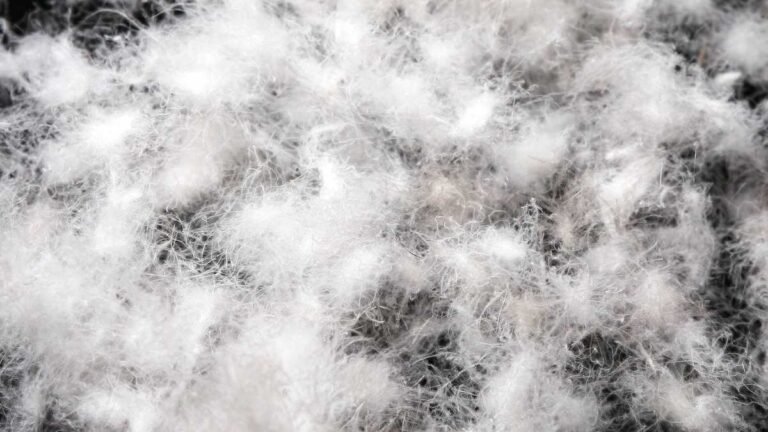
Down-filled: supremely compressible and soft, but expensive and hopeless if they get wet. Best for ultralight hikers in dry conditions.
Match the pillow to your sleep position
Back sleepers: low loft (8–11cm). Too high pushes your head forward and strains your neck. The regular-size inflatables are designed for you.
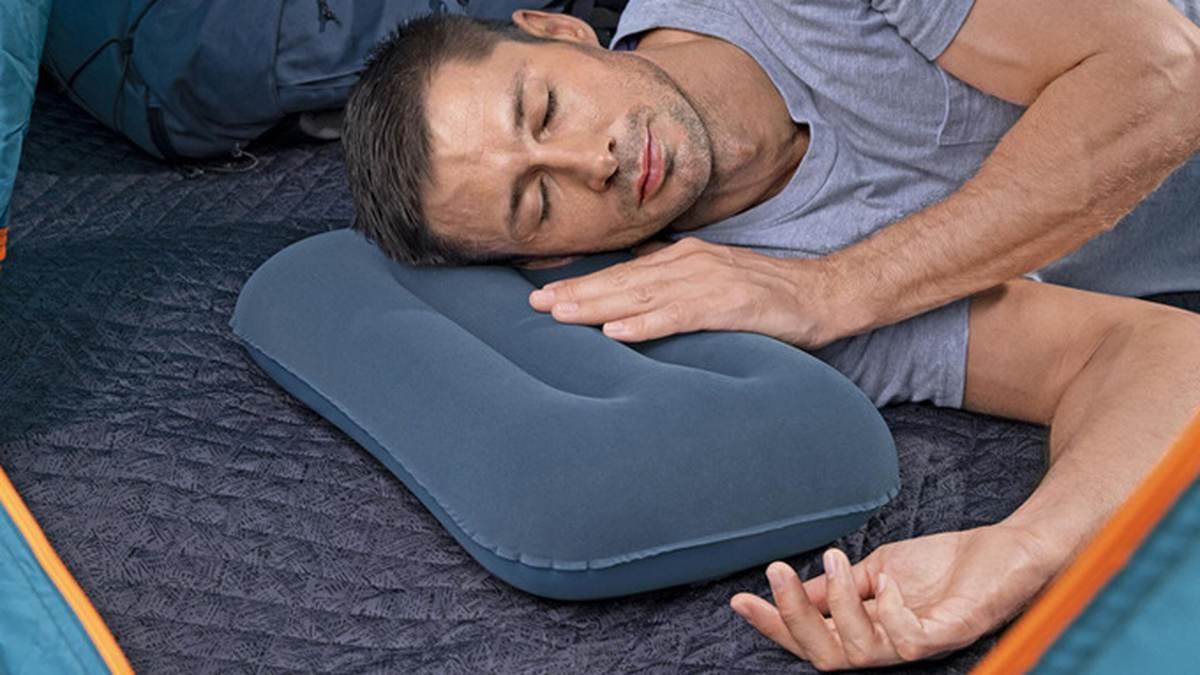
Side sleepers: high loft (11–14cm) to fill the shoulder-to-head gap. This is where most campers go wrong — a flat pillow as a side sleeper guarantees a sore neck. Buy the large size.
Stomach sleepers: very low loft or none. A thin pillow or folded jacket. (And consider training yourself out of it — it’s rough on necks generally.)
Restless sleepers: get a pillow that attaches to your mat. Sea to Summit’s PillowLock system (patches on the mat grip the pillow) stops the 3am pillow chase — small feature, big difference.
Best camping pillows Australia: top 7 for 2026
1. Sea to Summit Aeros Ultralight Regular — best ultralight pillow
55g. Packs to the size of an egg. Contoured shape that cradles your head, scalloped edge that centres on your shoulders, and a multi-function valve for easy inflation and fine-tuning. At $54.99 at Snowys, it’s the hiker’s default for good reason.
Best for: back sleepers and gram-counters. The 11cm loft suits back sleeping; side sleepers should step up to the Large. The brushed recycled face fabric feels far better than bare TPU against skin.
2. Sea to Summit Aeros Ultralight Large — best pillow for side sleepers
The Large (45 x 31cm, 80g) gives side sleepers the loft and surface area they need, at $64.99 at Snowys. Same contoured design, valve and PillowLock compatibility as the Regular, just more pillow.
Best for: side sleepers, bigger campers, and anyone who’s found regular camping pillows too small. The $10 premium over the Regular is the best $10 in sleep comfort.
3. Sea to Summit Aeros Premium — best all-round camping pillow
The Premium adds a softer face fabric and plusher feel over the Ultralight — the pillow that converts inflatable sceptics. Around $69.99 (per 2026 reviews). It’s slightly heavier than the Ultralight, but the comfort step is noticeable.
Best for: campers who want one pillow for everything — hiking, car camping, travel. If you’re buying your first proper camping pillow, start here.
4. Sea to Summit Aeros Premium Large — best large comfort pillow
The big one: Premium comfort in the Large size, $76.99 RRP. For side sleepers who also want the plushest face fabric, this is the top of the inflatable range before you go hybrid or down.
Best for: side sleepers who camp regularly and want the best inflatable experience. At 105g with the stuff sack it’s still absurdly light for what it delivers.
5. Sea to Summit Aeros Down — best luxury camping pillow
Inflatable core with a down-filled top: the closest thing to your bedroom pillow that packs into a stuff sack. $119.99 RRP — expensive for a pillow, but reviewers consistently rate it the best sleep they’ve had outdoors.
Best for: luxury campers, cold sleepers (the down adds warmth), and anyone for whom sleep quality justifies the price. Keep it dry — down and damp don’t mix.
6. Compressible foam pillow — best car-camping pillow
The classic shredded-foam pillow (various brands, $25–$45): compresses into its own sack for transport, expands to a proper pillow at camp. Heavier and bulkier than inflatables — irrelevant for car camping, disqualifying for hiking.
Best for: car campers, family camping, and anyone who finds inflatables too firm or bouncy. The most bed-like feel of any camping pillow type.
7. The stuff-sack pillow — best free option
Honest inclusion: a stuff sack filled with tomorrow’s clothes is a free, zero-weight pillow. It works — sort of. The lumps migrate, the height’s wrong, and it’s cold. But it’s better than nothing, and every hiker should know the trick for when their pillow fails or gets forgotten.
Best for: emergencies, ultralight purists, and night one while your real pillow is in the post. Upgrade to any pillow above when you can.
Pillow tips for better camp sleep
Don’t over-inflate. The #1 inflatable pillow mistake — a rock-hard pillow is worse than none. Inflate fully, then let a little air out until it cradles rather than resists. Your head should sink slightly.
Attach it to your mat. If your mat has PillowLock patches (Sea to Summit mats do), use them. Otherwise, a buff or beanie looped around pillow and mat works. A pillow that stays put is a pillow that works.
Pair with your bag’s hood. Many sleeping bags have a pillow pocket in the hood — slide the pillow in and the whole system stays aligned. Sea to Summit designs theirs for exactly this.
Bring a pillowcase. A lightweight cotton or merino pillowcase over a camping pillow improves the feel enormously and keeps it cleaner. Weighs nothing, packs tiny.
For the sleep-science side — why pillow height and neck alignment matter as much outdoors as at home — the Sleep Foundation camping pillow guide is a useful independent reference.
Pillow alternatives: what actually works
Forgotten your pillow? The alternatives ranked: Stuff sack with clothes: the classic — works surprisingly well if you pack it right (soft clothes on top, lumpy stuff at the bottom). The free option that’s always available. Down jacket in a stuff sack: the hiker’s pillow — your insulation does double duty. Genuinely comfortable. Dry bag with air: partially inflated, it makes a serviceable pillow — better than nothing, worse than everything else. Rolled towel: fine for a night, lumpy for a week. Nothing: some people sleep fine without — if you’re one of them, enjoy the saved weight and space. The verdict: alternatives work for a night or two, but a proper camping pillow ($30–$60) is worth it for regular campers. The best pillow is the one you’ll actually bring — and the improvised ones get left behind because they’re faff.
Travel pillows vs camping pillows: what’s the difference
They’re sold side by side but designed for different jobs. Travel pillows (the U-shaped neck ones) are for upright sleeping — planes, cars, passenger seats. They support the chin and neck when your head nods forward. They’re nearly useless in a tent — lying down, they push your head into an awkward angle. Camping pillows are for horizontal sleeping — they go under your head like a bed pillow, sized for a sleeping mat. Can you use one for the other? A camping pillow works fine as a travel pillow in a pinch (it’s just a small pillow), but a travel neck pillow makes a terrible camping pillow. The exception: side sleepers in cars sometimes use the U-pillow against the window — that’s its actual use case. Buying advice: if you camp, buy a camping pillow. If you fly, buy a travel pillow. Don’t buy one hoping it does both — it won’t. And if you already own a decent travel pillow, it stays in the car for the drive; the camping pillow lives in the tent bag.
Washing and caring for camping pillows
Pillows absorb sweat, sunscreen, insect repellent and campfire smoke — they need more washing than you’d think. Inflatable pillows: wipe the surface with mild soap and water; never submerge (valve damage). Air dry fully before storing. Compressible/fill pillows: most are machine-washable on gentle — check the label. Wash in a laundry bag to protect the fabric. Memory foam: spot clean only — never machine wash (it destroys the foam). Air them regularly. Drying: the critical step — damp pillow fill grows mould and smells. Dry completely, preferably in sun and breeze. Storage: loosely packed, dry, out of heat. Compressed storage flattens fill over time. Replacement: when the pillow no longer lofts, smells despite washing, or the valve leaks — typically 3–5 years. A $50 pillow that lasts four years costs $12.50 a year. Wash it and it’ll earn every cent.
Pillows for kids
Kids’ pillow needs are simpler but not identical. Size: adult camping pillows overwhelm small kids — look for junior sizes or just use a small compressible pillow. Height: kids need thinner pillows (smaller shoulders, shorter necks) — an adult pillow kinks a child’s neck. Durability: kids’ pillows get dragged around camp, used as cushions, fought over — buy tough and washable, not delicate and expensive. Their own: give them their own pillow, not a share of yours — ownership means they look after it (somewhat) and sleep better. Fun factor: a pillow in their favourite colour is a pillow they’ll actually use instead of your jacket. Safety: for under-2s, no pillow at all — safe sleep guidelines apply in tents too. For older kids, the same rules as adults: right height, washable, theirs.
Inflatable vs compressible: the core choice
Camping pillows split into two camps. Inflatable: tiny packed size (fist-sized), adjustable height (add or release air), light. Downsides: the “balloon” feel (improved on newer models with baffled designs), potential valve leaks, and a slightly noisy surface. Best for: hikers and anyone short on space. Compressible: foam or fill that squashes into a stuff sack — feels more like a real pillow, no valves to fail, quieter. Downsides: bulkier packed, fixed height (unless adjustable-fill), slower to dry if washed. Best for: car campers and comfort-first sleepers. Hybrids: inflatable core with a soft cover — the best of both, at a premium price. The verdict: hikers go inflatable (space is everything), car campers go compressible (comfort is everything), and bad sleepers should try before they buy — pillow feel is personal. Either type beats a stuff sack of clothes for a week-long trip.
Pillow packing and transport
Pillows are deceptively annoying to pack. Inflatables: the easy ones — deflate, fold, fist-sized. Keep the valve closed and protected; a damaged valve is a dead pillow. Compressibles: stuff, don’t fold — stuffing is faster and the fill doesn’t care. Use the stuff sack; an unbagged pillow migrates around the car and collects dirt. Hygiene: pack pillows in a dry bag or pillowcase — they touch your face for eight hours; keep them clean. Don’t compress long-term: storage compression flattens fill — transport compressed, store lofted. The car-camping luxury: bring your actual pillow from home. It’s bigger and comfier than any camping pillow, costs nothing, and car camping has no weight limit. The best camping pillow for car campers is the one already on their bed.
Frequently asked questions
Do I need a camping pillow?
For one night, a jacket works. For any trip longer than that, yes — poor neck support ruins sleep quality, and a $55 pillow that weighs 55g is the cheapest comfort upgrade in camping.
What is the most comfortable camping pillow?
For most campers: the Sea to Summit Aeros Premium Large ($76.99 RRP) — high loft for side sleepers, plush face fabric, PillowLock compatible. Car campers who prefer foam should get a compressible pillow.
Are inflatable pillows comfortable?
Good ones are — contoured designs like the Sea to Summit Aeros cradle your head rather than balancing it on a balloon. Cheap flat inflatables are not. Don’t over-inflate; slightly soft is the sweet spot.
How do I stop my pillow sliding off my mat?
Use a mat with pillow attachment (Sea to Summit’s PillowLock), a sleeping bag with a pillow pocket in the hood, or loop a buff/beanie around both. Or sleep in a tent small enough that the pillow can’t go far.
Can I just use a normal pillow for camping?
For car camping, yes — plenty of campers bring a normal pillow and sleep brilliantly. It’s just bulky. For hiking or touring where space matters, a camping pillow packs 90% smaller.
← Back to our complete guide: Best Sleeping Bags Australia 2026