Best Camping Near Brisbane: 11 Top Spots
Disclosure: We may earn a small commission if you purchase through our links, at no extra cost to you.
Brisbane is one of the easiest Australian cities to escape. Within an hour of the CBD you can be beside a creek in the D’Aguilar ranges; within two hours, in rainforest at Lamington or on a sand island. The best camping near Brisbane is not one place — it is a ring of national parks, state forests, lakeside parks and island campgrounds, each with its own booking system and access rules.
Every campsite below was checked against Queensland Parks pages, the operators or the Brisbane tourism site. Where a site needs a 4WD, a ferry or a permit booked before you leave home, it says so.
Best camping near Brisbane within 90 minutes
The closest real bush and beach camps to the city. All three are in national parks, so book a QPWS camping permit online before you arrive.
Archer camping area, D’Aguilar National Park
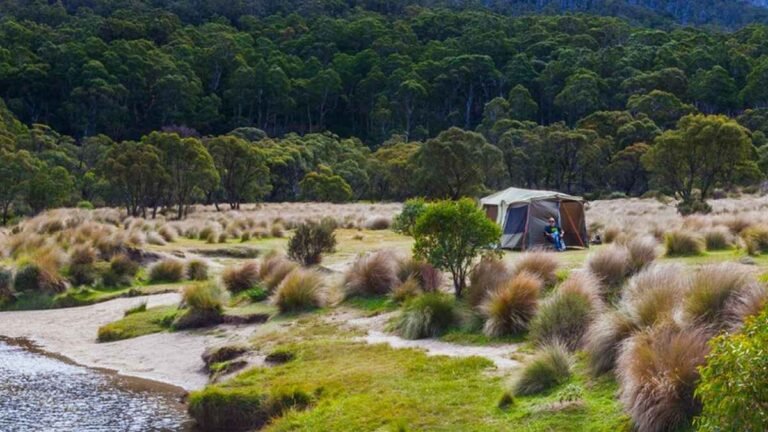
Archer sits in the northern section of D’Aguilar National Park, about 100 kilometres from Brisbane and 18 kilometres from Woodford, in open grassy bush beside Neurum Creek. It is the friendlier of the park’s two drive-in campgrounds, with nine numbered sites for up to six people each. Access is by two-wheel drive from the north via Woodford; from the south via The Gantry, a four-wheel drive is needed. Facilities are basic — treat-before-drinking water, septic toilets and fireplaces — and there is no phone service, so book before you drive in.
Neurum Creek camping area, D’Aguilar National Park
Six kilometres further along Lovedays Road, Neurum Creek is the quieter, more enclosed of the pair, with sites in their own forest clearings beside the creek, about 76 kilometres from the city. It is stricter to reach: high-clearance 4WD only, though a few sites (2, 4, 5, 8 and 11) take small off-road camper trailers. Facilities match Archer, and there is no phone reception, so book before you enter the park.
Bribie Island National Park — Ocean Beach, Poverty Creek and Gallagher Point
Bribie Island is the closest beach camping to Brisbane: about 65 kilometres north of the city, joined to the mainland by a bridge, its campgrounds reached by high-clearance 4WD. Ocean Beach is the headline act — sites just behind the dunes, 16 kilometres north of the beach access at Woorim, with toilets, cold showers and water taps, and fires allowed in the rings provided. Poverty Creek, on the calmer Pumicestone Passage side, is the family pick: grassy sites, room for camper trailers and groups, toilets and cold showers. Gallagher Point is the basic bush option — a few sites, no facilities, so bring a self-contained portable toilet. You need a camping permit plus a vehicle access permit; check park alerts first.
90 minutes to two hours: the Scenic Rim and the hinterland
Further out, the Scenic Rim and the Sunshine Coast hinterland hold rainforest campgrounds that feel a long way from the city.
O’Reilly’s Campground, Lamington National Park
Lamington is the rainforest classic, and its Green Mountains campground is now known as O’Reilly’s Campground after an extensive rebuild: 24 tent sites, 21 campervan sites and 17 safari tents, plus a new amenities building and camp kitchen. The campground is privately managed, so you book through O’Reilly’s, and the winding road up from Canungra takes at least 50 minutes and is unsuitable for vehicles over four metres or towing caravans or camper trailers — allow about two hours from Brisbane.
Booloumba Creek, Conondale National Park
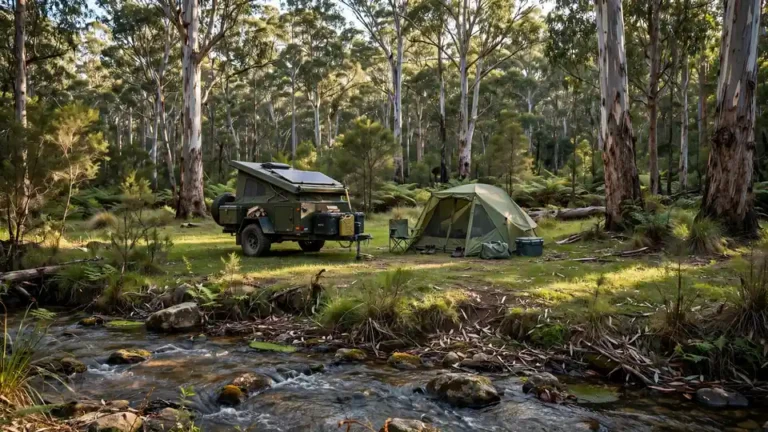
Booloumba Creek is just under two hours from Brisbane and feels wilder than the drive suggests: tall eucalypt forest, rainforest gullies and clear mountain streams. Booloumba Creek Road crosses unbridged creeks and is for high-clearance four-wheel-drive vehicles only, and there are three camping areas. Area 1 suits tents, with three sites that also take high-clearance 4WD campervans and off-road camper trailers. Area 3 is tents only. Area 4 is the open, grassy one, taking tents, larger groups and off-road caravans. Book permits in advance; pets and generators are not permitted. After rain, check whether the creek crossings are passable — a booking is no guarantee the road is open.
Charlie Moreland, Imbil State Forest
If Booloumba’s 4WD-only access rules you out, Charlie Moreland is the nearby alternative. This QPWS campground sits beside Little Yabba Creek in Imbil State Forest, about 11 kilometres south-west of Kenilworth, and the current QPWS page lists it as accessible by high-clearance four-wheel-drive vehicles and off-road camper trailers in dry weather. It is a grassy, open-forest camp beside a pretty creek. Dogs are not permitted; book and pay for the permit before you arrive.
Lake Moogerah Caravan Park and Frog Buttress, Moogerah Peaks
About 90 minutes south-west of Brisbane, Lake Moogerah is the Scenic Rim’s lakeside option: a privately run caravan park right on the water, with powered and unpowered sites, with the peaks of the national park as a backdrop. For something rawer in the same area, Frog Buttress camping area sits in the Mount French section of Moogerah Peaks National Park, in tall eucalypt forest. There are only two vehicle-based sites plus walk-in tent sites a short stroll from the car park, and campfires and pets are not permitted. Book it through the Queensland National Parks Booking Service — the lake is half an hour away, so this is a bush base, not a lakeside camp.
Bigriggen Park, Scenic Rim
Bigriggen Park is the family favourite of the Scenic Rim: about 90 minutes from Brisbane, set on 100 acres of hilltops and river flats between Boonah and Rathdowney. It has powered and unpowered sites, drive-through sites for big rigs, swimming holes and walking tracks — and unlike the national parks, dogs are welcome in designated areas. Access is by conventional vehicle, and the park is open every day except Christmas Day. Book direct.
Mount Barney National Park and Mt Barney Lodge
Mount Barney is the serious one on this list. The national park itself, about 120 kilometres south-west of Brisbane, offers walk-in bush camping only — every camp site is reached on foot, there are no facilities, and campers must be fully self-sufficient. You need a camping permit booked online, well ahead for public holidays. Open fires are prohibited, so bring a fuel stove; camping is banned on East Peak and within 500 metres of the summit. Most weekend campers will be happier at the base: Mt Barney Lodge, about 90 minutes away, has a grassy creekside campground with toilets, showers and barbecues.
Best camping near Brisbane by ferry: the island escapes
Brisbane’s two big sand islands need a ferry booking as well as a camping booking — and reward you with beach camping you cannot get on the mainland.
Moreton Island (Mulgumpin) — Blue Lagoon and North Point
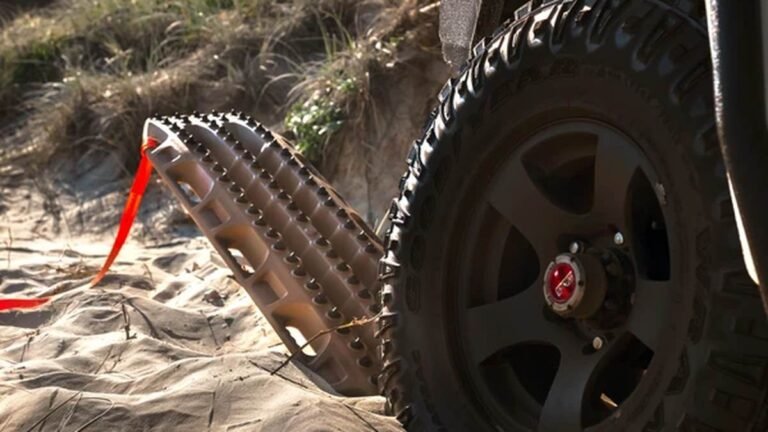
Moreton Island, known as Mulgumpin, sits 40 kilometres offshore, and the vehicle ferry from the Port of Brisbane takes 75 to 90 minutes. This is a high-clearance 4WD-only island, with no mechanic or vehicle recovery service, so carry your own recovery gear. Blue Lagoon campground, on the eastern side, is the best all-rounder — close to surf beaches and walking distance to the freshwater lagoon, with cold showers, and open to trailers and caravans (not via Middle Road, a narrow one-way soft-sand track). North Point, at the northern tip, is smaller and wilder, near Honeymoon Bay, with no open fires and no trailers or caravans. Book everything before you leave the mainland: camping and vehicle access permits come through Mulgumpin Camping, run by the Quandamooka Yoolooburrabee Aboriginal Corporation, and you must display a camping tag at your site. There is no self-registration on the island, and no pets.
North Stradbroke Island (Minjerribah) — Main Beach and Cylinder Beach
Minjerribah is the easier island trip: drive about 40 minutes to Cleveland, then take the SeaLink vehicle ferry (about 45 minutes) or the passenger ferry (about 25 minutes) to Dunwich. All camping is managed by Minjerribah Camping. Main Beach and Flinders Beach are both 4WD-only, need a vehicle access permit, and have no infrastructure. Main Beach is the wilder of the two: a roughly 38-kilometre surf beach on the eastern side, better for fishing than swimming. For facilities and a patrolled swim, Cylinder Beach is the better pick — a sheltered cove with powered and unpowered sites, showers and barbecues, and regular-vehicle access. Adams Beach campground is currently closed, so do not plan around it. Book the ferry and the campsite well ahead — both sell out on weekends and school holidays.
How to book the best camping near Brisbane
Most campgrounds in this guide sit in Queensland national parks or state forests, and they all run on the same rule: book your camping permit online first. The Queensland National Parks Booking Service handles QPWS sites, and the standard camping fee is $7.75 per person per night or $31 per family per night. You pay to secure the booking, and you display a tag with your booking number at your site. Several campgrounds have no phone service at all, so a permit cannot be bought on arrival. Vehicle access permits are separate from camping permits on the islands, and the ferry is a third booking. If you want to keep costs down on the mainland legs of a longer trip, our guide to free camping spots in Queensland covers the no-fee options worth knowing about. For permits, fees and the full list of bookable campgrounds, start at the Queensland Parks camping page.
Campfires, dogs and park rules
Campfire rules change from park to park, so check the individual park page on the day you travel. Fireplaces or fire rings are provided at Archer, Neurum Creek, Poverty Creek and Ocean Beach, and O’Reilly’s has a communal fire pit — you cannot collect wood inside a national park. Open fires are prohibited in Mount Barney National Park and at Frog Buttress, and at North Point and The Wrecks campgrounds on Moreton Island. Pets are not allowed in Queensland national parks. Bigriggen Park is the exception, with dogs welcome in designated areas.
When is the best time to camp near Brisbane?
April to October is the sweet spot for the best camping near Brisbane: warm days, cool nights and lower humidity. Summer, from December to February, is hotter, more humid and storm-prone, and it brings the one hard closure worth knowing: Lamington’s remote bush camps close from 1 December to 31 January. The islands book out over Christmas and school holidays. If you can only camp in summer, pick a site with shade and water.
What to pack for a weekend near Brisbane
Pack for the access, not just the weather. Every QPWS site needs your booking number on display, and the no-phone-service campgrounds need the booking made before you leave home. Bring sun protection, insect repellent, extra drinking water, a fuel stove as a backup, and warm layers for the cooler hinterland nights. Run through our full camping checklist for Australia before you load the car.
Best camping near Brisbane: FAQs
Do I need to book camping near Brisbane in advance?
Yes — for almost every site in this guide. Queensland national park and state forest campgrounds need a camping permit booked online, and you must pay to secure the booking. Several campgrounds have no phone service, so you cannot book on arrival. Island trips need a ferry booking and a vehicle access permit as well.
What is the best time of year to camp near Brisbane?
April to October is the best time to camp near Brisbane, with warm days, cool nights and lower humidity. Summer from December to February is hotter, more humid and storm-prone, and Lamington’s remote bush camps close from 1 December to 31 January.
Can I have a campfire when camping near Brisbane?
It depends on the campground. Fireplaces or fire rings are provided at Archer, Neurum Creek, Poverty Creek and Ocean Beach, and O’Reilly’s has a communal fire pit. Open fires are prohibited in Mount Barney National Park and at Frog Buttress, and on Moreton Island they are banned at North Point and The Wrecks campgrounds. Always check for fire bans, and never collect firewood inside a national park.
Where is the closest beach camping to Brisbane?
Bribie Island National Park is the closest beach camping to Brisbane, about 65 kilometres north of the city, with Ocean Beach, Poverty Creek and Gallagher Point campgrounds reached by high-clearance 4WD. For a patrolled swimming beach with facilities, Cylinder Beach on North Stradbroke Island (Minjerribah) is the pick — a 40-minute drive to Cleveland plus a short ferry ride.
Can I take my dog camping near Brisbane?
Not in the national parks — pets are not allowed in Queensland national parks, which covers most of the campgrounds in this guide. Bigriggen Park in the Scenic Rim welcomes dogs in designated areas, and some private parks around Lake Moogerah are pet-friendly. Always confirm the pet policy before you book.
Start with the closest sites — Archer, Neurum Creek or Bribie Island — and the whole ring of campgrounds opens up. Ready to range further? Our guide to the best camping spots in Australia picks up where this one leaves off.