Best 2-Burner Camp Stoves Compared
Disclosure: We may earn a small commission if you purchase through our links, at no extra cost to you.
One burner boils water. Two burners cook dinner — pasta and sauce, eggs and bacon, curry and rice, simultaneously. The step from a single burner to a 2 burner camp stove is the biggest upgrade in camp cooking: it turns sequential reheating into real meal preparation. This guide compares the best 2 burner camp stoves in Australia, explains the two formats (LPG bottle vs suitcase butane), what separates a good twin-burner from a frustrating one, and the setup that makes it all work.
Why Two Burners Change Everything
With one burner, every meal is a juggling act: boil the pasta, set it aside (getting cold), fry the sauce, reheat the pasta, eat lukewarm. With two burners, both happen at once — hot food, proper timing, actual cooking. It’s the difference between “camp food” and “food, at camp.” For couples and families, it’s transformative; for solo campers who eat simply, it’s optional. The rule: if you cook meals (not just boil water), you want two burners.
The Two Formats: LPG Bottle vs Twin Butane
LPG 2-burner stoves (gas bottle)
The classic camp kitchen: two burners on a folding stand or tabletop unit, fed by hose from an LPG bottle. Pros: cheapest fuel (see our stove fuel economics and BCF’s stove buying guide), best cold-weather performance, high output, proper simmer control on good models. Cons: the bottle is bulky and heavy — you’re committed to car camping. This is the format for regular campers, families, and long trips.
Twin-butane suitcase stoves
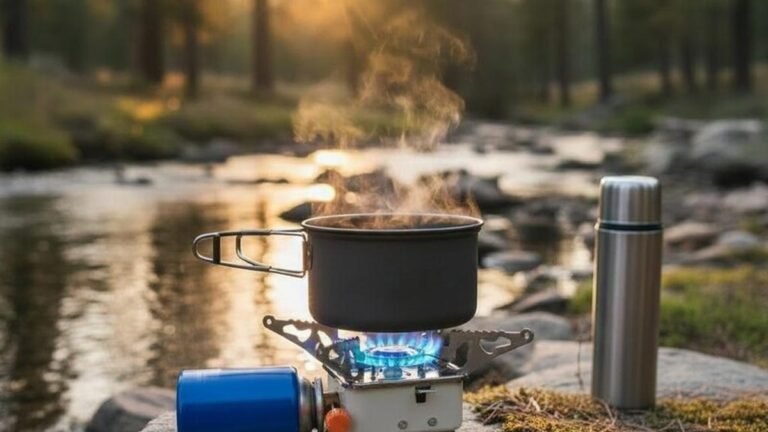
Two lunchbox-style butane burners in a briefcase format. Pros: ultra-compact, cheap to buy, no bottle to carry, dead simple. Cons: butane’s cold-weather weakness applies double (two burners chilling two canisters), canister costs add up, lower output than LPG. Best for: occasional campers, small cars, and backup duty.
The decision mirrors the single-burner choice: camp often, in varied weather, with family — LPG. Camp occasionally in fair weather — twin butane is fine and far cheaper to start.
What to Look For in a 2-Burner Stove
- Independent flame control: each burner needs its own fine adjustment — simmering sauce on one while boiling on the other is the whole point. Cheap twins share a crude control; avoid them.
- Windshields: built-in folding windshields are worth real money — they cut fuel use and cooking time dramatically in breeze. Aftermarket folding screens work too.
- Burner spacing: measure your pots against the burner distance — two large pots must fit side by side. This is the most common twin-burner frustration: burners too close for real cookware.
- Output per burner: 3–5kW per burner is the useful range; more isn’t better without simmer control.
- Stability: a loaded twin-burner with two full pots is heavy — wide feet, low centre of gravity, and a level surface matter.
- Piezo ignition per burner: convenient; carry a lighter anyway.
- Hose and regulator (LPG): check length (600mm is standard — enough to keep the bottle clear of heat), fittings (3/8″ vs POL — know your bottle), and condition annually.
- Lid: a lid that closes over the burners protects them in transport and doubles as a windshield.
The Best 2-Burner Camp Stoves in Australia
Gasmate Classic 2 Burner LPG — best overall value
Around $129 at Bunnings, the Gasmate Classic is the rational default: two burners, LPG economy, proper controls, and a price that pays for itself in fuel savings within a season of regular camping. It’s not fancy — no piezo on some versions, basic windshields — but it’s the stove that cooks thousands of Australian family dinners every weekend. If you’re buying one 2-burner stove without overthinking, buy this.
Coleman Fyreknight Hyperflame — best windproof performance
Around $369.99 at BCF, the Hyperflame’s recessed burners laugh at wind that kills conventional stoves. For exposed coastal camps, alpine trips, and anyone who’s watched dinner go cold while the flame blew out, it’s the premium solution. The price is real, but so is the performance gap — see our stove guide for the full breakdown.
Twin butane suitcase stoves — best budget/compact
The Gasmate and Campmaster twin-butane suitcases (stoves from ~$50–$80, canisters ~$1.10 each) are the low-commitment entry: two burners, briefcase portability, no bottle. Perfect for the camper who does three trips a year in good weather and wants real cooking without the LPG investment. Limitations are honest: cold mornings, canister costs over time, and lower output — but for the use case, they’re excellent.
What about the Coleman Triton?
The Coleman Triton 2-burner is a US-market favourite often mentioned in Australian forums — but with no verified Australian retail pricing or distribution found in our research, we can’t recommend it here. Buy stoves with local warranty and parts support; an imported stove with no local backing is a liability when the regulator fails on day three of a trip.
2-Burner Stoves Compared
| Stove | Format | Output | Windshield | Price (AU) | Best for |
|---|---|---|---|---|---|
| Gasmate Classic 2 Burner | LPG bottle | 2 x ~4kW | Basic | ~$129 | Best value family |
| Coleman Fyreknight Hyperflame | LPG/canister | High | Recessed burners | ~$369.99 | Windy/exposed |
| Twin butane suitcase | Butane | 2 x ~2kW | Basic | ~$50–$80 | Budget/occasional |
The Complete 2-Burner Setup: Accessories That Matter
The stove is half the system:
- Gas bottle: 9kg is standard (weeks of cooking); 4kg suits small cars and short trips. Keep a spare if you’re remote — running out mid-trip is the classic.
- Windshield: if the stove’s built-in shields are basic, a $15 folding aluminium screen is the best-value camp-kitchen accessory there is.
- Table: a stable, level, heatproof table at proper height. Cooking on the ground with two burners of hot food is asking for trouble.
- Cookware that fits: check pot diameters against burner spacing before the trip. Our cookware guide covers sizing.
- Lighter + spare: piezo fails eventually; a $2 lighter in a zip bag is insurance.
- Fire extinguisher: a small dry-powder extinguisher in the kitchen area — non-negotiable with two burners of hot oil.
Two-Burner Cooking Workflows
The techniques that earn the second burner:
Boil + simmer: pasta on high, sauce on low — the fundamental pattern. Start the slow thing first (sauce, stew), then the fast thing (pasta, rice).
Sear + warm: steaks searing on one burner, vegetables warming on the other. Resting meat while sides finish — restaurant timing at camp.
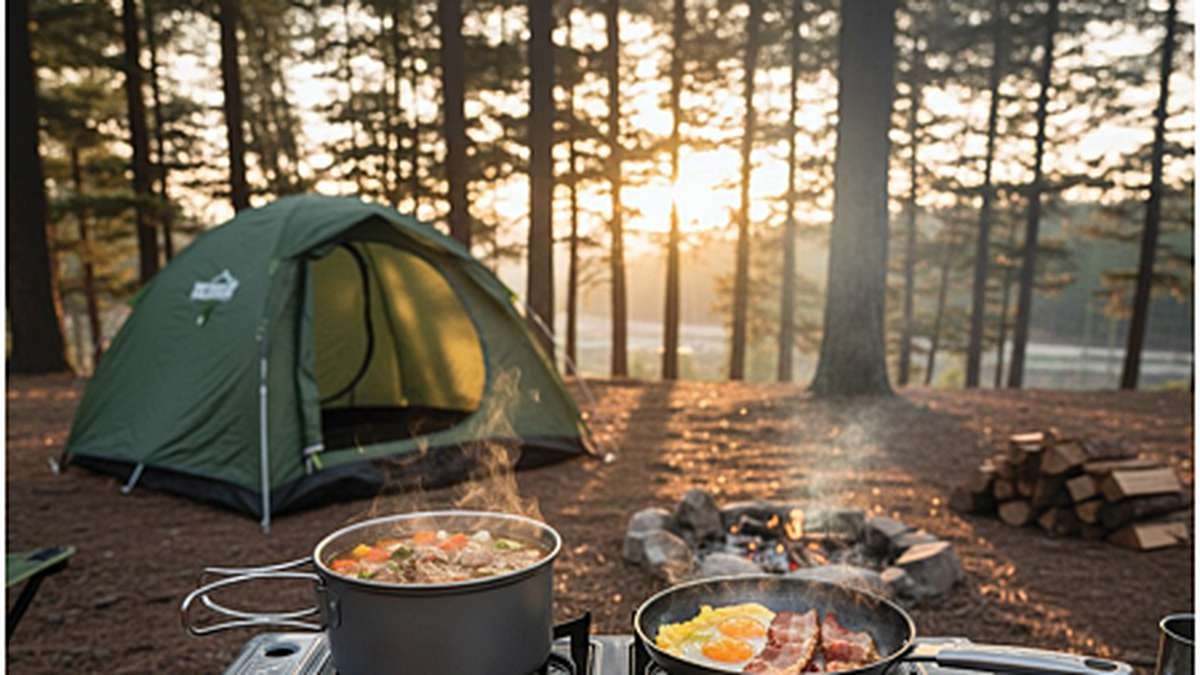
Breakfast service: bacon and eggs simultaneously, toast on the side — the meal that converts single-burner skeptics.
Boil + brew: dinner on one burner, the kettle on the other — tea ready when dinner’s served.
The meta-skill: think in parallel. Single-burner cooking is sequential; twin-burner cooking is orchestration. Plan the meal as two timelines that converge at serving.
Safety With Two Burners
- Never leave lit burners unattended — twice the burners, twice the risk.
- Keep the gas bottle upright, shaded, and clear of the burners’ heat — 600mm+ hose distance minimum.
- Check for leaks every trip: soapy water on all joints, look for bubbles.
- Turn off at the bottle first, then the burners — burns residual gas from the hose.
- Ventilation: never use in an enclosed space — carbon monoxide from two burners accumulates fast.
- Kids and dogs clear of the kitchen zone — mark it with the esky or a rope if needed.
2-Burner Stove vs BBQ vs Camp Oven: The Honest Overlap
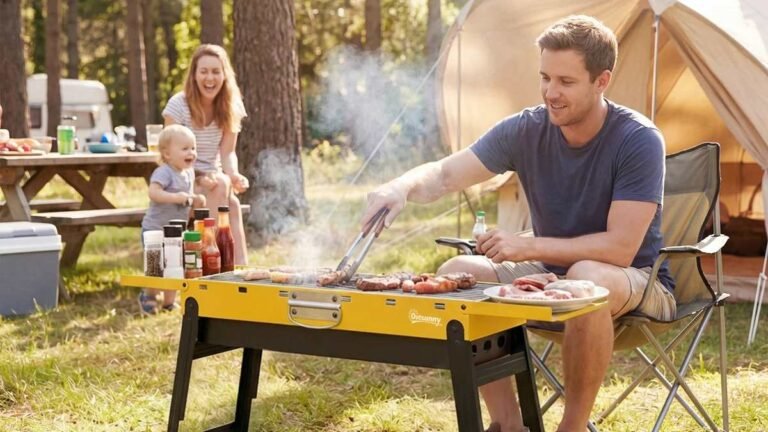
These three compete for the same space in your car and budget, so here’s the honest overlap map. A 2-burner stove does everything a BBQ does except grilling with radiant heat and hood-roasting large items — and it boils water, which a BBQ does badly. A BBQ does what a stove can’t: proper grilling, searing steaks, and the social theatre of the barbie. A camp oven does what neither can: baking, slow roasting, and true low-and-slow.
The combinations that work: stove + oven is the most capable pair (boiling/frying + baking/roasting covers everything); stove + BBQ is the most social (quick meals + the barbie experience); all three is base-camp luxury. If forced to one: the 2-burner stove — it’s the only one of the three that boils a kettle, fries eggs, simmers curry, and does it all on cheap LPG. The BBQ is the one people want; the stove is the one they need. Choose with your head for the first purchase; add the heart’s choice when budget allows.
Buying Secondhand: What to Check
Camp stoves are simple and durable — secondhand is smart. Checklist: burners light evenly (test before buying); no rust through on the body (surface rust is fine); hose supple, not cracked (budget $20 for a replacement hose/regulator); regulator works (steady flame, no pulsing); windshields intact and hinges working; all knobs present and turning smoothly. What to avoid: stoves with bent burner tubes (uneven heat forever), missing parts you can’t source, and any LPG component that smells of gas when connected. A $40 secondhand Gasmate with a new $20 hose is a $60 stove that cooks like new — the best value in camp cooking.
Storing Your Stove Between Trips
Five minutes of pack-up saves the next trip: disconnect fuel (bottle off, canisters out); clean burners (brush off food, clear jets); close the lid (protects burners from knocks); store dry (a damp stove in a sealed box corrodes); check the hose annually even in storage (rubber perishes); and keep it accessible — the stove buried behind everything is the stove you “forget” until you’re at camp without it. The campers whose gear lasts are the ones with a pack-up routine, not the ones with expensive gear.
Troubleshooting Common 2-Burner Problems
One burner weaker than the other: usually a partially blocked jet — clean with a wire. If both are weak, check the bottle level and regulator.
Yellow, sooty flames: incomplete combustion — blocked jet, low gas, or wrong air mix. Don’t cook on it; fix first.
Flame lifts off the burner: too much gas pressure or a draughty spot — reduce the flow, add windshields.
Piezo clicks but won’t light: dirty or misaligned electrode — clean and check the gap. Use the lighter while you troubleshoot.
Gas smell with everything off: leak — soapy-water test every joint, replace the hose/O-ring. Never ignore this.
Uneven heating across a big pot: normal for camp burners — stir more often, use a diffuser plate, or accept that camp cooking rewards attention. A diffuser (a $10 perforated plate between burner and pot) is the cheap fix for scorch-prone sauces and is worth carrying if you cook curries or custards at camp.
The 2-Burner Stove Buyer’s Checklist
Before you buy, run through this: fuel format decided (LPG for regulars, butane for occasionals)? Burner spacing fits your pots (measure!)? Windshields included or budgeted? Simmer control per burner (test in store if possible)? Ignition type and a backup lighter? Hose length and fittings match your bottle? Weight you’ll actually carry? Warranty and parts available in Australia? Answer all eight and you’ll buy right the first time — which, at $129–$370, matters. The wrong stove isn’t just annoying; it’s the difference between dinners you look forward to and dinners you endure.
Frequently Asked Questions
LPG or butane 2-burner stove: which is better?
LPG for regular camping (cheaper fuel, better cold performance, higher output); twin-butane suitcase for occasional fair-weather trips (cheaper to buy, compact, no bottle). Most committed campers end up on LPG.
What size gas bottle for a 2-burner camp stove?
9kg is the standard — lasts weeks of cooking and refills are ~$25–$35. A 4kg bottle suits small cars and short trips. Carry a spare on remote trips; running out mid-trip is the classic camp-kitchen failure.
Can you use a 2-burner stove in wind?
With windshields, yes — they’re transformative. Without, even a light breeze doubles cooking time. The Coleman Hyperflame’s recessed burners are the premium wind solution; a $15 folding screen is the budget one.
How do you clean a 2-burner camp stove?
Burn off residue, brush burners when cool, clear jets with a wire, wipe the body. Check the hose and O-rings annually. Store with the lid closed and canisters/bottles disconnected.
Is a 2-burner stove enough for a family?
Yes — it’s the standard family camp kitchen. Two burners handle pasta+sauce, fry-up breakfasts, and curry+rice for 4–6 people. Add a camp oven for baking and you’ve got a complete outdoor kitchen.
← Back to our complete guide: Best Camping Stoves Australia 2026