Best Air Mattresses for Camping Australia 2026
Disclosure: We may earn a small commission if you purchase through our links, at no extra cost to you.
The humble camping air mattress Australia campers love to hate: nothing beats that first-night feeling of a fully inflated queen bed in your tent, and nothing sours faster than waking at 4am with your hip on the ground. Air mattresses remain the most popular camp sleep system in the country because they’re cheap, pack small, and genuinely comfortable — when you buy the right one and use it properly. This guide covers the best air mattresses you can buy in Australia in 2026, why they deflate overnight (and how to stop it), and when you’d be better off with a stretcher or self-inflating mat instead.
Why Air Mattresses Go Soft Overnight (It’s Physics, Not Always a Leak)
Before the picks, let’s address the number one complaint, because most “leaking” air beds aren’t leaking at all. Air contracts as it cools. You inflate your mattress at 5pm in 25°C air; by 3am the air inside has cooled toward the night-time temperature, pressure drops, and the bed feels soft. Top it up before bed — inflate it fully, wait 15 minutes for the material to stretch, then top it up again — and you’ll eliminate most of the mystery deflation.
Real leaks do happen, of course. The usual culprits are valve seals (sand or grit in the valve is the classic), seam stress from over-inflation, and punctures from tent floors. A proper two-stage valve with a leak-proof cap, not over-inflating past firm, and always using a groundsheet under the tent solve 90% of it. Our guide to fixing a leaking sleeping mat covers patching when damage does occur.
The Cold Problem Nobody Mentions
Here’s the thing air mattress marketing skips: an air bed is a big bag of uninsulated air, and circulating air strips heat from your body all night. On a cool night, an air mattress without insulation underneath you can feel cold even in a good sleeping bag — the bag’s underside insulation is compressed beneath you and doing almost nothing, so the mattress is your insulation, and plain air is poor insulation.
The fixes, in order of effectiveness: put a closed-cell foam mat or blanket under the air bed (breaks the cold ground contact), put a foam mat or wool blanket on top of the air bed under your sleeping bag (insulates you from the cold air inside), or buy an air bed with built-in insulation. Winter campers in particular should read our self-inflating vs air vs foam mat comparison — for cold conditions, a self-inflating mat is usually the better tool.
What to Look For in a Camping Air Mattress
Built-in pump vs external pump
Built-in 240V pumps are brilliant at powered sites: plug in, two minutes, done. They’re useless at unpowered sites unless you also carry a 12V pump or a battery pack. Beds with built-in rechargeable pumps split the difference. If you mostly camp unpowered, a bed with a simple Boston valve plus a separate 12V pump (or a foot pump as backup) is the flexible choice. Always carry a backup inflation method — a dead pump with a flat bed is a trip-ruiner.
Height: single vs double high
Double-high beds (40–50cm) are easier to get in and out of and feel more like a real bed, but they’re colder (more air to cool), heavier, and harder to heat with body warmth. Single-high (20–25cm) is warmer, lighter, and packs smaller. Older campers and anyone with knee issues should go double-high; everyone else can save money and warmth with single-high.
Coil vs beam construction
Internal coils (like Coleman’s ComfortStrong) or I-beam construction stop the bed ballooning into a round tube and give flatter, more supportive sleep. Cheap beds without internal structure feel like sleeping on a lilo. It’s worth paying for.
Flocked top
A velour-flocked sleeping surface stops your sleeping bag sliding off at 2am and feels warmer against skin than bare PVC. It’s near-universal on decent beds now; avoid any bed with a slick bare-PVC top.
Size honesty
“Queen” varies between brands. Check actual inflated dimensions against your tent floor — a 203 x 152cm queen plus tent wall slope catches people out regularly. And remember the bed is only as big as your tent allows: measure first.
The Best Camping Air Mattress Australia Picks
Best overall: Coleman Quickbed Plus Double
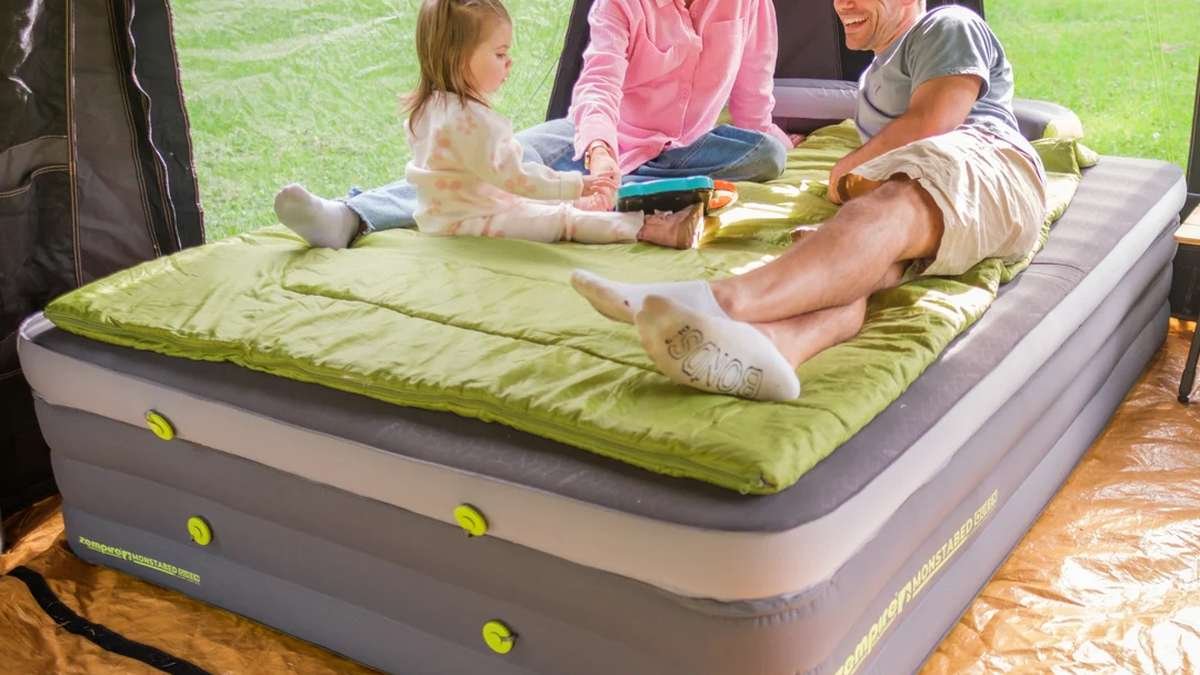
The Quickbed Plus is the sweet spot of the Coleman range: a double airbed with the AirTight system (factory-tested valves), ComfortStrong coil construction for flat support, a soft flocked top, and a double-lock valve. At around $89.99 at Australian retailers like Marine Deals, it’s priced where an air bed should be — cheap enough to replace every few years without grief, good enough to actually sleep well on. Pair it with an external pump (12V for unpowered sites) and a foam mat underneath in cool weather, and it’s the best value sleep in camping.
Best for powered sites: Coleman Quickbed Double High Queen with 240V pump
If you camp at powered sites and want maximum convenience, the double-high Quickbed with built-in 240V pump is the answer: plug in, inflate in minutes, sleep at real-bed height. Around $229 at Australian retailers. The trade-offs are the usual double-high ones — colder, heavier (about 9–10kg), bulkier packed — plus total dependence on 240V power. For caravan parks and powered family camping, though, the convenience is hard to argue with. Bring a 12V pump as backup anyway; built-in pumps do fail.
Best budget: OZtrail Velour Air Mattress
OZtrail’s basic velour-top air mattress, often found around $45, is the “good enough” pick for occasional campers, festival-goers, and kids. Two-stage inflation valve, flocked top, repair kit included. It won’t last a decade of heavy use, but at this price it doesn’t need to — and it’s cheap enough to keep as a spare for guests. Manage expectations: it’s a single-chamber PVC bed, so it’s bouncier and colder than the coil-constructed options above.
Best for families: Bestway TriTech Queen with built-in pump
Bestway’s TriTech range (stocked at Anaconda) uses a reinforced three-layer material that’s noticeably tougher than standard PVC, with built-in pump options. For family camping where kids will absolutely jump on the bed, the extra puncture resistance is worth it. Prices move with Anaconda’s catalogue cycle, so watch for sales. The weight and pack size are substantial — this is car-camping-only gear.
Best premium: OZtrail DuoComfort Queen 12V/240V
The DuoComfort is OZtrail’s answer to the premium air bed: queen size, dual 12V/240V built-in pump (inflate at powered or unpowered sites), dual-seal no-leak valve, and puncture-tough PVC walls. Listed around $139.99, it undercuts the big-name premium beds while covering both power scenarios — the 12V/240V flexibility is genuinely useful for tourers who mix powered parks and bush camps. At 45cm high it’s a proper bed-height sleep.
Camping Air Mattresses Compared
| Mattress | Size | Height | Pump | Construction | Street price (AU) | Best for |
|---|---|---|---|---|---|---|
| Coleman Quickbed Plus Double | Double | Single-high | External (not incl.) | Coil, AirTight valves | ~$90 | Best overall value |
| Coleman Quickbed Double High Queen 240V | Queen | Double-high (~45cm) | Built-in 240V | Coil, AirTight valves | ~$229 | Powered sites |
| OZtrail Velour Air Mattress | Single/Double | Single-high | External | Single chamber PVC | ~$45 | Budget / spare |
| Bestway TriTech Queen | Queen | Double-high | Built-in options | TriTech 3-layer | Varies (Anaconda sales) | Families with kids |
| OZtrail DuoComfort Queen 12V/240V | Queen | Double-high (~45cm) | Built-in 12V/240V | Dual-seal valve | ~$140 | Mixed powered/unpowered touring |
Prices are Australian street prices checked October 2026. For the full range of air beds, pumps, and repair kits, Sea to Summit’s product range and the major camping retailers stock everything mentioned here.
Choosing the Right Size Air Mattress
Size mistakes are the most common air-bed regret. Work through this before buying:
- Measure your tent floor and subtract 15–20cm — tent walls slope inward, and a queen bed jammed against sloping walls is a condensation and comfort problem.
- Count the sleepers honestly. A “double” air bed is cosy for two adults; a queen gives real room. But two singles offer better temperature control and survive one bed failing.
- Check your vehicle’s pack space. A packed queen air bed is roughly the size of a large sleeping bag — fine for wagons and utes, tight in a small hatchback with other gear.
- Consider the pump’s power source alongside size: bigger beds take longer to inflate, which matters more with a slow 12V pump at an unpowered site.
- Height vs tent door: double-high beds can make low tent doors awkward — check you can still get in and out gracefully.
Air Mattress vs Stretcher vs Self-Inflating Mat
Quick decision guide, because this is the real question most shoppers are asking:
- Choose an air mattress if you want the cheapest comfortable sleep, pack small, and mostly camp in mild weather at powered or car-accessible sites.
- Choose a stretcher if you’re tired of leaks, have a bad back, camp in wet areas, or want bombproof reliability. Add a mat on top.
- Choose a self-inflating mat if you camp in cool weather, need reliability without bulk, or hike to your campsite.
Many experienced campers end up with both: air beds for the family base camp, self-inflating mats for everything else.
Getting the Best Night’s Sleep on an Air Bed
- Inflate, wait, top up. Fill it 90%, let the material stretch for 15 minutes, then top up to firm. This alone fixes most “it went flat” complaints.
- Don’t over-inflate. Rock-hard stresses seams and valves. Firm with a little give is the target — you should sink about 5cm when lying on it.
- Insulate underneath and above. Foam mat under the bed, blanket or mat on top under your bag. This is the difference between a warm night and a cold one below about 10°C.
- Clear the tent floor. One sharp stone or forgotten tent peg is all it takes. Sweep the floor before setup, every time.
- Store it loosely. Don’t leave it compressed in its bag for months between trips; folds become weak points. Store loosely rolled in a cool spot.
- Carry the repair kit. Every decent bed includes one. Add it to your permanent camp box rather than leaving it in the packaging.
Air Mattress Firmness: Getting It Right
Most air-mattress discomfort comes from wrong firmness, not wrong mattress. The rule: inflate until firm, then let out small amounts of air until your hips just sink in without touching the ground. Side sleepers need it softer (more give at hips and shoulders); back sleepers need it firmer (lumbar support); heavier campers need more air than lighter ones on the same mattress.
The common mistake is max inflation — rock-hard feels supportive for five minutes, then pressure points scream. The second mistake is setting firmness in the warm afternoon and not adjusting at bedtime when the air has cooled and contracted. Fine-tune at the time you’ll actually sleep, lying in your normal position, and give each adjustment a minute to settle. Couples on a double air bed should compromise toward the lighter sleeper’s preference — the heavier partner’s weight distributes anyway.
Frequently Asked Questions
Why does my air mattress deflate overnight if there’s no leak?
Usually temperature: air inside the mattress cools overnight, pressure drops, and the bed feels soft by morning. Inflate fully, wait 15 minutes for the material to stretch, then top up before bed. If it still goes flat, check the valve for sand or grit.
Are air mattresses warm enough for winter camping?
Not on their own — uninsulated air strips body heat. Add a foam mat under the bed and a blanket or insulated mat on top, or switch to a self-inflating mat for genuinely cold conditions.
Built-in pump or separate pump: which is better?
Built-in 240V pumps are most convenient at powered sites but useless unpowered. A separate 12V pump plus a bed with a standard valve is the most flexible setup for mixed camping. Always carry a backup inflation method.
How long do camping air mattresses last?
Expect 2–4 years of regular use from a mid-range bed, longer with careful storage (loosely rolled, cool and dry) and a groundsheet. Budget beds last fewer seasons; premium coil-constructed beds last longer. Valves usually fail before the material does.
Can I use a camping air mattress as a permanent guest bed?
Occasionally, yes — but they’re not designed for nightly use. The PVC stretches, seams fatigue, and you’ll be topping up constantly within months. For regular guests, a proper folding bed or a quality self-inflating mat is a better investment.
← Back to our complete guide: Best Sleeping Bags Australia 2026