Camping in the Rain: Proven Tips for Wet-Weather Camping in Australia
Disclosure: We may earn a small commission if you purchase through our links, at no extra cost to you.
Every Aussie camper has a rain story — the east-coast summer storm that turned the campsite into a river, or the tropical downpour that lasted three days. These camping in the rain tips come from those stories, and they all teach the same lesson: the difference between a miserable trip and a memorable one isn’t the weather. It’s preparation.
These camping in the rain tips are built for Australian conditions — sudden summer storms, humid coastal drizzle, tropical deluges. Most of it is technique: where you pitch, how you pack, how you cook, and how you judge when it’s time to pack up and drive home.
One caveat first: if severe weather is forecast — a severe thunderstorm warning, a flood watch, or damaging winds — the best tip is to postpone. Everything below assumes normal wet weather, not a natural disaster. Knowing the difference is the most important skill on this page.
Camping in the Rain Tips: Read the Sky With the BOM Radar
The Bureau of Meteorology’s rain radar is the most useful tool an Australian camper owns. The animated loop shows where rain is and which way it’s moving — a storm cell tracking toward your campsite an hour out is your cue to tension guy ropes, stash loose gear, and get the tarp up before the rain starts instead of during it.
Watch the loop, not the snapshot. A slow-moving intense cell sitting over your area is a very different prospect from a fast band that passes in twenty minutes. And note that radar is most reliable within about 200 kilometres of the radar site; in remote areas coverage can be patchy, so check before you rely on it. The Bureau publishes its radar network coverage information so you can see what’s covered.
Beyond the radar, watch the warnings. A severe thunderstorm warning, flood watch, or damaging wind warning changes the equation from “wet camping” to “safety decision”. Check the BOM warnings page each morning of your trip. And learn your storm season: east-coast summer storms typically build through hot afternoons, so plan activities for the morning and be back at camp — everything secured — by mid-afternoon.
Site Selection in the Rain: Think Like Water
The best camping in the rain tips start before the first drop falls. Rain camping is won or lost at site selection, and the technique is simple: think like water. Where would it flow, and where would it pool? Don’t sleep there.
High ground, not the highest point. Pitch on ground slightly elevated relative to its surroundings — water runs downhill. But avoid the most exposed point in a storm; that’s where lightning and wind hit hardest.
Avoid the water traps. Dry creek beds, gullies, dips and slope bottoms all collect water. That flat sandy creek bed looks perfect until a storm kilometres away sends water down it. In flood-prone country this is a safety issue, not a comfort one. Ask the campground host if you’re unsure — they’ll know which sites flood.
Give trees their space. Trees keep dripping long after rain stops, and in wind, branches come down — eucalypts are notorious for dropping limbs without warning. A small clearing near trees beats pitching directly under them.
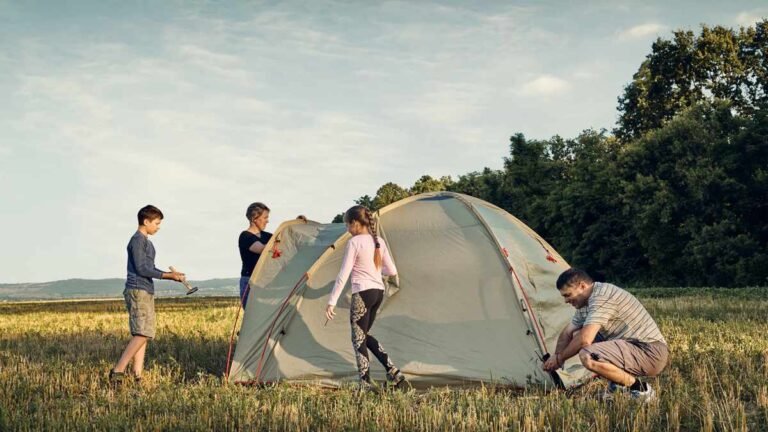
Orient for wind and drainage. Angle the door away from the prevailing wind so gusts don’t push rain inside when you unzip it, and if the ground tilts, put your head on the uphill side. If it’s already raining when you arrive, walk the site first — you’ll see exactly where water runs and pools.
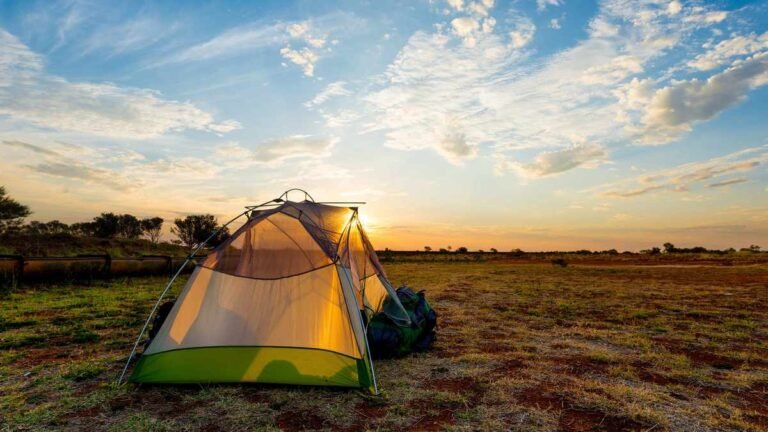
Your tent matters enormously in sustained rain: a full-coverage fly reaching close to the ground, a bathtub floor, and sealed seams will handle weather that destroys a cheap tent. If yours is a few seasons old, test it before the trip — set it up in the backyard and hit it with the hose. Our best camping tents for Australia guide covers what to look for in a genuinely weatherproof shelter.
Keep Your Gear Dry: Camping in the Rain Tips for Packing
The rain isn’t what gets your gear wet — you are. Every opened door, every damp jacket dragged inside imports the weather. Staying dry is a discipline, not a purchase.
Pack like it’s already raining. Line packs and tubs with heavy-duty garbage bags or dry bags before leaving home — even “waterproof” bags leak at zips in sustained rain. Clothes in one dry bag, electronics in another, sleeping gear in a third. Anything that must stay dry gets its own waterproof layer.
Run a wet/dry divide. The tent vestibule is your airlock: wet jackets, muddy boots and damp packs live there, never inside the inner tent. The moment wet gear migrates inside, everything feels damp and morale slides.
Manage condensation like a leak. Half of what campers call “a leaking tent” is condensation — breath and body heat hitting the cold fly and dripping back. Keep vents and a window cracked even in rain; a little spatter beats waking up in a dripping tent. And never cook inside the tent — beyond the carbon monoxide risk, a stove pumps moisture into the air.
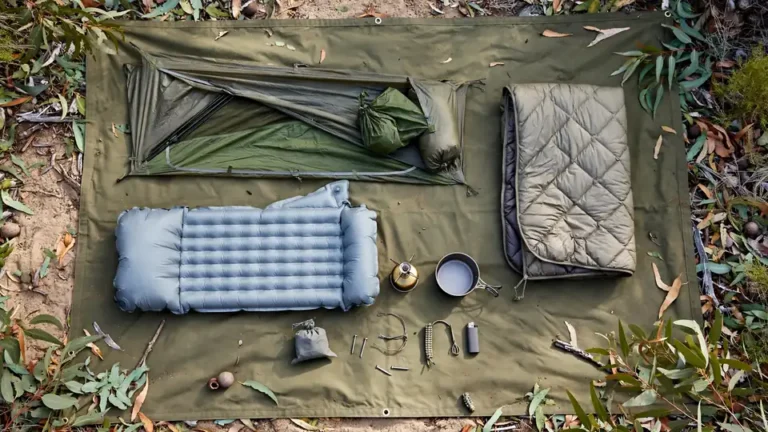
Keep a wet kit ready. Rain jacket, rain pants, a full change of clothes sealed in a dry bag, a headlamp — packed where you can grab them without thinking when the storm hits. A cord strung under your tarp doubles as a drying line, and microfibre towels soak up far more water than cotton.
Cooking in the Rain: Hot Food Saves Trips
Cold, wet and hungry is the combination that ends trips. Hot food and drinks are morale infrastructure — they warm you from the inside and give everyone something to gather around. Protecting your ability to cook is non-negotiable.
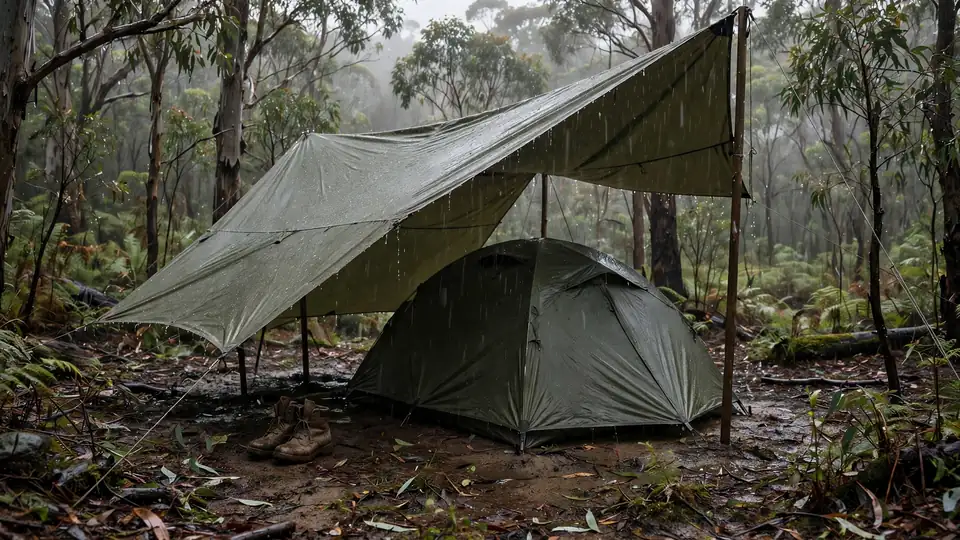
Build a dry kitchen. A tarp rigged over your cooking area — high enough to stand under, angled for runoff — is the best wet-weather investment after a good tent. Rig it before the rain starts. A camp kitchen shelter at a holiday park does the same job for free.
Gas beats fire in the wet. Even where campfires are allowed, lighting one in sustained rain is an exercise in frustration. A gas stove lights in seconds in any weather. Keep a windbreak around it; wind kills both flame and fuel efficiency.
Cook one-pot. Stews, curries, pasta — food that cooks in one vessel, serves fast and reheats well. Plan meals needing minimal prep in the rain, and keep snacks accessible: when everyone’s damp, the gap between meals feels twice as long. Guard your drinking water containers under cover, and keep lighters and matches in a sealed dry bag — they’re useless once wet, exactly when you need them most.
When Everything Is Wet: Staying Warm
Sooner or later, something you wanted dry isn’t. The skill is managing it so one wet item doesn’t cascade.
Protect your sleep system at all costs. A damp sleeping bag loses insulation fast. Pack it in its own dry bag, keep it off the tent floor — a mat with good insulation helps on cold, wet ground (see our sleeping mat guide) — and air it at the first break in the weather.
Change into dry clothes to sleep. Never sleep in the clothes you wore in the rain. Keep one set of sleep clothes sealed in a dry bag and treat them as sacred; dry socks before bed alone can transform a night.
Eat and drink warm. Your body burns more energy staying warm in cold, wet conditions — this is not the trip to skip dinner. A thermos filled in the morning gives you hot water all day without firing up the stove in the rain.
Look after your feet. Wet boots and socks all day lead to blistered feet. Rotate socks, stuff boots with newspaper overnight to draw out moisture, and air your feet at every break. Pack tent-bound entertainment too — cards, a book, a downloaded podcast. The best wet-trip memories are made in a dry tent listening to rain on the fly, but only if someone brought the cards.
When to Bail: Floodwater, Creek Crossings and Storms
Gear and technique have limits, and recognising them is a skill, not a failure.
Never drive through floodwater. Floodwater hides washed-out road surfaces, and it takes surprisingly little depth and flow to sweep a vehicle away. If you can’t see the road surface through the water, don’t cross — turn around. The same applies on foot: never attempt a creek running high, fast or discoloured after rain. Wait it out.
Watch the water around camp. If creeks are rising, water is pooling where it wasn’t an hour ago, or heavy rain is forecast upstream of your gully or floodplain site — move to higher ground, and to the car and out if it keeps coming. Flash flooding can arrive from rain that fell far away, under a clear sky above you.
Lightning protocol. Tents offer no protection from lightning. In a severe electrical storm, shelter in a hard-topped vehicle with windows closed — not the tent, not under a tree. Wait thirty minutes after the last thunder before going back out.
Know the numbers. For flood or storm emergencies the SES number is 132 500; for life-threatening emergencies it’s Triple Zero (000), and the Emergency+ app gives the operator your exact GPS coordinates. Save both before the trip, not during it.
The bail decision. Bail when a severe weather warning covers your area, water is rising near camp, the access road is cut, or anyone is cold, wet and not recovering. Packing up in the rain for an hour beats being stranded. No shame in it — the campsite will be there next weekend.
Drying Out: The After-Trip Routine That Saves Your Gear
Packing a wet tent into its bag and forgetting it is how tents grow mould and lose waterproofing. An hour of aftercare saves hundreds in replacement gear.
Air everything within 24 hours. Pitch the tent in the backyard or drape fly and inner separately over a line — mould starts in folds where damp layers touch. Air sleeping bags inside-out, and never store them compressed while damp.
Clean, inspect, repair. Brush mud off the tent, wipe down poles, wash cooking gear properly. Wet trips expose weaknesses — a weeping seam, a sticking zip, a pinhole in the groundsheet. Fix them now while you remember, and reproof the fly if water has stopped beading.
Store it right. Tent loosely packed in a cool, dry place; sleeping bag in its large storage sack, not the compression sack. Do this and your gear comes out next trip ready to go. Our Australian camping checklist includes a post-trip section so nothing gets skipped when you’re tired and everything’s damp.
Frequently Asked Questions
Is it safe to camp in the rain in Australia?
Normal rain, yes — with the right shelter and site selection. The line is severe weather: a severe thunderstorm warning, flood watch or damaging winds means postponing. Never camp in creek beds or floodplains during storm season, and never drive through floodwater.
How do I keep my tent dry in heavy rain?
Choose slightly elevated, well-draining ground away from creek beds. Keep the fly full-coverage and tensioned, guy ropes pegged out, and vents open to fight condensation. Store wet gear in the vestibule and rig a tarp overhead for an extra dry area.
What should I pack for camping in the rain?
A rain jacket and rain pants, dry bags to waterproof pack contents, a tarp with cord for a dry kitchen, a full change of dry clothes in a sealed bag, microfibre towels, extra socks, a headlamp, and a gas stove.
How do you cook when camping in the rain?
Rig a tarp over your cooking area before rain starts and cook on a gas stove. Keep meals simple and one-pot, keep hot drinks coming, and never cook inside the tent — carbon monoxide and condensation risks.
When should I cancel a camping trip because of rain?
When a severe thunderstorm warning, flood watch or damaging wind warning covers your area; when water is rising near camp or the road is cut; or when someone is cold and wet and not recovering. The SES number for flood and storm help is 132 500.
How do I dry my tent after camping in the rain?
Air it within 24 hours — drape fly and inner separately so no damp folds touch. Brush off mud, repair damage, re-seal weeping seams, and store loosely packed in a cool, dry place. Never leave a wet tent packed until the next trip.