Swag vs Tent
Disclosure: We may earn a small commission if you purchase through our links, at no extra cost to you.
The swag vs tent debate is one of Australian camping’s great arguments, right up there with canvas versus nylon and gas versus fire. Ask in any campground and you’ll get passionate answers on both sides — usually from people who’ve only ever used one of them. The honest answer is that neither is better in any absolute sense; they’re different tools for different trips, and plenty of experienced campers own both.
This guide gives you the straight comparison: what each one actually is, how they stack up on setup, comfort, weather protection, space and cost, and — most usefully — which one suits the way you camp. For detailed product picks, see our best swags roundup and best tents roundup.
What exactly is a swag?
A swag is Australia’s original portable bed: a heavy canvas bedroll with a built-in foam mattress, that unrolls on the ground and props up with a couple of poles to give you headroom. The modern dome swag — pioneered by Darche in the 1990s — adds insect mesh, storm flaps and enough internal space to sit up. You sleep inside it directly, usually in your sleeping bag, with your pillow at the head end.
The classic swag experience: unroll, insert two poles, done. You’re sleeping in under two minutes. There’s no separate bedroom and living room, no standing up, no changing clothes with dignity — it’s a bed with a roof, and gloriously simple because of it. Traditional swags trace back to 1800s shearers and miners; the modern canvas dome version is the direct descendant.
What exactly is a tent?
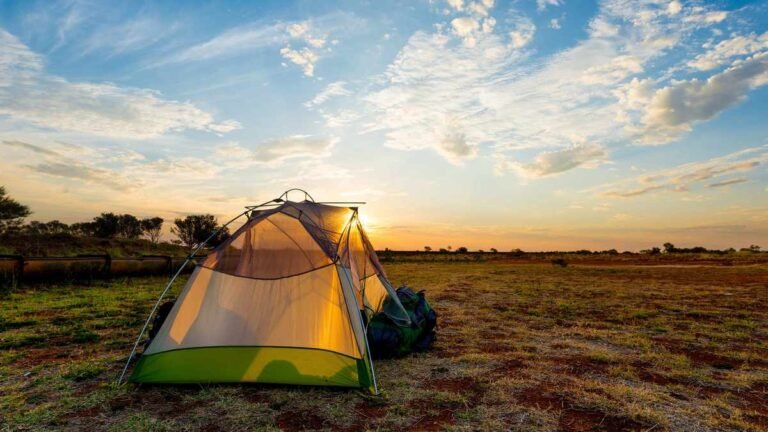
A tent is a freestanding shelter with floor space you can move around in — sit up, get dressed, wait out rain, store gear. Modern family and touring tents add vestibules, awnings, blackout fabric and standing headroom. A tent separates “bedroom” from “living space” in a way a swag fundamentally can’t.
The trade-off is complexity: poles, pegs, guy ropes, flysheets, and setup times from two minutes (instant tents) to half an hour (big canvas tourers). Tents also pack bigger and need more campsite space.
Head-to-head: swag vs tent
Setup and pack-down speed
Winner: swag, by a mile. A dome swag unrolls and takes two poles — genuinely under two minutes, and pack-down is just rolling it up. Even the fastest instant tents need pegging and flysheet work that takes longer. If you’re arriving at camp after dark or moving every single day, nothing beats a swag for sheer speed.
Sleeping comfort
Winner: swag, for sleeping itself. The built-in 70mm high-density foam mattress in a quality swag (like the Darche Dusk to Dawn range) is more comfortable than most airbeds and self-inflating mats campers pair with tents. Canvas breathes, so you don’t get the clammy condensation of nylon tent inners. Many campers report their best outdoor sleep ever is in a swag.
The catch: getting in and out. You’re crawling into a low opening and wriggling into a sleeping bag in a confined space. For anyone with bad knees, a bad back, or over about 60, this gets old fast. Tents let you sit on a stretcher or airbed and swing your legs around like a normal human.
Weather protection
Winner: tent, for sustained bad weather. A good swag handles rain fine — quality canvas with storm flaps keeps you dry in normal downpours. But a swag is a place to sleep, not a place to live. When a storm parks over camp for six hours, tent campers cook dinner under the awning, play cards and stay sane. Swag campers lie in a canvas tube reading by headtorch and hoping it passes.
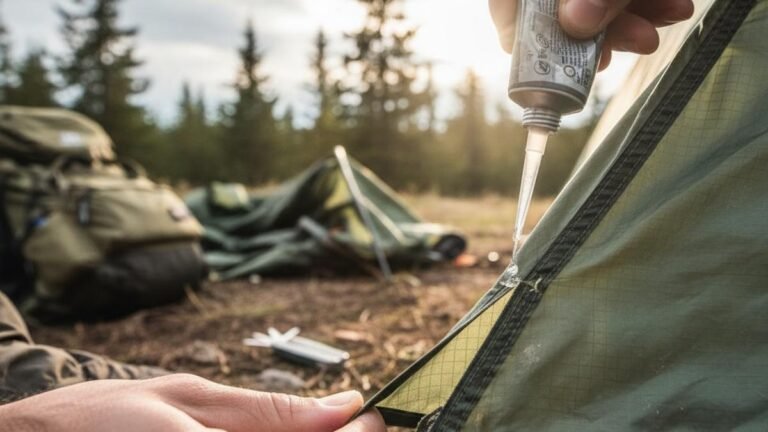
Canvas swags need “seasoning” (wetting and drying) before first use to seal the weave — skip this and your first rain will find every stitch hole. Tents need seam sealing too, but the process is more familiar to most buyers.
Space and liveability
Winner: tent, overwhelmingly. This is the tent’s home turf. Standing headroom, room to dress, space for kids to play when it’s raining, somewhere to keep bags dry, a vestibule for muddy boots. A swag gives you a bed. If your camping involves more than sleeping — and family camping always does — a tent wins.
Weight and packed size
Winner: swag, for solo travellers. A single dome swag packs to roughly 90cm x 40cm and weighs 10–14kg — it fits across a ute tray, on a roof rack, or even strapped to a motorbike. A comparable tent plus mattress plus sleeping bag takes more space and more bags. For touring where every litre of cargo space counts, swags are brilliantly efficient.
Versatility
Winner: tent. Tents work for couples, families, tall people, bad backs, long stays and base camping. Swags work brilliantly for one specific thing — a solo sleeper (or cosy couple in a double) moving regularly. A tent can do 80% of what a swag does; a swag can’t do 50% of what a tent does.
The honest drawbacks nobody mentions
Swag condensation is real. You’re breathing into a small canvas space all night; without the vents open you wake up damp. Experienced swag campers sleep with head and foot vents cracked even in cool weather — which rather undermines the warmth.
Swag claustrophobia affects more people than admit it. If you’ve never slept in one, borrow or hire before buying. Some people love the cocoon; others last one night.
Tent faff is the tent’s equivalent skeleton: poles, pegs, flys, guy ropes, and the 20-minute pack-down when it’s wet. The bigger the tent, the bigger the faff — which is why tourers who move daily often end up in swags or rooftop tents.
Cost comparison: real numbers
A quality single dome swag (Darche Dusk to Dawn 900) is $579; the king-single 1100 is $629 and the double 1400 $679. Add a stretcher underneath ($150–$250) for the deluxe setup and you’re at $730–$930 for a superb solo sleep system that lasts a decade.
A comparable tent setup: BlackWolf Turbo Lite 300 at $999.99 plus a self-inflating mat ($100–$200) plus a sleeping bag ($100–$300) lands at $1,200–$1,500. A budget tent setup (OZtrail Fast Frame 6P at $245 + mat + bag) can come in under $600 — cheaper than a premium swag, but a very different experience.
Per person, swags are usually cheaper for solo campers and dearer for couples (two swags vs one tent). For families, tents win on cost every time.
When a swag is the right choice
Choose a swag if: you camp solo or as a couple; you move camp most days (touring, 4WD trips); you arrive late and leave early; you value sleep comfort above all; your vehicle space is tight; you’re camping in fair weather or short trips. The classic swag camper is the solo tourer doing a lap — up at dawn, rolling the swag in five minutes, gone.
Swags also suit tradies and workers doing remote stints, motorbike tourers, and anyone who finds tent setup genuinely annoying. If the faff of tents is what’s stopping you camping more, a swag removes the barrier.
When a tent is the right choice
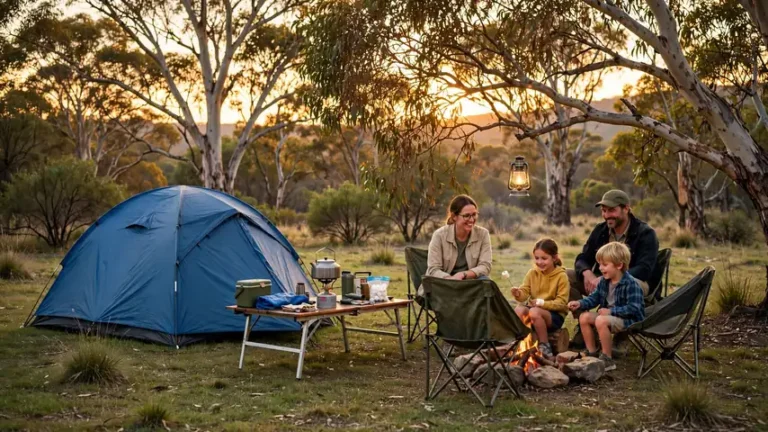
Choose a tent if: you camp with kids; you stay multiple nights in one spot; anyone in the group has mobility issues; you camp in shoulder seasons with unpredictable weather; you want living space, not just sleeping space; you’re on a tight budget (budget tents undercut budget swags). The classic tent camper is the family at the beachside caravan park for a week — and there’s not a swag in sight, for good reason.
The hybrid setups experienced campers use
Here’s what the debate usually misses: plenty of campers use both. The most common hybrid is swag on a stretcher under a tarp or awning — you get the swag’s sleep comfort and speed, plus covered living space for bad weather. A 3x3m tarp or the awning off your 4WD does the job.
Another popular combo: tent for base camp, swag for overnights. Families pitch the big tent for a week but dad takes a swag for the solo fishing overnighter. Or the reverse that tourers love: rooftop tent for the adults, swags for the kids on the ground — everyone sleeps well and setup stays fast.
The stretcher-swag combo deserves special mention: a swag on a camp stretcher gets you off the ground (warmer, easier in/out, no rocks in your back) and is many grey nomads’ permanent setup. Just make sure the stretcher width matches the swag — a 900mm swag wants a single stretcher, not a king single.
The verdict
Buy a tent first. For most Australians getting into camping — especially families — a tent is the versatile, forgiving choice that handles the widest range of trips. Start with a good instant or fast-frame tent and you’ll camp happily for years.
Add a swag second. Once you’re camping regularly and find yourself wishing setup was faster, or you’re planning solo touring trips, a quality canvas swag is one of the best upgrades in camping. It’s the specialist tool you reach for when the trip suits it.
The campers who argue loudest for one side usually haven’t tried the other properly. Try both — hire a swag for a weekend before committing — and you’ll know within two nights which one is yours.
Swag vs tent for specific trips
Beach camping (a week, family): tent, no contest. You need shade, space, somewhere for sandy kids — a swag is a bed in the sun. Solo fishing overnighter: swag. Arrive late, unroll, sleep, gone at dawn. The big lap (months, couple): most end up with both — a touring tent or rooftop tent as base, swags for quick overnights. Festival camping: cheap tent. Swags are too nice to leave in a festival field and too small for the chaos. Motorbike touring: swag — it straps to the bike and nothing else packs that small for the comfort. Winter camping: tent (with room for gear and a vestibule for cooking) or a canvas swag with ventilation managed — both work, but the tent is more forgiving.
For full specifications on the benchmark dome swag referenced throughout this guide, see Darche’s Dusk to Dawn specifications — the 420gsm canvas, 70mm mattress and trigger-lock ridge pole show what a quality swag looks like on paper.
The cost of getting it wrong
Buy a swag when you needed a tent: you discover it on night two of a rainy family trip, lying in a canvas tube with restless kids and nowhere to go. Buy a tent when you needed a swag: you discover it at 9pm after a 700km driving day, wrestling poles by headtorch while swag campers are already asleep. The wrong choice doesn’t just cost money — it costs trips. When in doubt, hire first: many camping stores hire swags for weekends, and a $60 hire that answers the question is the cheapest research you’ll ever do.
Frequently asked questions
Is a swag warmer than a tent?
Generally yes. The heavy canvas, small air volume and thick foam mattress hold warmth better than a nylon tent. But you must ventilate to manage condensation — a sealed swag gets damp, not warm.
Can two people sleep in a swag?
Yes — double swags (1400mm wide, e.g. Darche Dusk to Dawn 1400 at $679) sleep two. It’s cosy rather than spacious. Couples who need elbow room are usually happier in a tent.
Do swags leak in rain?
Quality canvas swags don’t leak in normal rain once seasoned (wetted and dried 2–3 times before first use). In prolonged heavy rain, water can eventually find stitching — pitch with storm flaps closed and avoid hollows where water pools.
Are swags good for tall people?
Most single swags are 200–210cm long internally, so anyone under 190cm fits. Tall campers should check internal length carefully and consider a king-single or double swag for extra room.
How long does a canvas swag last?
A quality canvas swag lasts 10–15 years with basic care: dry it completely before storing, never pack it away wet, and re-proof the canvas every few years. Cheap swags with thin canvas may last 3–5 years.
← Back to our complete guide: Best Camping Tents Australia 2026