Solo Camping Safety Australia: A First-Timer’s Guide
Disclosure: We may earn a small commission if you purchase through our links, at no extra cost to you.
Solo Camping Safety Australia: A First-Timer’s Guide
Camping alone in Australia is one of the best ways to clear your head: a quiet campsite, a fire, nobody else’s schedule. It is also the one kind of camping where nobody is there to notice if something goes wrong. Solo camping safety Australia is not about being fearless — it is about planning so carefully that the trip feels easy. Tell someone where you are going, pick a campsite that suits a first solo trip, pack a kit that covers the likely problems, and know what you will do if the car will not start or the weather turns. This guide walks through each of them in order, so a first-timer can plan a solo trip with confidence.
Solo Camping Safety Australia Starts Before You Leave
The most important safety step on a solo trip happens at home, before the car is packed. Tell a trusted person exactly where you are going, which campsite you have booked, when you expect to arrive and when you expect to be home — and agree that they will raise the alarm if they do not hear from you by the agreed time. Leave the same details in writing: a note on the fridge, a text message, or a shared note on your phone. If your plans change on the road, send an update. On a group trip someone else notices a missed check-in; alone, that person is the friend or family member back home.
Check phone coverage for the area before you go. Much of regional Australia has patchy or no mobile reception, and a campsite that looks close to town on a map can sit in a dead zone. Download offline maps for the whole route, and save the campsite’s address and the nearest town’s details on your phone. If you are heading somewhere remote — an outback track, a desert campground, a long stretch with no towns — a personal locator beacon is worth carrying. Hire one if you do not own one; many outdoor shops and visitor centres hire them out. It is a small device with one job, and on a solo trip that job matters.
Service the car before a solo trip, not after a breakdown. Check tyres including the spare, oil, coolant and fuel, and carry enough water for yourself and the car. A solo driver cannot send a passenger to walk for help, so a breakdown alone is a bigger problem than the same breakdown with a group. Keep your fuel tank above half on remote roads and know where the next fuel stop is. The outback safety and breakdown guide covers vehicle preparation in detail if your first solo trip heads beyond the sealed roads.
Choose the Right Campsite for Your First Solo Trip
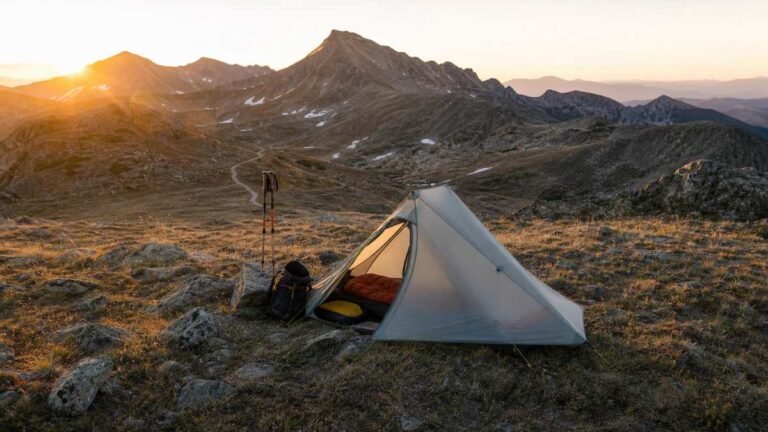
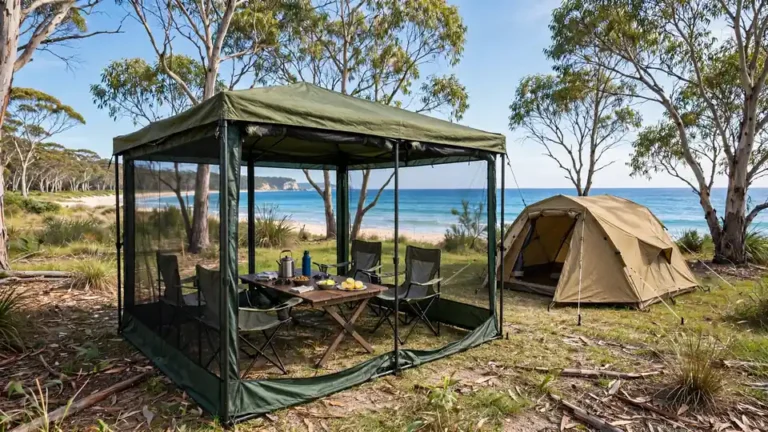
Your first solo trip should not be your most remote trip. Pick a booked campground with a camp host, a ranger station or other campers nearby — a national park campground, a state forest site or a small holiday park. There are people around if you need help, and you are not the only person in the valley. Save the wild, unbooked campsites for a later trip, once you know how you sleep alone in a tent. A first solo trip is a test of the routine, not of your endurance.
Arrive in daylight. This is the single best habit for solo camping safety in Australia, and it costs nothing. Arriving with two or three hours of light left gives you time to pick a good site, pitch the tent properly, cook dinner and find the toilets and water — all without rushing. Arriving after dark means pitching a tent you cannot see properly and starting the trip tired and stressed. Plan for a mid-afternoon arrival, and if the drive runs long, stop at the nearest town rather than pushing on to a dark campground.
When you arrive, take a slow walk around the campground before you set up. Note where the toilets are, where the water tap is, where the camp host or ranger is, and which sites have neighbours. Pick a flat site, clear of dead branches, and not in a dry creek bed or a dip that could fill with water in rain. Introduce yourself to a neighbour or the camp host — a quick hello is enough. On a solo trip, being a known face at the campground is a quiet safety net: someone will notice if your tent is still zipped up at midday.
Your Solo Camping Safety Kit
A solo camper’s kit is a group camper’s kit with the safety items doubled: two ways to make light, two ways to start a fire, and a first aid kit you actually know how to use. Pack a headlamp and a spare torch with fresh batteries, plus a lantern for the campsite. A headlamp matters more alone than in a group, because every night task — cooking, a toilet trip, checking a noise — is done by you, hands-free, in the dark. Our best headlamps guide covers brightness and battery life if you are buying your first one.
Water is the next non-negotiable. Carry more than you think you need, and know before you go whether the campground has drinking water — many bush campgrounds have tank water that must be treated, or no water at all. Carry a separate drinking supply and a way to treat water, such as purification tablets or a filter. The same goes for food: pack a day’s extra beyond the trip length, in case a road closes or the car will not start. A solo camper who runs out has no one to borrow from, so the margin has to come from your own packing.
Your first aid kit should cover the injuries that actually happen while camping: cuts, burns, blisters, insect bites, sprains and sunburn. Include dressings, a pressure bandage, antiseptic, burn gel, blister plasters, tweezers, pain relief and antihistamines, plus personal medication with a day to spare. A portable power station or charged power bank keeps your phone alive for navigation and emergency calls; a dead phone alone is a safety problem, not an inconvenience. Read the healthdirect first aid guide before you go.
Staying Safe at Camp Alone
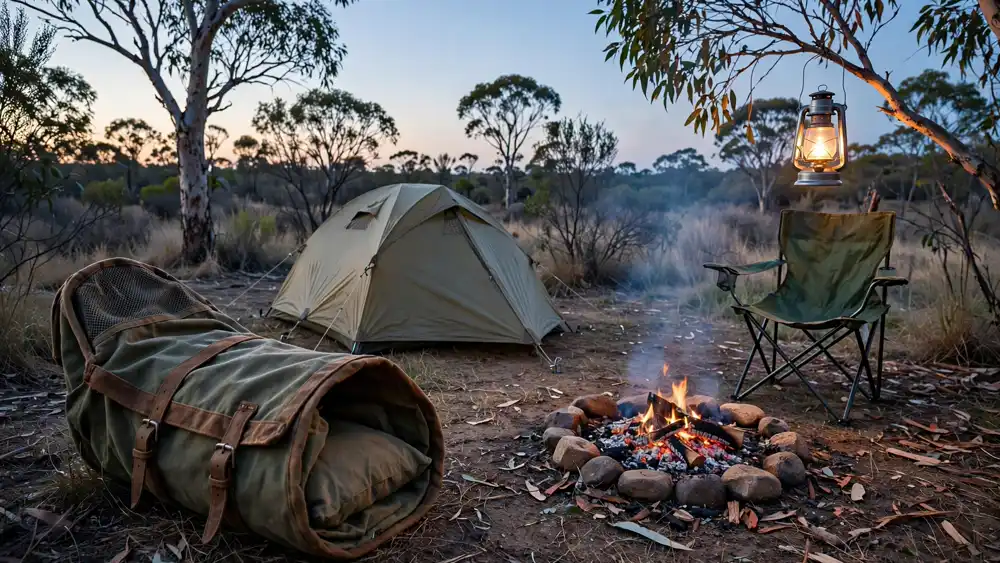
Once the tent is up, solo camp safety is mostly routine. Keep the campsite tidy: food in sealed containers or in the car at night, rubbish bagged and stored away from the tent, and nothing edible left out. Australian campgrounds attract curious wildlife after dark — possums, wallabies, goannas and, in the north, crocodiles near water — and a tidy camp keeps them moving past. Never feed wildlife, and never store food inside your tent. If you are camping in the north, check the local crocodile warnings before you go near any waterway; the rules are there because the risk is real.
Snakes are part of camping in Australia, and the safety rules are simple: wear closed shoes after dark, use a torch on every night walk, stay on clear paths, and never put a hand or foot somewhere you cannot see. If you see a snake, give it room and let it move on. Our snake safety guide covers what to do in more detail, including what to do if someone is bitten. Keep your tent zipped at all times when you are not in it — a closed tent keeps out snakes, spiders, insects and rain in equal measure.
Driving and Road Safety on a Solo Trip
Most solo camping trips involve more driving than group trips, because one person does all of it. Plan driving days of no more than four or five hours, and stop every two hours to stretch, drink water and check the car. Fatigue is the biggest road risk on a camping trip, and it builds quietly. If you catch yourself yawning, drifting or missing turn-offs, pull over and rest: a twenty-minute nap is worth more than an hour of pushing on, and there is no passenger to take the wheel.
What to Do When Something Goes Wrong
Every solo trip needs an emergency plan, and the plan is simple: stop, think, then act. If you are injured, treat the injury first, then call for help — 000 is the emergency number Australia-wide, and it works from a mobile even with no credit and, on some networks, even without a SIM. If you have no signal, move to higher ground or the nearest road and try again; if you carry a personal locator beacon, activate it. Stay where you are once you have called for help: moving around makes you harder to find.
If the car breaks down, stay with the car: it is shelter, it holds your water and food, and it is far easier to find than a person on foot. Put the bonnet up, conserve your phone battery, and wait. If the weather turns — a storm, a flood, extreme heat — change the plan rather than pushing through. A solo camper’s best skill is not toughness; it is the willingness to turn back or come home a day early. The campground will still be there next month.
Before your first solo trip, read our camping for beginners guide for the full packing routine, and pick a tent you can pitch alone in the dark — our best camping tents guide notes which models are genuinely one-person jobs. Then choose a campsite, tell someone the plan, and go. The first night alone in a tent is the hardest part; by the second night it feels normal.
Solo Camping Safety Australia: FAQs
Is solo camping safe in Australia?
Yes, with planning. Solo camping safety Australia comes down to four habits: telling someone your plan and check-in time, choosing a booked campground with other people nearby for your first trips, carrying a first aid kit and a way to call for help, and arriving in daylight. The risks — breakdowns, injuries, weather — are the same as group camping; the difference is that you plan for them in advance instead of relying on someone else to notice.
What should a solo camper tell someone before leaving?
Leave your destination, the campsite name, your expected arrival and return times, your vehicle details and your check-in arrangement with a trusted person, in writing. Agree that they will raise the alarm if they do not hear from you by the agreed time. If your plans change on the road, send an update so the person back home always has your current location.
Do I need a personal locator beacon for solo camping?
Not for a booked campground near a town, where a mobile phone is usually enough. For remote trips — outback tracks, desert campgrounds, long stretches with no towns or phone coverage — a personal locator beacon is strongly recommended, and you can hire one from outdoor shops and visitor centres. It is a one-button device that calls for rescue when there is no phone signal.
What is the safest first solo camping trip?
A one- or two-night stay at a booked national park campground or small holiday park within a few hours of home, arriving in daylight. Pick a site with a camp host or ranger nearby, other campers around, drinking water and toilets. It tests your tent, your kit and your night routine without testing your self-reliance in a remote place.
What should I do if my car breaks down alone on a camping trip?
Stay with the car — it is shelter, it holds your water and food, and it is far easier to find than a person on foot. Put the bonnet up, call 000 or roadside assistance if you have signal, conserve your phone battery, and wait. Walk out only if you are certain of the distance and direction, the weather is safe, and you have water with you.