Tent Maintenance
Disclosure: We may earn a small commission if you purchase through our links, at no extra cost to you.
A $1,000 tent that’s neglected lasts five years. A $300 tent that’s maintained lasts ten. Tent maintenance isn’t complicated — it’s just a handful of habits, done consistently, that prevent the five things that actually kill tents. Most campers do none of them, then blame the tent when it fails. This guide is the complete system: what destroys tents, how to clean properly, zip and pole care, storage, and a seasonal checklist.
If your tent is already leaking, start with our waterproofing guide; if something’s broken, tent repair covers fixes. This guide is about prevention — the stuff that means you never need those.
The five things that kill tents
Ranked by how many tents they destroy:
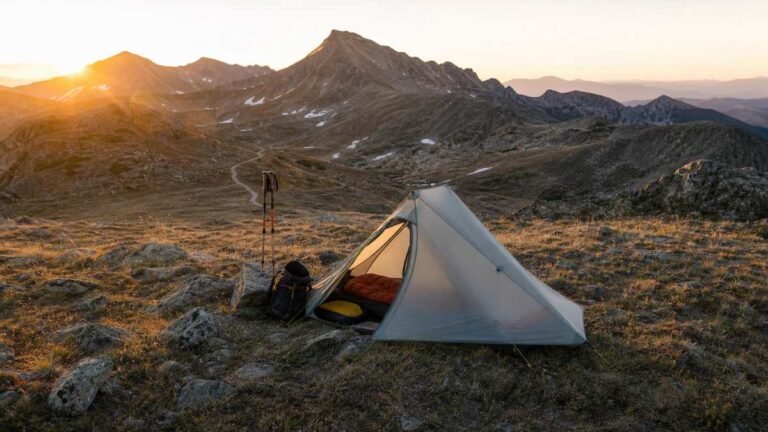
1. UV exposure. The #1 killer, and it’s not close. Ultraviolet breaks down polyester and nylon flys — the fabric goes chalky, then brittle, then tears along fold lines. A tent left pitched for a month in Australian summer ages more than a tent used for twenty weekends and stored properly. Canvas resists UV far better (see canvas vs nylon), but even canvas fades and weakens eventually.
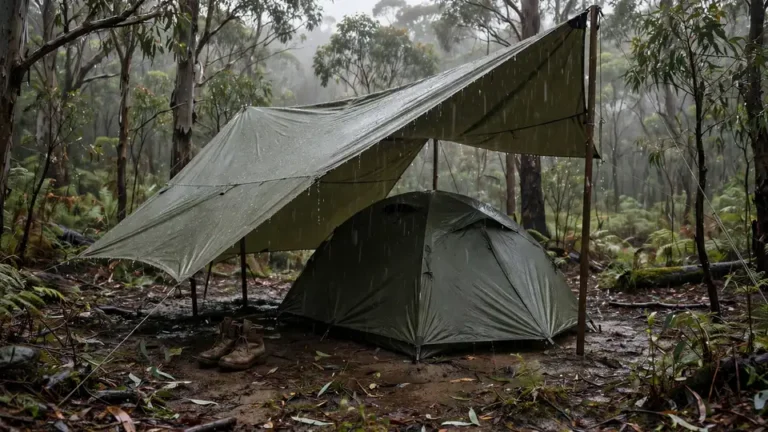
2. Packing away wet. Moisture + darkness + time = mould, mildew and delaminating PU coatings. A tent packed damp for a week can be ruined; packed damp for a month is often write-off. This is the most common cause of “my tent smells and the coating is flaking” — and it’s entirely preventable.
3. Dirt in zips. Zips are the most-used moving part and the most common failure point. Outback dust, sand and salt grind the teeth and sliders until they jam, split or separate. A $5 zip care routine prevents a $200 fly replacement.
4. Pole damage. Forcing bent poles, packing poles wet (corrosion), and letting shock cord go slack until sections separate mid-pitch. Poles are replaceable, but a failed pole in the field ruins a trip.
5. Abrasion. Dragging the tent across rough ground, pitching on sharp sticks without a footprint, stuffing it into the bag with pegs loose inside. Small cuts become big tears under wind load.
Cleaning your tent properly
The right way to wash
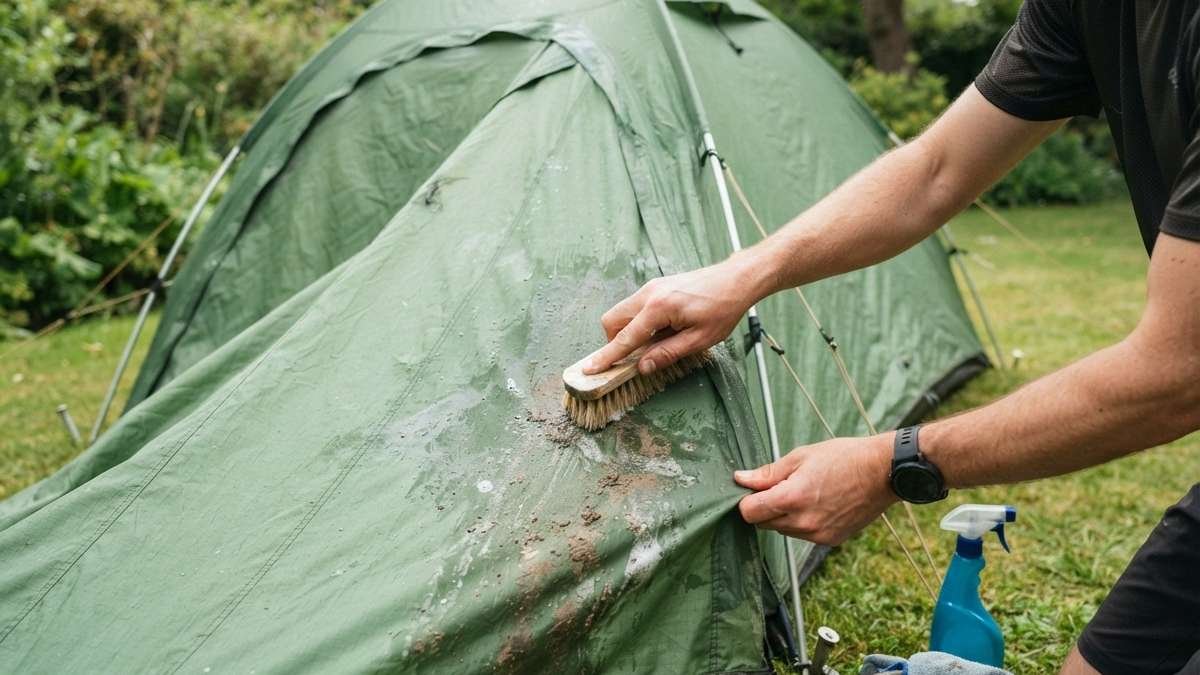
Pitch the tent (or hang the fly), and wash with lukewarm water and a tiny amount of pure soap — not detergent, not washing powder, definitely not bleach. Detergents strip DWR coatings and damage PU layers. Use a soft sponge or cloth, work gently, and rinse thoroughly. Soap residue left in fabric attracts dirt and degrades coatings.
For the floor, a soft brush on stubborn dirt is fine. For sap or bird droppings, soak first — never scrape. Rinse until the water runs clear and no soap slick remains.
What never to do
Never machine-wash a tent — the agitation destroys coatings and can tear mesh. Never pressure-wash — it drives water through seams and damages fabric. Never use hot water — it softens PU coatings. Never dry-clean. These sound obvious, but every one of them has killed a tent.
Drying
Dry in shade with good airflow — not in direct sun (UV + heat stress the fabric while wet). Make sure it’s completely dry before packing: feel the seams, the corners, inside the stuff sack. “Nearly dry” grows mould. If you must pack damp (rain on pack-down day), unroll it at home within 24 hours — set a phone reminder, because “I’ll do it tomorrow” becomes next month.
Zip care: the five-minute job that saves tents
Clean zips after every dusty, sandy or coastal trip: run a soft brush along the teeth to remove grit, then work the slider back and forth. Apply a zip lubricant (paraffin wax, candle wax, or silicone zip lube — not oil, which attracts dirt) to the teeth twice a year.
If a zip starts separating behind the slider, the slider has worn loose — squeeze it gently with pliers to tighten, or replace the slider (cheap, and easier than replacing the zip). Never force a jammed zip; back it up, clear the fabric caught in it, and work it gently. Forcing a zip is how teeth get ripped out.
Pole care
Shock-corded poles: don’t let sections snap together — guide them. This prevents cracks at the ferrules. If the shock cord goes slack (poles separate too easily), re-cord it — replacement cord is cheap and the job takes 20 minutes with a YouTube tutorial.
Aluminium poles: wipe down after coastal trips (salt corrosion), check for cracks at the joints annually. Fibreglass poles: check for splintering — a splintered pole is a failure waiting to happen; replace the section. Store poles dry and loosely, not compressed.
Storage: where tents go to live or die
Cool, dry, dark. A garage shelf beats a garden shed (heat), which beats a car boot (heat + UV + crushing). Store the tent loosely — not compressed in its stuff sack. Long-term compression weakens coatings and sets permanent creases. An old pillowcase or mesh bag is ideal.
Store poles separately if possible, fully assembled or loosely bundled — not folded tight for months. Keep pegs in their bag (loose pegs puncture packed tents). Throw a silica gel pack in if your storage is humid.
Every six months in storage, air the tent out for a day. It takes ten minutes and prevents the slow moisture damage that ruins stored tents.
Canvas tent maintenance
Canvas needs everything above, plus: season new canvas (2–3 wet/dry cycles) before first use; never pack wet — canvas moulds faster than synthetic and rot is irreversible; re-proof every few years with canvas reproofer when water stops beading; and brush off (don’t hose aggressively) for routine cleaning. Never fold canvas along the same lines every time — vary the fold to avoid wear lines.
Seasonal maintenance checklist
Before the camping season: pitch the tent and inspect — fly for UV damage and thinning, seams for cracked sealer, zips for smooth operation, poles for cracks, pegs for bends. Hose-test for leaks. Lubricate zips. Replace anything worn now, not at the campsite.
After each trip: shake out dirt and sand, brush zips clean, check for damage, and dry completely before storing — even if it “didn’t rain” (dew and condensation count).
End of season: full wash, seam check, zip lube, pole inspection, then loose storage. Note anything to replace before next season while it’s fresh in your mind.
Pest damage: mice, insects and cockatoos
Tents stored in sheds and garages get eaten. Mice and rats: chew through tent bags and fabric for nesting material — and their urine destroys coatings. Store tents off the ground, in sealed plastic tubs if rodents are a problem, and never with food residue inside. Insects: ants and cockroaches nest in stored tents; a shake-out and clean before storage prevents it. Silica gel packets in the storage bag deter moisture-loving insects. Cockatoos: yes, really — in some areas cockatoos chew guy ropes, peg bags and even tent fabric left in carports. Store gear where birds can’t reach it. The signs: droppings in the bag, chewed straps, mysterious holes. Prevention: clean gear, sealed containers, off the ground, regular checks. A tent destroyed by mice in storage is the most preventable loss in camping — and one of the most common.
Mould remediation: when it’s not too late
Surface mildew (musty smell, small dark spots, fabric still strong): pitch the tent, scrub with diluted white vinegar or a tent-specific cleaner, rinse thoroughly, and dry completely in shade with airflow. This works — the tent will be fine. Deep mould (large black patches, fabric weakened, persistent smell after cleaning): the fibres are damaged. You can clean it, but the tent’s strength is compromised — retire it from serious use. What doesn’t work: bleach (destroys fabrics and coatings), pressure washing (drives mould deeper), or ignoring it (it spreads). Prevention recap: dry before storing, store loosely, air every six months. Every mouldy tent is a storage failure, not a manufacturing failure.
For manufacturer care guidance as a reference point, see BlackWolf’s tent care information — the rinse, dry-before-storage and reproofing advice applies to all synthetic tents.
When professional repair makes sense
Some repairs are worth paying for: zip replacement ($50–$100 at a canvas repairer or gear shop) on an otherwise good tent; large canvas repairs — sailmakers do superb work; pole replacement when sections are unavailable retail. The math: if the repair costs less than a third of replacement and the tent has years of life left, repair professionally. If it costs half or more, replace. Find repairers through camping stores (many offer or recommend services), sailmakers (for canvas), and outdoor gear repair specialists in capital cities. A $80 professional zip replacement on a $1,000 tent is obvious; on a $130 tent, it’s not — match the repair investment to the tent’s value.
Storing tents in small spaces
No garage? No problem — tents store fine in apartments with the right approach. The enemies are the same: heat, moisture, compression and pests. Best spots: under the bed (cool, dark, out of the way), on top of a wardrobe (heat rises — avoid if the flat gets hot), or in a storage cage on the balcony (only if fully weatherproof — damp kills). Breathable bags: ditch the stuff sack for storage — use the mesh storage sack or an old pillowcase. Small-space trick: hang the tent in its bag on a hook inside a cupboard door — off the floor, ventilated, invisible. What not to do: don’t store in a hot car boot “temporarily” (temporary becomes permanent), don’t compress into vacuum bags (destroys coatings), and don’t store damp “until the weekend” (mould starts in days). A tent stored properly in a one-bedroom flat outlasts a tent stored carelessly in a triple garage — space was never the issue, habits are.
Teaching kids tent care
Kids destroy tents faster than weather does — but they can also learn to care for them. Give them ownership: their tent, their responsibility. Kids who own the maintenance take pride in it. Teach the big three: no shoes inside, no food inside (attracts animals and stains), and zips get done up gently with two hands (one holding the fabric). Make pack-down a game: who can fold the fly neatest, who finds all the pegs. Let them do repairs: a 10-year-old can apply Tenacious Tape to a tear — and they’ll remember the lesson. The payoff: kids who learn tent care become adults who own tents for decades. The ones who don’t become adults who buy a new tent every two years. Ten minutes of teaching per trip compounds into a lifetime skill.
The 10-minute post-trip routine
Do this every trip, without exception: Shake and sweep (2 min) — empty the tent completely, shake out debris, sweep the floor. Grit left inside abrades the floor coating. Spot-check (3 min) — scan for new damage: tears, zip issues, pole damage, missing pegs. Catch it now, fix it at home. Air dry (5 min of effort, hours of time) — if the tent is damp at pack-up, pitch or drape it at home the same day. This is the single highest-value habit in tent ownership. Repack properly — fold, don’t stuff (stuffing is fine for hiking tents designed for it, but folding extends fly life on family tents), keep pegs separate, and make sure the bag isn’t straining. Ten minutes now saves hours later — and it’s the difference between a tent that lasts three years and one that lasts ten.
Frequently asked questions
How often should I clean my tent?
A proper wash once a year (or after notably dirty trips — beach sand, red dust, mud) is enough for most campers. Shake-outs and zip cleans after every trip; deep clean annually. Over-washing wears coatings faster than dirt does.
Can mould be removed from a tent?
Surface mildew can be cleaned with diluted white vinegar or a tent-specific cleaner, followed by thorough rinsing and drying. But mould that has rotted fabric or delaminated the PU coating can’t be fixed — the damage is structural. Prevention (dry storage) is everything.
Why do my tent zips keep jamming?
Almost always grit in the teeth or a worn slider. Clean the teeth with a soft brush, lubricate with wax or silicone lube, and check whether the slider has loosened (squeeze gently with pliers). Forcing a jammed zip makes it worse.
How should I store my tent long-term?
Clean, completely dry, loosely packed (not in the compression stuff sack), in a cool dry dark place. Poles stored separately, pegs in their bag. Air it out every six months.
Is it worth repairing an old tent or should I replace it?
Repair if: the fabric is sound and it’s zips, poles, seams or small tears — all fixable cheaply. Replace if: the fly is UV-rotted (chalky, brittle, tears easily), the PU coating is flaking off widely, or there’s structural mould/rot. See our repair guide for the fixable list.
← Back to our complete guide: Best Camping Tents Australia 2026