Camping with Kids Australia: The Complete Family Guide
Disclosure: We may earn a small commission if you purchase through our links, at no extra cost to you.
Camping with Kids Australia: The Complete Family Guide
Camping with kids Australia is one of the best holidays a family can take — and one of the easiest to get wrong on the first try. The difference between a weekend the kids talk about for months and one everyone wants to forget comes down to planning: a campsite close to home, a tent the children can sleep in, food they will eat, and a clear plan for water, fire and sun. Start small: pick a campsite within two or three hours of home, stay two nights, and treat the trip as a practice run. If something goes wrong, you are home in an afternoon.
Camping with Kids Australia Starts with the Right Campsite
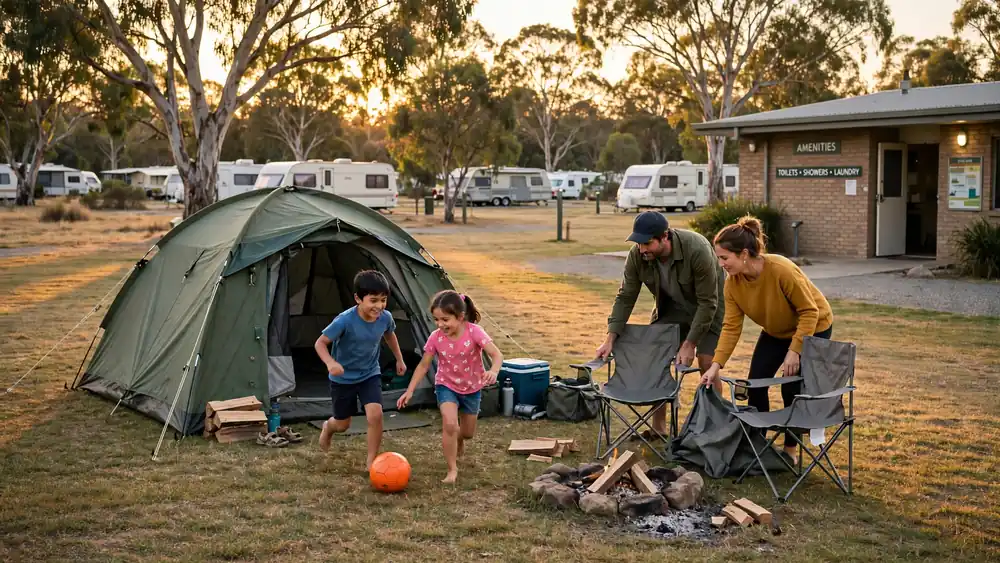
For a first trip with children, facilities matter more than scenery. Look for flushing toilets, drinking water, hot showers, a camp kitchen or barbecue, and a playground or swimming area. Holiday parks are the easiest first step: powered sites, laundry, a shop for forgotten milk, and other kids around.
Once the kids have a trip or two under their belts, national park campgrounds are the next step. They are cheaper and wilder, but the facilities are basic — drop toilets, no showers, and often no drinking water — so check the park’s page before you book and bring what the site does not provide. Book well ahead for school holidays.
Check three things on a map before you commit: flat ground, toilets close enough for a 2am walk with a four-year-old but not so close you hear foot traffic all night, and shade for the middle of the day.
Our camping beginners guide for Australia covers choosing between a tent, camper trailer and caravan.
Tent and Sleeping Setup for Children
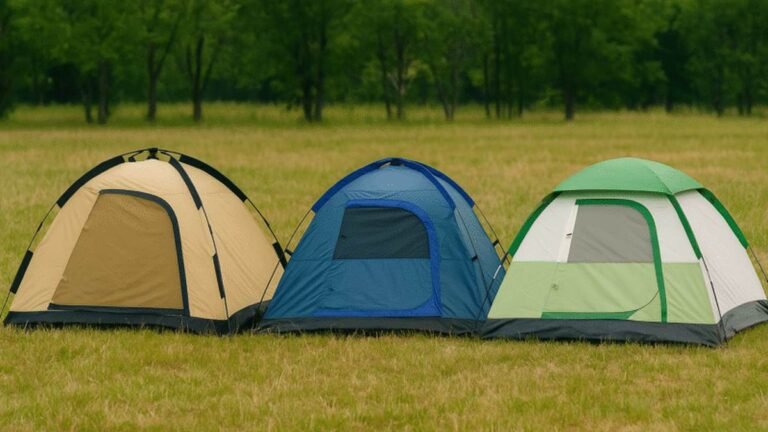
Work out the sleeping arrangements at home, not at the campsite. Count the people and the sleeping spaces, and be honest about whether the kids will share a mat without an argument. A tent that sleeps four on the box usually sleeps two adults and two small children tightly — go one size up.
Practice pitching the tent in the backyard before the trip. Let the kids help and sleep in it one night at home, and you will find every problem while the house is still ten steps away. Pack a mallet, spare pegs and a repair kit.
Sleeping bags matter more for children than for adults, because kids lose heat faster. A bag rated for the coldest night you expect, plus a warm liner, is the safe combination — and a familiar pillow and a favourite soft toy from home do more for a good night’s sleep than any gear upgrade.
Our guides to the best camping tents in Australia and the best sleeping bags in Australia compare the gear that suits family trips.
Food and the Camp Kitchen with Kids
Camp food with kids works best when it is simple, familiar and partly cooked by them. Plan meals the children already like at home — pasta, sausages, toasties, damper on a stick — and save the ambitious campfire cooking for a later trip. Pre-cook what you can at home: a bolognese sauce frozen in a container doubles as an ice block in the esky.
Give the kids jobs at the camp kitchen: washing vegetables, stirring a pot, setting the table. A two-burner stove and a single pot will feed a family of four — our best camping stoves in Australia guide compares the stoves that suit family cooking, and our camp kitchen setup checklist covers the full kit list.
Pack more snacks than you think you need, and keep them where the kids can reach them: muesli bars, fruit, crackers and cheese. Bring plenty of drinking water, and store all food in sealed containers or the car at night; possums and ants will find anything left out.
Keeping Kids Safe When Camping with Kids Australia
Safety on a family camping trip is mostly about supervision and habits, not gear — and the adults agreeing on the rules before the trip.
Water: never out of sight
Water is the biggest risk on a family camping trip. Kidsafe Australia says drowning is the leading cause of unintentional death for children under five in Australia, and its advice is blunt: active adult supervision is the most important thing you can do to keep children safe around water. For toddlers that means an adult within arm’s reach at all times. Young children should never be left alone in or around any body of water.
Kidsafe recommends appointing a designated supervisor — one adult whose only job is watching the kids around water — and rotating the role through the day. Do not rely on flotation aids or pool toys to keep a child safe; they are not designed to prevent drowning. Teach the kids a simple boundary: they do not go near the water without an adult. For more detail, see Kidsafe Australia’s water safety guidance before your trip.
Fire: rules before the first match
A campfire is the heart of a family camp — and the thing that needs the clearest rules. Set the rules before the fire is lit: children stay behind a line you mark on the ground, nobody pokes the fire with a stick, and nobody is ever left alone with it. Keep a bucket of water beside the fire at all times. Check the fire rules and the fire danger rating before you go — some parks ban fires entirely in summer.
Sun: five steps, every day
Australian sun is strong even on cloudy days, and children burn faster than adults. Cancer Council Australia’s sun protection advice is five steps together: Slip on sun-protective clothing, Slop on broad-spectrum sunscreen, Slap on a broad-brimmed hat, Seek shade, and Slide on sunglasses. Apply sunscreen before the kids get dressed so no patches are missed, and reapply through the day. See Cancer Council’s sun safety page for the full guidance.
Wildlife and getting lost
Most Australian wildlife will leave your family alone if you leave it alone. Teach the kids to look but not touch, to wear closed shoes on bush tracks, and to stay on marked paths. Check the park’s current rules when you book, because snake and wildlife advice varies by park and season. Never let children put their hands into logs, rock crevices or long grass.
Getting lost is the other worry parents carry, and it is easy to prevent. Give every child a whistle — three blasts means “come and find me” — and teach them that if they are lost, they stop, stay put and blow the whistle. Agree on a meeting point at the campground.
Wet Weather and Boredom Plans
Rain is the most common reason a family camping trip falls apart, and it is entirely survivable with a plan. A large tarp over the eating area keeps the camp usable in a shower, and a second tarp over the tent entrance gives everyone a dry place to take off wet shoes. Pack a change of clothes per child per day plus one spare set, sealed in a dry bag.
Boredom is the other trip-killer, and the fix is a box, not a screen. Pack a “rainy day box” before you leave: card games, colouring books, a ball, a magnifying glass, and a torch for shadow puppets. Keep one new toy hidden until the rain starts; the surprise is half the fun. Download a couple of audiobooks before you leave, too — a story in the tent at bedtime works wonders.
Packing Checklist for Kids
Packing for children is where most first trips go wrong, because the list is longer than parents expect.
- Sleeping: sleeping bag and liner, sleeping mat, pillow from home, favourite soft toy, warm pyjamas, torch per child.
- Clothing: two changes of clothes per day plus one spare set, warm jumper and rain jacket, closed shoes and sandals, swimmers, sun hat.
- Sun and bugs: broad-spectrum sunscreen, insect repellent, after-bite cream.
- Health: first aid kit, antiseptic and any regular medication.
- Eating: water bottle per child, snacks they can reach themselves, reusable plates and cups.
- Play: ball, bucket and spade, bike or scooter, card games, colouring books, binoculars, the rainy day box.
- Night: glow sticks, headlamp, a night light for the tent, nappies and wipes if needed.
- Documents: bookings and confirmation numbers, park entry passes, emergency contacts on paper.
Your First Trip Plan for Camping with Kids Australia
Choose a holiday park or a well-equipped campground within two hours of home and book a powered site for two nights over a weekend outside school holidays, in autumn or spring. Arrive by mid-afternoon so the tent goes up in daylight.
Day two is the holiday: a morning walk or swim, lunch at camp, an afternoon of free play, and a campfire with damper and stories after dinner. Pack up slowly on day three and drive home in daylight.
Camping with Kids Australia: FAQs
What age can kids start camping in Australia?
There is no official minimum age for camping with kids in Australia — families camp with babies, toddlers and teenagers alike. The trip just looks different at each age: babies need shade and a safe sleeping setup, toddlers need constant supervision near water, and older kids need jobs and freedom to explore. Start with a short, well-equipped trip close to home whatever age your children are.
What should I pack for camping with kids in Australia?
The essentials are a sleeping bag and mat per child, warm pyjamas, two changes of clothes per day plus a spare set, a rain jacket, closed shoes, sun hat, broad-spectrum sunscreen, insect repellent, a first aid kit, a water bottle per child, snacks, a torch, and a rainy day box of games and books. Pack a familiar pillow and a favourite soft toy from home — they make the first night in a tent much easier.
How do I keep kids safe around water while camping?
Kidsafe Australia’s advice is to actively supervise children at all times in and around water, with an adult within arm’s reach of toddlers. Appoint a designated supervisor at group gatherings so it is always clear who is watching, and never rely on flotation aids or pool toys to keep a child safe. Set a firm rule: children do not go near the water without an adult.
What is the best first campsite for kids in Australia?
For a first trip, a holiday park or a well-equipped campground within two or three hours of home is the best choice: flushing toilets, drinking water, hot showers, a camp kitchen, a playground or pool, and a shop for forgotten supplies. Once the family has a trip or two under its belt, a national park campground is the next step — cheaper and wilder, but with basic facilities, so check the park’s page before you go.
What do kids eat when camping?
Stick to meals they already like at home: pasta, sausages, toasties, damper on a stick, and pre-cooked meals such as bolognese sauce or soup frozen at home. Give the kids jobs at the camp kitchen — washing vegetables, stirring a pot, setting the table — and pack more snacks than you think you need, kept where children can reach them. Store all food in sealed containers or the car at night so animals do not come into camp.