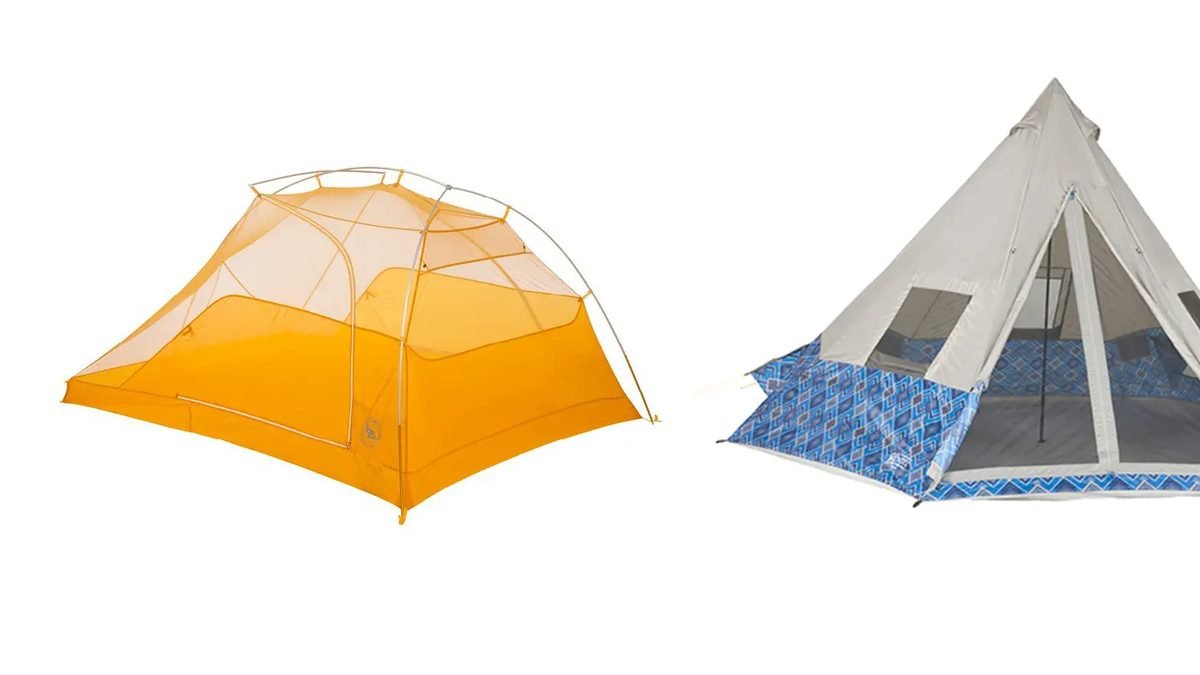
Canvas vs Nylon Tents
Disclosure: We may earn a small commission if you purchase through our links, at no extra cost to you.
Few gear debates run hotter in Australian campgrounds than canvas vs nylon tents. Canvas devotees talk about their Oztent like a family member and pity anyone sleeping in “plastic”. Nylon fans point at the price tag, the weight, and the 30 seconds it takes to pitch a dome tent. Both sides are right about some things and romanticising others — and the outback is the perfect place to settle it, because outback conditions expose every weakness a tent fabric has.
This guide compares canvas and synthetic (nylon/polyester) tents across the factors that matter in Australia: heat, UV, dust, storms, weight, setup, maintenance and long-term cost. For touring-specific recommendations see touring tents, and for keeping either fabric alive, our tent maintenance guide.
The fabrics, plainly explained
Canvas in modern tents is usually poly-cotton: cotton woven with polyester (often 65/35), sometimes with ripstop reinforcement. Brands like Oztent use around 8oz canvas; Darche swags use 400–420gsm ripstop polycotton. The cotton component is the magic: it swells when wet (sealing the weave), breathes (reducing condensation), and handles UV far better than synthetics.
“Nylon” tents are mostly polyester these days — true nylon is rare in camping tents now. Typical touring tents use 150D polyester with PU coating (BlackWolf Turbo series); hiking tents use lighter 20–40D fabrics. Polyester is light, cheap, doesn’t absorb water, and packs small. Its weaknesses are UV degradation, condensation, and noise in wind.
Head-to-head in Australian conditions
Heat
Winner: canvas. This is the most noticeable difference in an Australian summer. Canvas breathes — hot air escapes through the weave, and the heavier fabric doesn’t turn the tent into a greenhouse. A canvas tent in 35°C heat is warm but bearable; a polyester tent in the same conditions is an oven by 9am. Blackout-coated synthetics (Coleman DarkRoom, OZtrail BlockOut) close the gap significantly, but standard synthetics aren’t close.
UV resistance
Winner: canvas, by a long way. Australia’s UV index destroys synthetic flys. A polyester tent left pitched for weeks will go chalky, then brittle, then tear along the fold lines — often within 2–3 seasons of hard use. Canvas shrugs off UV for a decade or more. If you do long trips or leave tents up at a holiday house, this alone justifies canvas.
Rain and storms
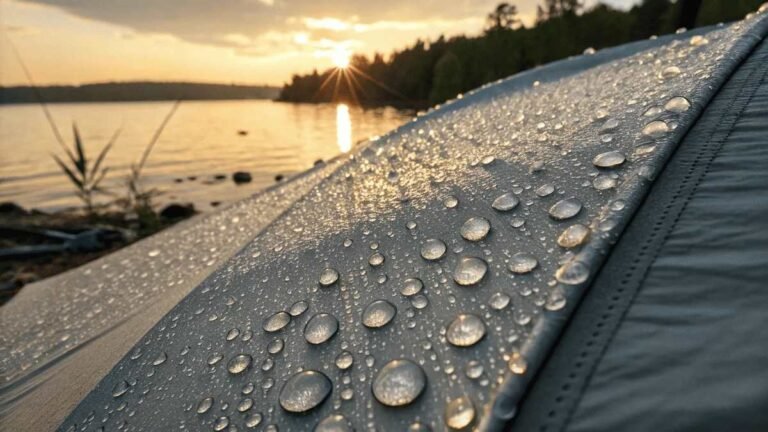
Winner: depends. Quality canvas, properly seasoned, is superb in rain — water beads and runs off, and the fabric doesn’t flap or drum. But canvas must be seasoned (2–3 wet/dry cycles) before first use, and in prolonged multi-day rain it gets heavy and can eventually weep at seams. Good synthetic tents with 2000mm+ ratings and taped seams are excellent in rain from day one, with no seasoning needed. For sudden downpours: synthetic. For sustained weather with proper preparation: canvas.
Wind
Winner: canvas (heavy) vs synthetic (design). Canvas tents are heavy, and weight is stability — an Oztent barely notices gusts that flatten cheap domes. But modern synthetic touring tents (turbo frames, geodesic hiking tents) are engineered for wind with guy-out systems that work brilliantly. A well-guyed synthetic tent beats a poorly-pegged canvas tent every time. Call it a draw with good technique.
Dust
Winner: canvas, slightly. Fine outback dust penetrates everything, but canvas’s tighter weave and heavier zips keep more of it out. Synthetic tents with full mesh inners (common in hiking tents) let dust pour in — fine for ventilation, miserable in a dust storm. If you’re doing the red centre, a canvas tent or a synthetic with solid (non-mesh) inner panels is noticeably more comfortable.
Condensation
Winner: canvas. Breathable cotton moves moisture vapour out; waterproof-breathable synthetics trap it against the fly. Anyone who’s woken in a nylon tent with the fly dripping inside knows this one. It’s the reason canvas swags are legendary for comfort — the fabric does the ventilating for you.
Weight and packed size
Winner: synthetic, overwhelmingly. A canvas touring tent weighs 15–25kg and packs the size of a body bag. A synthetic family tent of similar capacity weighs 8–12kg; a hiking tent 1.5–3kg. If you carry your tent any distance, or your vehicle is small, synthetic wins by default. Canvas is vehicle-only camping, full stop.
Setup speed
Winner: depends on design, not fabric. Oztent’s 30-second canvas pitch beats most synthetics; but instant-up synthetic tents (Coleman, OZtrail) pitch in 2 minutes versus 10–15 for a traditional canvas pole tent. Modern designs have erased fabric as the deciding factor here.
Lifespan
Winner: canvas. 10–15 years for a looked-after canvas tent vs 4–8 for a synthetic touring tent, 2–4 for a budget dome. This is where the cost math flips — see below.
The real cost: price per year
A canvas Oztent RV-5 at $1,699 over 12 years costs about $140/year. A synthetic BlackWolf Turbo Lite 300 at $999.99 over 7 years costs about $140/year. A budget $250 synthetic replaced every 3 years costs $83/year — cheapest, but you camp in a worse tent the whole time and send three tents to landfill.
The honest math: canvas and quality synthetic cost roughly the same per year of ownership. Canvas costs more upfront and demands more care; synthetic costs less upfront and needs replacing sooner. Buy based on how you camp, not on sticker price.
Maintenance compared
Canvas demands more: season before first use, dry completely before storage (mould kills canvas fast), re-proof every few years, and never pack it wet. Synthetic is more forgiving — dry it, pack it, done — but UV is the silent killer: don’t leave it pitched for weeks, and store it out of sunlight.
Both need clean zips (outback dust destroys zips faster than any other component) and occasional seam-seal checks. Our tent maintenance guide covers the full routine for both fabrics.
Which should you buy?
Buy canvas if: you tour regularly (10+ nights a year); you camp in summer heat; you keep gear long-term; you have a ute, wagon or trailer; you value sleep comfort and quiet in wind; you’re doing the big lap or long outback trips. The Oztent RV-5 ($1,699) and Darche canvas swags ($579–$679) are the benchmarks.
Buy synthetic if: you camp occasionally; weight or packed size matters; you’re on a budget; you hike or carry the tent; you want the fastest setup; you camp mostly in cooler months. The BlackWolf Turbo Lite 300 ($999.99) and Coleman/OZtrail instant tents ($245–$700) cover most needs.
The poly-cotton middle ground: modern poly-cotton canvas (like Darche’s 420gsm ripstop) splits the difference — lighter than old-school canvas, tougher than synthetic. For many tourers it’s the best of both.
Poly-cotton: the middle ground
Modern poly-cotton canvas (like Darche’s 420gsm ripstop) deserves its own category. It blends cotton’s breathability and UV resistance with polyester’s strength and lighter weight — tougher than old-school pure cotton canvas, more comfortable than pure synthetic. Most premium Australian touring tents and swags now use poly-cotton, and for good reason: it takes the best of both fabrics.
The trade-off is honest: heavier than synthetic, lighter than old canvas; needs seasoning like canvas; costs like canvas. For tourers who want canvas comfort without canvas weight, poly-cotton is the answer. When comparing specs, check the blend ratio and gsm — heavier weaves (400gsm+) last longer and insulate better.
For a reference point on quality synthetic touring tent specifications, see BlackWolf’s Turbo Lite 300 — the 150D polyester fly at 2000mm shows what premium synthetic looks like, and it’s the fair comparison point for any canvas tent you’re considering.
Canvas tent buyer’s checklist
Shopping canvas? Check: fabric weight — 8oz+ (tents) or 400gsm+ (swags) for serious use; lighter canvas is a cost saving, not a feature. Seams — double-stitched, with reinforced stress points. Poles — aluminium or steel, never fibreglass on a canvas tent (the fabric outlasts the poles otherwise). Zips — heavy-duty coil zips; canvas tents live or die by their zips. Floor — heavy PVC (500gsm+) with welded or sealed seams. Warranty — 2–3 years minimum; canvas should last a decade, and the warranty should reflect that confidence.
Myths about canvas and nylon
“Canvas is always better.” For touring in heat, yes. For hiking, no — weight rules it out entirely. For occasional camping, the price premium buys durability you’ll never use. “Nylon tents are rubbish.” Modern polyester touring tents (BlackWolf, for example) are superb — the gap is narrower than canvas devotees admit. “Canvas is waterproof.” Only after seasoning, and only with maintenance. Unseasoned canvas leaks; neglected canvas rots. “Synthetic tents only last two years.” Budget ones, maybe. Quality synthetic touring tents last 5–8 years with basic care — and cost half as much as canvas.
The environmental angle
A canvas tent that lasts 12 years has a smaller footprint than three synthetic tents replaced over the same period — manufacturing dominates a tent’s environmental cost, not the materials. But the greenest tent is the one you already own: maintaining and repairing beats replacing regardless of fabric. When a tent truly dies, check recycling options — some outdoor retailers run gear recycling programs, and old tent fabric makes excellent tarps, ground sheets and garden covers. Don’t landfill a tent with usable fabric; someone on a community camping page will take it for parts.
Canvas vs nylon tents for specific Australian trips
Big lap (12 months): canvas — the durability and comfort compound over hundreds of nights. School-holiday family camping: synthetic instant tent — fast setup matters more than fabric longevity. Overnight hikes: synthetic (nylon) — canvas isn’t carried, full stop. Desert touring: canvas — heat, UV and dust are its home turf. Alpine: synthetic — weight matters and modern synthetics handle snow well. Beach base camp: either — but rinse salt off synthetic zips religiously, and don’t leave either pitched for weeks in coastal UV.
Repairing canvas vs repairing nylon
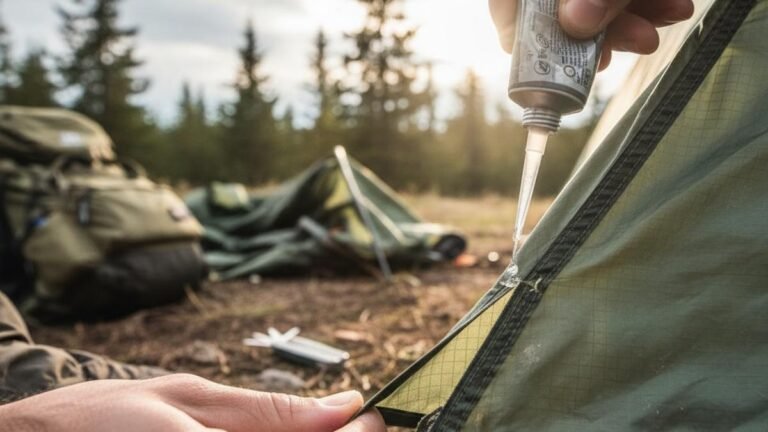
Canvas is the more repairable fabric, and it is not close. A torn canvas panel can be sewn with heavy-duty thread, patched with canvas, and re-proofed — the repair is often stronger than the original and lasts years. Sailmakers and upholsterers do professional canvas repair at reasonable prices, which makes sense for a $1,700 tent. Nylon and polyester can be taped (Tenacious Tape works brilliantly) or sewn, but taped repairs on high-stress areas eventually peel, and sewing lightweight fabric requires care to avoid puckering. UV-rotted synthetic fabric cannot be repaired at all — once the fibres are degraded, no patch will hold. This repairability gap is part of canvas’s longevity story: a canvas tent can be kept going almost indefinitely, while a synthetic tent has a finite life no matter how well you treat it.
Secondhand canvas vs secondhand nylon
The secondhand market treats the fabrics very differently. A used canvas tent (Oztent, for example) at half price is often an excellent buy — canvas shows its condition honestly: mould smells, thin spots are visible, and the fabric either has life left or it doesn’t. A used synthetic tent is riskier: UV damage is invisible until the fabric tears, and PU coatings delaminate from the inside where you cannot see. When buying used synthetic, check the fly by gently trying to tear it at a seam — sound fabric resists; rotted fabric gives way. With canvas, trust your nose and your eyes; with synthetic, trust the tear test. Either way, pitch it fully before paying.
Frequently asked questions
Is canvas really better than nylon for camping?
For Australian touring — heat, UV, long trips — yes, canvas is better and lasts longer. For hiking, budget camping, or occasional use, synthetic is lighter, cheaper and perfectly adequate. “Better” depends on how you camp.
Do canvas tents need waterproofing?
New canvas must be seasoned (wetted and dried 2–3 times) to seal the weave — this isn’t optional. After that, quality canvas is naturally water-resistant. Re-proof every few years with canvas reproofer as the water beading fades.
Are canvas tents too heavy?
They’re heavy — 15–25kg for a touring tent. That’s fine in a ute or wagon and irrelevant once pitched. They’re not suitable for hiking, small cars, or anyone who struggles with heavy lifting.
How long does a canvas tent last compared to nylon?
A looked-after canvas tent lasts 10–15+ years; a quality synthetic touring tent lasts 5–8 years; budget synthetic domes last 2–4 years. Per year of ownership, the costs are surprisingly similar.
Can you use a canvas tent in winter?
Yes — canvas is excellent in cold weather. The heavy fabric holds warmth, breathes to reduce condensation, and handles snow loading better than lightweight synthetics. Just ensure it’s fully dry before packing away.
← Back to our complete guide: Best Camping Tents Australia 2026