Best Sleeping Mats Australia 2026
Disclosure: We may earn a small commission if you purchase through our links, at no extra cost to you.
Here’s the thing nobody tells new campers: your sleeping mat matters as much as your sleeping bag. Cold ground sucks heat out of your body all night — a $500 down bag on a $20 uninsulated mat will leave you cold, while a $200 bag on a proper insulated mat keeps you warm. The best sleeping mats Australia has in 2026 range from $99 self-inflating workhorses to $500+ ultralight air mats, and the number that matters most is one most campers have never heard of: the R-value.
This guide explains R-values plainly, compares the three mat types, and reviews eight mats with verified prices. Pair your choice with the right sleeping bag — the two work as a system. For the full hiking shelter setup, see hiking tents.
R-values, explained simply
R-value measures insulation: higher = warmer. It’s now tested to an international standard (ASTM F3340), so R-values are comparable across brands — a 4.5 from Therm-a-Rest means the same as a 4.5 from Sea to Summit.
The practical translation for Australia:
R 1–2: summer only. Fine for warm nights, useless when it drops below ~10°C. R 2–3: three-season for warm sleepers; shoulder seasons for cold sleepers. R 3–4.5: the versatile zone — handles most Australian camping including cold snaps. R 5+: winter and alpine. The Therm-a-Rest XTherm’s 7.3 is expedition-grade overkill for most — but glorious overkill.
The rule: match your mat’s R-value to your bag’s rating. A -5°C bag on an R-2 mat performs like a 0°C bag — the ground steals the difference. When campers say “my bag isn’t warm enough”, the mat is the culprit half the time.
The three mat types
Air mats: inflatable (mouth, pump sack or built-in pump), light, compact, comfortable. Downsides: punctures happen, they’re noisy (older models), and cheap ones have no insulation (just air = cold). The premium hiking choice.
Self-inflating: foam core that expands when unrolled, with an air valve. Heavier and bulkier than air mats, but durable, quiet, and reliably warm. The car-camping and 4WD favourite — no pump needed, hard to kill.
Closed-cell foam: the humble foam roll. Light, indestructible, cheap — and thin and uncomfortable. Best as a summer mat, a backup, or paired under an air mat in winter (foam + air mat R-values add up — the classic alpine trick).
Best sleeping mats Australia: top 8 for 2026
1. Therm-a-Rest NeoAir XLite NXT — best ultralight hiking mat
The XLite is the default ultralight mat worldwide: 370g, packs to water-bottle size, R-value 4.5 — warm enough for nearly all Australian hiking. The NXT version fixed the old model’s crinkly noise. Around $490 RRP in Australia — expensive, but it’s the mat serious hikers measure everything against.
Best for: hikers counting grams who still want genuine 3-season warmth. The WingLock valve and included pump sack make inflation easy. Wait for sales — it regularly drops well below RRP.
2. Therm-a-Rest NeoAir XTherm NXT — best winter mat
R-value 7.3 — the warmest mat here by a mile. For alpine winter camping, it’s not a luxury, it’s safety: the ground in the Snowies will freeze you through anything less. Around $539–$575 RRP, often discounted.
Best for: winter hikers, alpine campers, and cold sleepers who want one mat for everything. At ~430g it’s barely heavier than the XLite — the weight penalty for more than double the warmth is tiny. If you only buy one premium mat, make it this one.
3. Sea to Summit Ultralight XR Insulated — best value insulated air mat
Sea to Summit’s answer to the XLite: light, compact, insulated, at $229.99 RRP — less than half the XLite’s price. The Large was tested as part of Sea to Summit’s sleep system (576g with pump sack) and rated highly for comfort.
Best for: hikers who want premium-mat performance without the premium price. The comfort-to-weight ratio is excellent, and Sea to Summit’s Australian support is a plus.
4. Wanderer Camp 38 Self Inflating Hike Mat — best budget hike mat
$99.99 at BCF buys a genuine hiking-capable mat: 725g, packs to 28 x 15cm, R-value 2.5 (warm-weather rated), ripstop nylon with TPU coating, repair kit included. It’s not a winter mat — R-2.5 is a summer/shoulder-season number — but for fair-weather hiking it’s honest value.
Best for: new hikers, scouts, and anyone building a kit on a budget. The self-inflating design means no pump faff, and it’s far more durable than cheap air mats.
5. Zempire Twin Bomber 3D — best car-camping comfort
For car camping, thickness is comfort: the Twin Bomber 3D’s 10cm of self-inflating foam is the closest thing to a real mattress in this guide. Check BCF for current pricing — it’s positioned as the premium car-camping mat.
Best for: family campers, anyone with a bad back, and base camping where weight doesn’t matter. You won’t hike with it (it’s huge), but you’ll sleep better than on any hiking mat.
6. Wanderer Tourer Extreme 4×4 — best 4WD touring mat
The Tourer Extreme is built for ute trays and touring: 12cm thick, heavy PVC construction, multiple sizes up to king single. It’s a mattress, not a hiking mat — 9.5kg of it. Check BCF for current pricing across the size range.
Best for: 4WD tourers and grey nomads who live in their swag or tent for weeks. Paired with a stretcher or straight on the ute tray, it’s the touring comfort benchmark.
7. Closed-cell foam mat — best indestructible backup
The $20 foam roll: 400g, never punctures, works as a summer mat alone or as a booster under an air mat in winter (R-values stack). Every serious hiker should own one — as a backup, a sit pad, or a winter layer.
Best for: ultralight summer hiking, emergency backup, and winter layering. Not comfortable enough as a primary mat for most adults — but indestructible has its own value.
8. Exped-style wide mats — best for side sleepers (category pick)
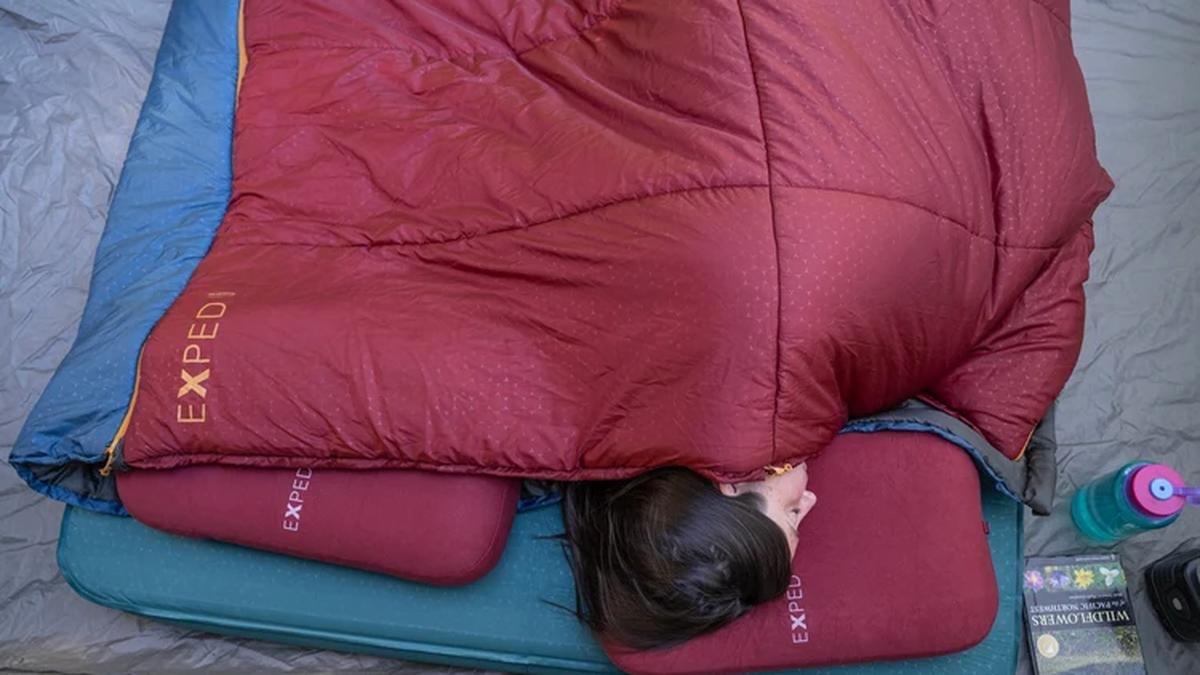
Side sleepers need thickness — hips bottom out on thin mats. Wide, thick air mats (7cm+, 65cm wide) from Exped, Sea to Summit and others solve it. Check Snowys for the current range; expect $200–$350 for insulated wide models.
Best for: side sleepers who’ve tried standard mats and woken with dead hips. Width matters as much as thickness — your arms need somewhere to go.
Air mat care: punctures and prevention
Air mats puncture — accept it and prepare. Prevention: clear the ground before pitching, use a footprint or tent floor, never drag the mat, and keep it away from sparks and sharp gear. Repair: every air mat includes a patch kit — find the leak (submerge in water and look for bubbles, or listen), clean, patch, wait. A proper patch is permanent.
Storage: store unrolled with the valve open (like sleeping bags, long-term compression damages them). Inflation: use the pump sack, not your mouth — breath moisture inside the mat breeds mould and degrades insulation over time.
For a second opinion on R-values, pad types and sizing, the REI sleeping pad guide is a solid independent reference that aligns with the advice here — particularly on matching R-value to expected temperatures.
R-value explained: the number that matters most
R-value measures insulation — higher means warmer. The scale: R-1 to R-2 (summer only), R-3 to R-4 (three-season), R-5+ (winter), R-7+ (extreme cold). Why it matters more than thickness: a thick uninsulated air mat (R-1.5) is colder than a thin insulated one (R-4). Air alone doesn’t insulate — the insulation inside the mat does. The standard: R-values are now tested to an ASTM standard, so they’re comparable across brands — a genuine improvement over the old marketing free-for-all. Matching to conditions: add a safety margin — if nights might hit 0°C, take R-4+, not R-3. Cold ground steals heat all night; the mat is your primary defence. Stacking: R-values add — a foam mat (R-2) under an air mat (R-3) gives R-5. The classic winter system. The mistake: buying a summer mat and “making do” in winter. You can’t make do with R-value — you’ll just be cold. Match the mat to the coldest night you expect, then add one.
Pump sacks and inflation techniques
How you inflate your mat matters more than you’d think. Why not your mouth: breath moisture condenses inside the mat — over time this degrades insulation and grows mould. In winter it’s worse: the moisture can freeze inside. Pump sacks: the standard solution — most quality mats include one. Two to three bags of air fills a mat, it doubles as a stuff sack, and it keeps moisture out. Built-in pumps: some mats have integrated foot pumps — convenient but slower, and a potential failure point. Electric pumps: tiny USB pumps ($30–$60) inflate a mat in a minute — car-camping luxury, and worth the weight for anyone with lung issues. Technique: inflate firm, then lie on the mat and release air until your hip just barely doesn’t touch the ground — that’s the comfort sweet spot. Over-inflated mats are the #1 comfort complaint, and the fix takes ten seconds. Deflation: open the valve and roll from the far end — don’t fold (creases stress the baffles).
Stretcher and camp bed combos
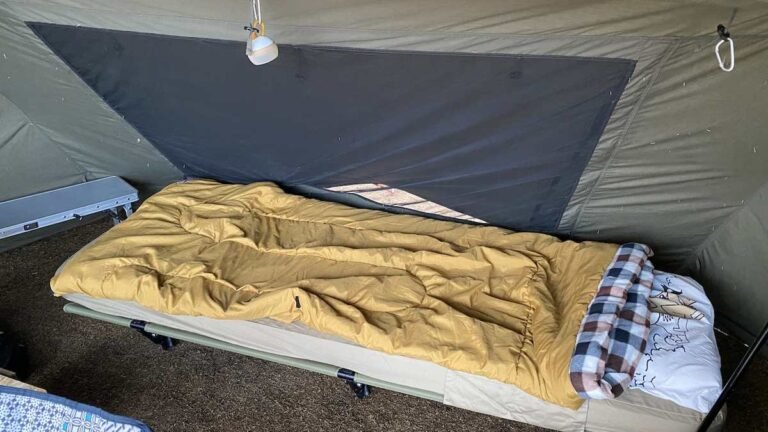
For car campers who hate ground sleeping, stretchers change everything. What they do: raise you 30–45cm off the ground — no more getting up from floor level, better airflow underneath, and insulation from cold ground. With a mat on top: the winning combo — stretcher for comfort and height, self-inflating mat for insulation and padding. This is the closest camping gets to a real bed. Types: camp stretchers (folding, $80–$200), camp beds with mattresses (heavier, comfier), and stretcher-tent combos. Limitations: bulky and heavy — strictly car camping. They don’t fit in small tents (check tent dimensions — you need the length and the height). For bad backs: often the difference between camping and not camping. If ground sleeping hurts, a stretcher isn’t luxury — it’s access. The setup: stretcher + insulated mat + good pillow = the gold standard of car-camping comfort. Heavy, bulky, and utterly worth it.
Mat care and storage
Self-inflating mats: store unrolled with the valve open — long-term compression damages the foam. Air mats: store loosely rolled or hung, valve open, out of heat. Foam mats: the indestructible option — store however you like. Cleaning: wipe down with mild soap and water; never machine wash. Heat: the enemy — don’t leave mats in hot cars (delamination, valve damage) or in direct sun for days. Repairs: fix small leaks promptly — they don’t heal, and a slow leak becomes a flat mat at the worst moment. Lifespan: quality mats last 5–10 years with care; neglected ones die in two. The mat is the most under-maintained item in most camp kits — an hour of care per year doubles its life.
Closed-cell foam mats: the underrated option
Foam mats are unfashionable and unbeatable at certain things. Pros: indestructible (can’t puncture), cheap ($20–$60), light (~400g), instant (no inflation), and double as camp seats, kneeling pads and emergency splints. Cons: thin (comfort is basic), bulky (they strap outside the pack), and R-values top out around R-2 (summer/shoulder only). Best uses: kids (indestructible), summer hiking (light and simple), as a supplement under an air mat in winter (R-values stack), and as the “never worry” option for rough ground. The combo: foam mat underneath + air mat on top is the winter standard — puncture insurance plus R-5+ warmth. Many experienced winter campers wouldn’t go without the foam layer. Unfashionable, unkillable, and under $50 — the foam mat deserves more respect than it gets.
Frequently asked questions
What R-value sleeping mat do I need?
R 2–3 for summer and warm three-season camping; R 3–4.5 for year-round Australian camping; R 5+ for winter and alpine. Match the mat to your sleeping bag — a cold-rated bag on a low-R mat wastes the bag.
Are expensive sleeping mats worth it?
For hikers, yes — the weight and packed-size savings of a $400+ mat are transformative over a week. For car camping, no — a $100 self-inflating mat sleeps just as well; you’re paying for packability you don’t need.
How do I find a leak in my sleeping mat?
Inflate firmly, submerge sections in water (bath, creek, bucket) and watch for bubbles. Or hold it to your ear/cheek in a quiet room. Mark the spot, clean, patch with the included kit — permanent fix.
Can I use two sleeping mats together?
Yes — R-values add up. A foam mat (R-2) under an air mat (R-3) gives roughly R-5. It’s the classic winter trick: extra warmth plus puncture insurance (if the air mat fails, the foam still works).
How thick should a camping mat be?
Back sleepers: 5cm+ is comfortable. Side sleepers: 7cm+ (hips need depth). Car camping: 10cm+ for real-mattress feel. More thickness also means more packed size — the eternal trade-off.
← Back to our complete guide: Best Sleeping Bags Australia 2026