The Big Lap Checklist
Disclosure: We may earn a small commission if you purchase through our links, at no extra cost to you.
The Big Lap — a full circuit of Australia on Highway 1, roughly 15,000km of coastline, outback, and everything between — is the definitive Australian road trip. People spend years dreaming about it and months preparing. And most of that preparation is wasted on the wrong things: agonising over which camp chair to buy while neglecting the vehicle’s cooling system, or packing three of everything “just in case” until the GVM is blown before leaving the driveway.
This big lap checklist Australia is deliberately prioritised. Tier 1 is what you genuinely need. Tier 2 is worth having. Tier 3 is what experienced lappers wish they’d left behind. If you’re still working out your setup, our 4WD packing guide covers the weight maths, and our free camping apps guide will save you thousands in accommodation.
Before Anything: The Vehicle
The vehicle is the trip. Every Big Lap failure story starts with “we figured the car would be fine”. It won’t be fine unless you make it fine:
- Full mechanical inspection by a mechanic who understands touring — not just a roadworthy, but cooling system, suspension bushes, wheel bearings, CVs, belts, hoses, and the air conditioning (you’ll live in it). Budget $2,000–$5,000 for pre-trip rectification on a used 4WD; there’s always something.
- Tyres: start the lap on fresh all-terrains with a full-size matching spare (two spares for remote legs). You’ll chew through a set on a full lap — budget for replacements on the road.
- Service schedule: plan services every 10,000km — that’s 4–5 services on a full lap. Know where the major towns with your vehicle’s dealer network are.
- Cooling system: the #1 killer of outback trips. New radiator hoses, fresh coolant, tested thermostat and fan clutch, and a clean radiator. Overheating in 45°C between roadhouses is how engines die.
- Dual-battery system: non-negotiable for fridge-based touring. Our DC-DC charger and power audit guides cover the setup.
- Insurance: comprehensive vehicle insurance plus roadside assistance that covers remote towing (check the fine print — some policies exclude unsealed roads or cap remote towing distances).
Tier 1: Genuinely Essential
Shelter and sleep
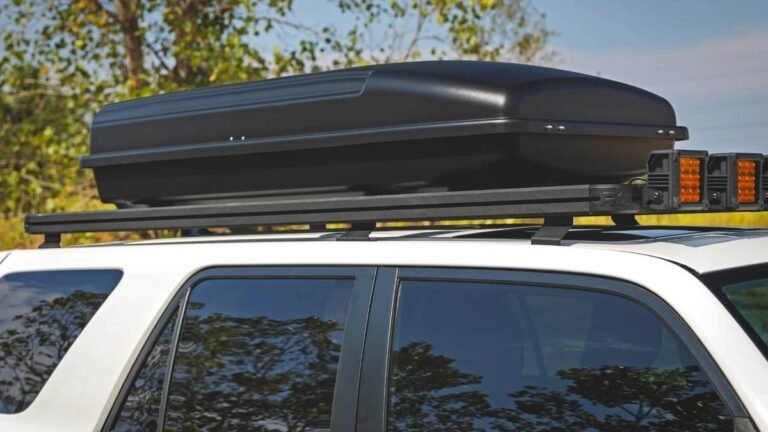
- Rooftop tent, camper trailer, caravan, or quality ground tent — whatever suits your budget and style. It must survive wind, rain, and months of daily setup/packdown. Cheap tents die on lap three of the setup cycle.
- Sleeping setup rated for the coldest night you’ll face (the desert gets cold — below zero in winter).
- An awning or shade structure. Non-negotiable in Australia.
Power and water
- 12V fridge (40–60L minimum for a couple) — the heart of the camp kitchen.
- Dual-battery system with DC-DC charger and 200W+ solar.
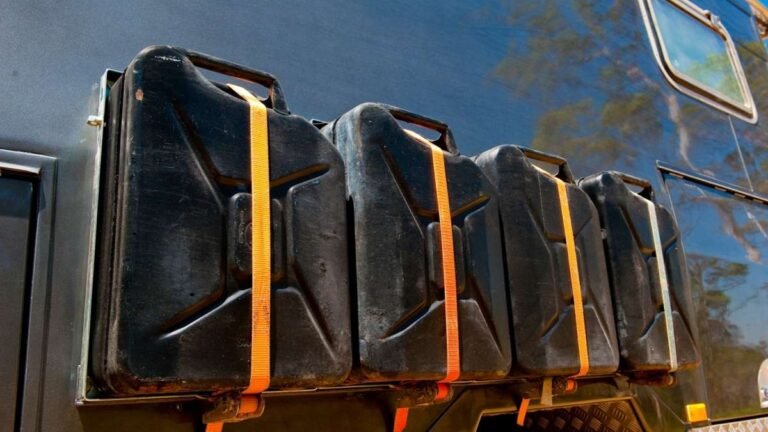
- Water storage: minimum 40L for a couple (20L per person for 2–3 days remote). More for the outback legs. See our water storage guide for the maths.
- Water filter or purification as backup.
Recovery and repair
- The full Tier 1 recovery kit: rated points, snatch strap, shackles, recovery boards, deflator + compressor (see our recovery gear checklist).
- Basic tool kit: sockets, spanners, screwdrivers, multimeter, tyre repair kit, spare fuses, belts, hoses, JB Weld, duct tape, cable ties.
- Spare parts specific to your vehicle: fuel filter, air filter, fan belt, radiator hoses, wheel bearings if you’re handy.
- Two spare tyres for remote travel; tyre repair kit always.
Comms and navigation
- UHF radio (vehicle-mounted) — the outback communication standard.
- Satellite communicator (Garmin inReach, Zoleo, or similar) for emergencies beyond mobile range. This is safety gear, not a luxury.
- Offline maps downloaded (Hema, Google offline, or Memory-Map).
- WikiCamps app ($9.99 one-off) — the campsite database most lappers navigate by; download offline maps before leaving coverage.
- Telstra SIM — the only carrier with meaningful remote coverage.
Safety
- First aid kit (proper one, plus training — a course is worth more than the kit).
- Fire extinguisher, 20L minimum extra water per person beyond drinking needs for the remote legs, and the outback breakdown protocol (see our outback safety guide).
- EPIRB/PLB for truly remote travel.
Tier 2: Worth Having
- 12V oven or camp oven: fresh bread and roasts transform long-trip morale. A camp oven costs little and delivers enormously.
- Hot water system: a Joolca HOTTAP ($399+) or similar — after three months, hot showers stop being a luxury and become a necessity.
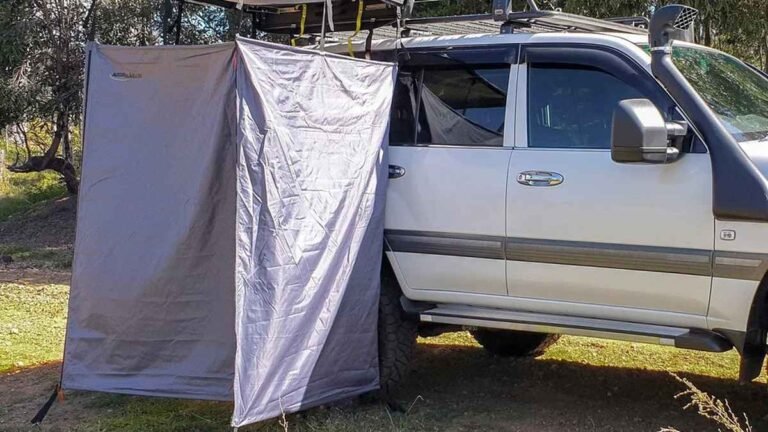
- Portable toilet + shower tent: essential for free camping in many areas, and civilised everywhere. See our portable toilet guide.
- Second battery / extra solar: if you’re running Starlink, a CPAP, or working remotely.
- Air compressor upgrade: the twin-cylinder life is worth it on a big lap.
- Fridge slide and drawer system: your back will thank you by month three.
- Quality camp chairs and table: you’ll spend hundreds of hours in them — this is not the place for $20 specials.
- Fishing gear: half the coast is fishable, and fresh fish is free dinner.
- Starlink or satellite internet: if you need to work, stay connected, or just want weather radar in the outback.
Tier 3: Leave It Behind
Things Big Lap veterans consistently say they carried too much of:
- Duplicate tools and “just in case” spares for failures you can’t fix roadside anyway. You don’t need a spare alternator; you need the phone number of a good auto electrician in the next big town.
- Excessive clothing. You need a week’s worth, not a season’s. Laundromats exist in every town.
- The third esky. One fridge, one esky for drinks if you must. More is just weight.
- Books, games, and entertainment bulk. A tablet holds infinite books. The outback provides the entertainment.
- “Project” gear — the drone you fly twice, the telescope, the gold prospecting kit. If you haven’t used it in the first month, post it home.
- Excessive food stocks. Australia has supermarkets. Carry 1–2 weeks of staples for remote legs, not a pantry.
The rule experienced lappers repeat: pack for a month, then remove a third. You’ll buy what you actually need on the road — every touring town has a BCF, Anaconda, or Supercheap.
The Admin Nobody Talks About
The unglamorous half of Big Lap prep:
- Mail: arrange mail redirection to a family member or a mail holding service. You’ll need someone who can open, scan, and action things.
- Banking: notify your bank of travel (card blocks in remote towns are miserable), set up automatic payments for everything, and carry a backup card from a different bank.
- Insurance: vehicle, caravan/trailer, health (check remote coverage and RFDS membership — the Royal Flying Doctor Service membership is cheap peace of mind), and income protection if relevant.
- Vehicle registration and licence: check expiry dates against your trip timeline. Renewing rego from the Tanami is not fun.
- House: if you’re renting it out or leaving it empty, arrange property management, and tell your home insurer about extended absence (policies often have unoccupancy clauses).
- Medications: 3–6 month supplies, scripts on file with a national pharmacy chain, and a plan for repeats on the road.
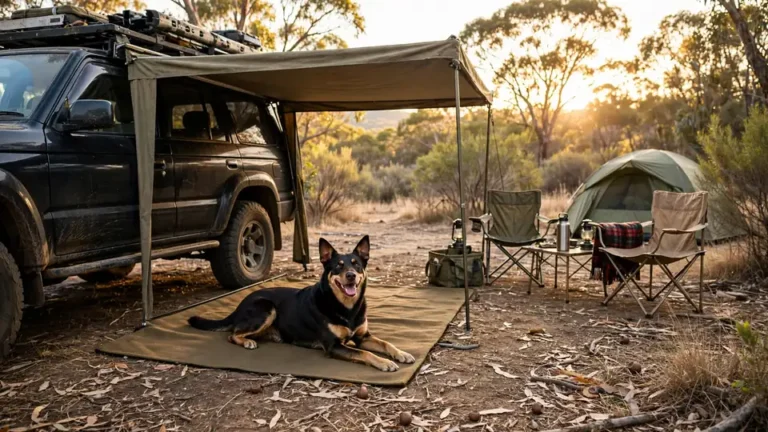
- Pets: dogs aren’t allowed in national parks — this shapes your entire itinerary. Plan boarding, pet-sitters, or a parks-free route. It’s the single biggest itinerary constraint pet owners face.
Budget: What a Big Lap Actually Costs
Honest figures for a couple doing a 12-month lap in a 4WD with a camper trailer or rooftop tent:
| Category | Annual estimate (AUD) |
|---|---|
| Fuel (~30,000km incl. detours) | $8,000–$12,000 |
| Accommodation (mix of free + paid) | $5,000–$10,000 |
| Food (cooking mostly, some eating out) | $12,000–$18,000 |
| Vehicle servicing, tyres, repairs | $4,000–$8,000 |
| Attractions, tours, national park fees | $2,000–$4,000 |
| Insurance (vehicle, health, roadside) | $3,000–$5,000 |
| Comms, misc, contingency | $3,000–$5,000 |
| Total | $37,000–$62,000 |
The huge range reflects choices: free camping vs caravan parks is the biggest lever (free camping 80% of nights saves ~$8,000+), followed by cooking vs eating out. Most couples land around $45,000–$55,000 for the year. It’s not cheap — but it’s cheaper than a year of rent in Sydney, and incomparably better.
Timing and Direction
Follow the good weather clockwise or anti-clockwise: the classic strategy is to chase winter north and summer south. Leave southern capitals in autumn heading north (up the east coast or through the centre), spend winter in the Kimberley/Top End (dry season, perfect weather), and be back south for summer.
The north has a hard window: the Kimberley and Top End are essentially April–October destinations. The Gibb River Road, Kakadu, and the Savannah Way are at their best mid-dry season. Arrive in the north in December and you’ll meet the wet season — flooded roads, closed parks, and oppressive humidity.
Don’t rush the lap. The #1 regret of Big Lappers is going too fast. A 12-month lap averages under 100km/day of driving — which still feels rushed in the good places. If you can stretch to 18 months, do it. The lap will still be there; the time won’t come back.
Choosing Your Direction: The Weather Window
There’s no universally “correct” direction for the Big Lap — there’s only the weather. The classic strategy chases winter north and summer south:
- Depart southern capitals in March–May (autumn). Head north up the east coast or through the centre while the south cools down. You’ll reach the Kimberley and Top End as the dry season opens (May) — perfect timing.
- Winter (June–August) in the north. The Kimberley, Top End, and Cape York are at their glorious best: dry, warm days, cool nights, accessible roads. This is what the whole lap is for.
- Spring (September–November) heading south. Work down the west coast as it warms up — wildflowers in WA’s south-west (September–October) are a world-class display worth timing for.
- Summer (December–February) in the south. Tasmania, Victoria’s coast, and South Australia are at their best. The north is in the wet — flooded, humid, and with closed roads. Be south.
Clockwise vs anti-clockwise matters less than hitting the northern dry season. Most lappers go anti-clockwise from the east coast (up the east coast first, across the north, down the west coast) — but the reverse works equally well if the timing puts you north in winter.
The school-holiday trap: if you’re travelling with kids, you’re locked to term dates — which means sharing every popular spot with thousands of other families. Book the critical stops (Karijini, Ningaloo, Uluru) the moment booking windows open, and embrace the less-famous stops between them.
Frequently Asked Questions
How long does the Big Lap take?
The full Highway 1 circuit is ~15,000km, but with detours (Kimberley, Red Centre, Tasmania) most lappers drive 25,000–35,000km. Twelve months is the classic timeframe; 6 months is rushed; 18+ months lets you actually experience places rather than photograph them.
How much does the Big Lap cost?
For a couple in a 4WD setup, budget $45,000–$55,000 for 12 months — roughly $1,000/week. Free camping and self-catering are the biggest cost levers. Pre-trip vehicle preparation and setup gear are on top of this.
What is the best vehicle for the Big Lap?
A reliable dual-cab 4WD ute or 4WD wagon with a camper trailer, rooftop tent, or slide-on camper. Reliability and parts availability matter more than capability — a LandCruiser or Patrol can be fixed anywhere; an exotic import can’t. Whatever you choose, start with a full mechanical inspection.
Can you do the Big Lap with a dog?
Yes, but it reshapes your trip: dogs aren’t allowed in national parks, so you’ll skip or work around many highlights. Many lappers with dogs focus on free camps, station stays, and state forests, and arrange boarding for must-do park visits.
Which direction should I drive the Big Lap?
Chase the weather: head north for winter (dry season in the Kimberley/Top End, roughly May–September) and be in the south for summer. Most people leave southern capitals in autumn. There’s no universally “correct” direction — the weather window is what matters.
What is the best time of year to start the Big Lap?
Autumn (March to May) from southern capitals, heading north — you will reach the Kimberley and Top End as the dry season opens and be back south for summer. The key rule: be in the north in winter and the south in summer.
← Back to our complete guide: Best Roof Racks for 4WD Touring Australia 2026