Best Roof Racks for 4WD Touring Australia 2026
Disclosure: We may earn a small commission if you purchase through our links, at no extra cost to you.
A roof rack is the most visible modification on any touring 4WD — and one of the easiest to get wrong. Too small and you’re Tetris-ing gear every morning; too heavy and you’ve eaten half your payload before loading a single jerry can; the wrong type and your rooftop tent wobbles like a shopping trolley. The best roof racks for 4WD touring aren’t necessarily the most expensive — they’re the ones matched to your vehicle, your load, and the kind of touring you actually do.
This guide explains the engineering first (load ratings, GVM, and why they matter more than brand), then compares the platform racks dominating Australian touring in 2026, with real prices. If you’re planning what goes on the rack, our 4WD packing guide covers weight distribution and GVM maths in detail.
Dynamic vs Static Load: The Rating That Matters
Every roof rack has two load ratings, and confusing them is the most common mistake in touring:
- Dynamic load rating: the maximum weight the rack can carry while driving — typically 75–100kg for most 4WD platform racks. This is limited by your vehicle’s roof strength, not just the rack. Braking, cornering, and corrugations multiply the forces enormously.
- Static load rating: the maximum weight when parked — typically 250–350kg. This is what lets two adults sleep in a rooftop tent on the rack.
The practical takeaway: your rack might be rated to hold 300kg static (rooftop tent + two people), but you can only drive with 100kg up there (tent + awning + a few light items). Exceed the dynamic rating and you’re stressing the roof, raising the centre of gravity dangerously, and — in a crash — turning the roof load into a weapon. Insurance assessors do check this.
Also note: the rack’s rating doesn’t override your vehicle’s roof rating. If Toyota rates your LandCruiser’s roof at 100kg dynamic, a rack rated to 150kg dynamic doesn’t give you 150kg — the vehicle is the limit.
How Roof Weight Eats Your GVM
Here’s the maths nobody does before buying: a platform rack weighs 20–35kg before you put anything on it. A rooftop tent adds 55–75kg. An awning adds 20–30kg. Suddenly you’ve got 100kg+ sitting on the roof — and every kilo counts against your Gross Vehicle Mass (GVM).
Worse, roof weight counts double in handling terms: weight up high raises the centre of gravity, increasing body roll and the risk of rollover on off-camber tracks. The touring rule is simple: heavy things go low (in the vehicle, between the axles), and the roof is for light, bulky things — swags, sleeping bags, recovery boards, empty jerry cans, fishing rods.
Before you buy a rack, weigh your intended roof load honestly and check it against both the dynamic rating and your remaining GVM. Our packing guide walks through the full calculation.
Platform vs Basket vs Cross Bars
Three main designs dominate Australian touring:
- Platform racks (flat): a flat aluminium deck with channels or slots for mounting accessories. The current standard for serious touring — maximum versatility, lowest profile, easiest to mount tents/awnings/rooftop boxes to. Heavier and pricier than alternatives.
- Basket/tray racks: a steel or alloy tray with raised sides. Cheaper, great for containing loose gear (firewood, jerry cans, recovery gear), but heavier, noisier, and less aerodynamic. Harder to mount a rooftop tent cleanly.
- Cross bars: two or three bars across the roof. Lightest and cheapest, fine for kayaks, skis, or a narrow roof box. Inadequate as a general touring platform — gear slides around and there’s nowhere to mount accessories.
For 4WD touring in 2026, the platform is the default choice unless you have a specific reason otherwise. The rest of this guide focuses on platforms.
The Best Roof Racks for 4WD Touring in 2026
| Rack | Type | Dynamic rating | Typical AU price* |
|---|---|---|---|
| Rhino-Rack Pioneer 6 Platform | Platform | ~100kg (vehicle dependent) | ~$1,239–$1,299 |
| ARB BASE Rack | Platform | ~100kg (vehicle dependent) | ~$1,872+ (with mount kit) |
| Front Runner Slimline II | Platform/tray | ~100kg (vehicle dependent) | ~$1,100–$1,500 |
| Rola Titan Tray | Tray | ~75kg | ~$600–$900 |
*Platform prices shown for popular sizes (e.g. ~1300×1400mm to 1800×1400mm); ARB BASE Rack is sold as vehicle-specific bundles including mount kits, hence the higher figure. Final price depends on vehicle and mounting system. Prices AUD, late 2026.
1. Rhino-Rack Pioneer 6 Platform — The Australian Standard
The Pioneer platform is the rack you’ll see on more Australian touring 4WDs than any other, and the current Pioneer 6 generation is the best version yet. Rhino-Rack claims up to 60% less drag than its predecessor, 20% less weight, and 25% more usable mounting channels — and the platform genuinely feels more refined on the highway than older designs.
The Pioneer 6 1300×1380mm platform runs about $1,239 AUD at retailers like Opposite Lock; the larger 1800×1430mm flat-pack is around $1,299 at Big W. You’ll also need a vehicle-specific mounting system (legs, tracks, or backbone), which adds a few hundred dollars — budget $1,500–$1,800 all-in for a typical wagon install.
The ecosystem is the real selling point: Rhino-Rack’s accessory range — awning brackets, shovel holders, jerry can holders, rooftop tent mounts — is the deepest in the business, and most of it bolts straight into the platform channels. If you want maximum choice and local support, start here.
2. ARB BASE Rack — The Engineered Alternative
ARB’s BASE Rack takes a different approach: a fully welded aluminium platform with a dovetail mounting system running around the perimeter and down each beam. It’s lower-profile than most competitors and, being welded rather than bolted, has a rigidity that modular platforms can’t quite match.
ARB sells it as vehicle-specific bundles — for example, the 1835×1285mm BASE Rack with the LandCruiser 100 Series mount kit is listed at $1,872 AUD, and canopy/ute bundles run $1,898–$2,594 depending on vehicle and configuration. That’s premium money, but it includes the engineered mounting solution rather than a generic leg kit.
Choose the BASE Rack if you value the lowest possible profile, the welded construction, and ARB’s dealer network for fitting. Choose the Pioneer if you want the bigger accessory ecosystem and slightly lower buy-in.
3. Front Runner Slimline II — The Modular Veteran
Front Runner’s Slimline II has been around for years and remains hugely popular, particularly with the overlanding crowd. Its signature is modularity: the slatted deck accepts an enormous range of accessories, and the whole system is designed to be reconfigured as your needs change.
Pricing typically lands between $1,100 and $1,500 AUD depending on size, before mounting kits. It’s a proven design with a massive global user base — if you want to see how any accessory mounts, someone on YouTube has already filmed it. Slightly noisier and less refined than the newest Pioneer, but battle-tested on every continent.
4. Rola Titan Tray — The Budget Workhorse
Not everyone needs a $1,500 platform. The Rola Titan is a steel mesh tray — heavier and less sophisticated than the platforms above, but perfectly functional for carrying swags, jerry cans, and recovery gear. Typically $600–$900 AUD.
The compromises: more wind noise, more weight for the capacity, and a less elegant mounting story for rooftop tents and awnings. But if your roof load is simple and your budget is tight, a tray gets the job done. Just watch the total weight — steel trays are heavy before you load them.
What to Mount (and What Not To)
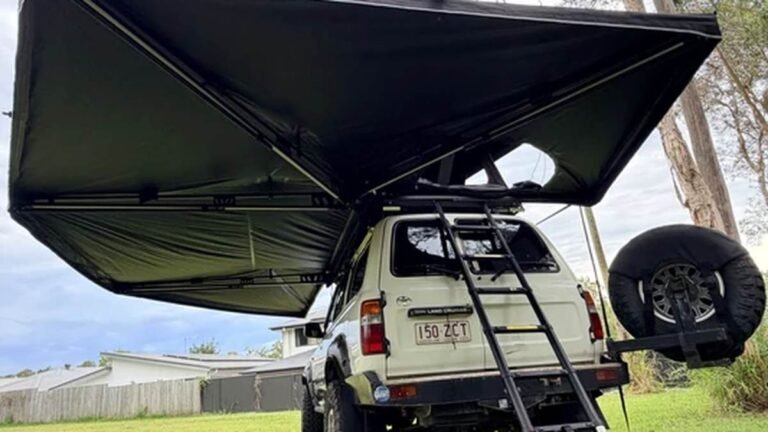
Good roof citizens: rooftop tents (designed for it), awnings (mount to the rack’s side), recovery boards (light, flat), swags and sleeping bags in waterproof bags, fishing rods in holders, empty jerry cans, solar panels.
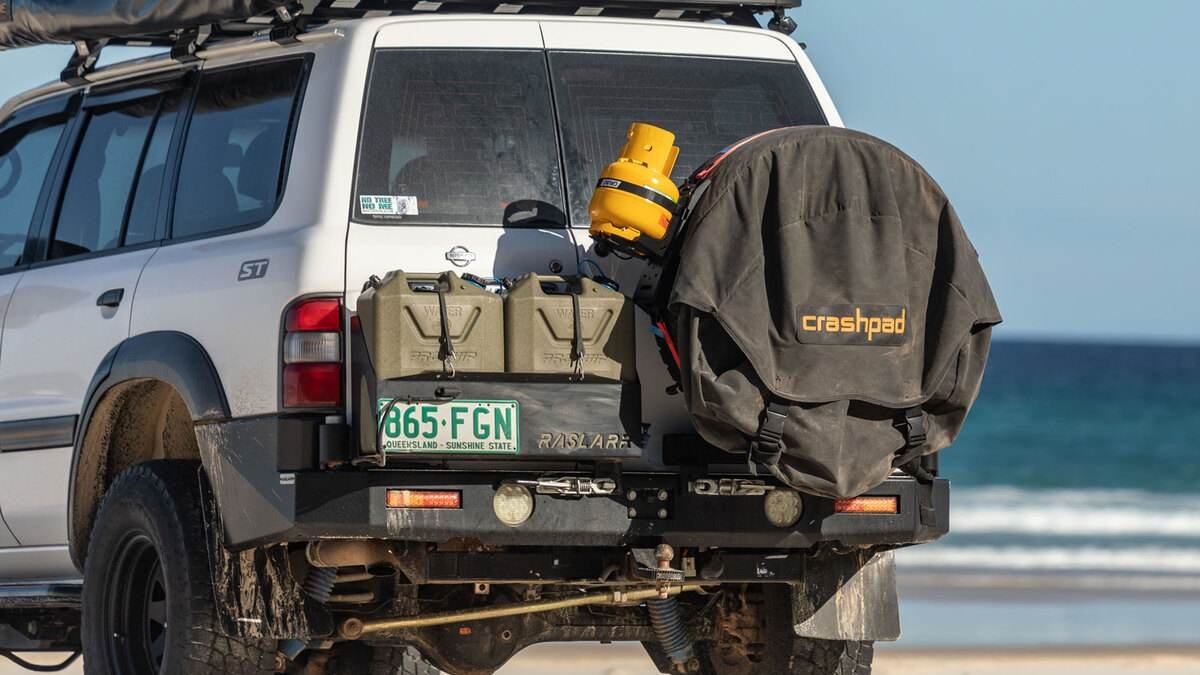
Bad roof citizens: full jerry cans of fuel or water (40kg+ of liquid sloshing up high — put them low in the vehicle), heavy toolboxes, batteries, anything you need frequent access to (climbing up there ten times a day gets old fast).
Mounting hardware matters: use proper brackets, not ratchet straps through the platform slots. Recovery boards should be on lockable mounts (they’re the most commonly stolen roof item). Everything should be secured against both bouncing up (corrugations launch gear) and sliding sideways.
Wind Noise, Fuel Economy, and Living With a Rack
A roof rack costs you fuel — typically 5–15% on the highway depending on what you’ve loaded. A bare platform is at the low end; a platform with a rooftop tent, awning, and jerry cans is at the high end. Over a big lap, that’s thousands of dollars in extra diesel. Pack the roof thoughtfully and remove the rack entirely if you’re doing months of bitumen touring without needing it.
Wind noise is mostly a function of what’s mounted, not the rack itself. A wind deflector (fairing) at the front of the platform cuts noise dramatically — most manufacturers offer one, and it’s worth fitting from day one. Whistling usually means a loose accessory or an unfaired front edge.
Weight Ratings Explained: Dynamic vs Static
Roof load ratings confuse everyone, because there are two of them and only one matters while driving:
- Dynamic rating (driving): typically 75–100kg for most vehicles and racks. This is the maximum while the vehicle is moving — it accounts for braking forces, cornering loads, and corrugation impacts multiplying the effective weight. Everything on the roof counts: the rack itself, the awning, the cargo box, and every item inside it.
- Static rating (parked): much higher — often 300kg+. This is what allows rooftop tents with two adults sleeping in them. It only applies when stationary.
The trap: a rooftop tent (60kg) + rack (25kg) + awning (20kg) = 105kg before you’ve loaded anything — already over many vehicles’ dynamic rating. Add a cargo box and you’re well illegal. This is why weight budgeting for the roof matters as much as GVM budgeting for the vehicle.
Reading the fine print: the vehicle’s roof rating (in the owner’s manual) and the rack’s rating are separate — the lower of the two governs. Some vehicles have surprisingly low roof ratings (check before buying the big platform). And GVM upgrades don’t change roof ratings — they’re separate engineering limits.
Practical rule: roof = light and bulky only (swags, chairs, awnings, empty boxes). If you can lift it with one hand, it can go up top. If it needs two hands, it lives inside the vehicle, low and between the axles.
Frequently Asked Questions
How much weight can I put on my roof rack?
Check two numbers: the dynamic rating (for driving, typically 75–100kg including the rack itself) and your vehicle’s roof rating — the lower of the two is your limit. Static rating (parked, for rooftop tents) is much higher, usually 250–350kg. Never exceed the dynamic rating while driving.
Platform vs basket roof rack — which is better for touring?
Platforms are better for most tourers: lower profile, more versatile mounting, easier rooftop tent fitment, and better aerodynamics. Baskets are cheaper and good for containing loose gear like firewood, but heavier and noisier. Cross bars suit light, specific loads only.
Does a roof rack affect fuel economy?
Yes — typically 5–15% worse on the highway depending on load. A bare platform is at the low end; a loaded touring setup with tent and awning at the high end. Remove the rack for long bitumen stretches if you don’t need it.
Can I mount a rooftop tent on any roof rack?
No — the rack needs an adequate static load rating (250kg+ for two adults plus tent) and a flat, sufficiently large mounting surface. Platform racks are ideal. Check the tent manufacturer’s mounting requirements against your specific rack before buying.
Do I need a wind deflector on my roof rack?
Strongly recommended. A fairing at the front of the platform dramatically reduces wind noise and slightly improves fuel economy. Most whistling and buffeting complaints are solved by fitting one.
How do I stop my roof rack from whistling?
Fit a wind deflector at the front, ensure all bolts are tight, and remove unused crossbars. Most whistling comes from bare crossbars or gaps in the platform — a fairing solves the majority of cases.