How to Pack a 4WD for Touring
Disclosure: We may earn a small commission if you purchase through our links, at no extra cost to you.
Here’s an uncomfortable truth about touring setups: most fully loaded 4WDs on Australian roads are overweight. Not slightly — hundreds of kilos over their Gross Vehicle Mass, with insurance, warranty, and legal implications nobody mentions in the glossy build videos. How to pack 4WD touring is fundamentally a weight puzzle first and a layout puzzle second. Get the weight right, and the layout becomes easy. Get it wrong, and no drawer system in the world saves you.
This guide covers the maths, the legal limits, and then the layout system that experienced tourers use. For the gear itself, see our Big Lap checklist; for roof loading specifically, our roof rack guide.
The Weight Maths: GVM, Payload, and Why You’re Probably Over
Know your numbers
Every vehicle has a compliance plate with three critical figures:
- GVM (Gross Vehicle Mass): the maximum your fully loaded vehicle can legally weigh. For a typical dual-cab ute: ~3,000–3,200kg.
- Tare mass: the empty vehicle with fluids. Typically ~2,000–2,200kg for a dual-cab.
- Payload: GVM minus tare — what’s left for everything: people, fuel, water, bullbar, canopy, drawers, fridge, recovery gear, camping gear, the dog.
A typical dual-cab has ~900–1,000kg of payload. Sounds generous. Now add it up: two adults (160kg), full fuel tank (70–140kg depending on tank size), 60L water (60kg), bullbar (60–80kg), canopy (80–120kg), drawer system (60–100kg), fridge full (25–40kg), second battery (25–35kg), roof rack + rooftop tent (60–100kg), recovery gear (30–50kg), camping gear, tools, food, clothes, awning (15–25kg)…
You’re at or over GVM before you’ve packed lunch. This is the normal state of Australian touring rigs, and it’s why GVM upgrades are a booming industry.
The weighbridge habit
The only way to know your real weight: a public weighbridge. They’re at most tips/transfer stations and some service stations, and a weigh costs a few dollars. Weigh:
- Fully loaded for a trip — as you’d leave for the outback.
- Each axle separately — drive on so only the front axle is on the plate, then the rear. Rear axle overload is the most common and most dangerous (it unloads the front, wrecking steering and braking).
- With the trailer/caravan attached — check GCM (Gross Combination Mass) too, and tow ball download (typically 10% of trailer weight, and it counts against the vehicle’s payload).
Do this once, properly, and you’ll never guess again. Most people are shocked. The honest ones then remove 200kg of gear.
Legal and insurance reality
Driving over GVM is illegal in every state, with fines and defect notices. More importantly: insurers can and do deny claims for overloaded vehicles. If you’re in a serious accident at 400kg over GVM, your comprehensive policy may not save you. A GVM upgrade (done by an approved engineer/second-stage manufacturer, plated and legal) is the legitimate fix if you genuinely need more capacity — typically lifting a dual-cab to 3,500–3,800kg GVM.
The Layout System: Zones and Principles
Once the weight budget is understood, pack by these principles:
1. Heavy, low, and forward (between the axles)
The golden rule. Heavy items go as low as possible and as close to between the axles as possible:
- Water, tools, recovery gear, and the second battery: low in the cargo area, over or just behind the rear axle.
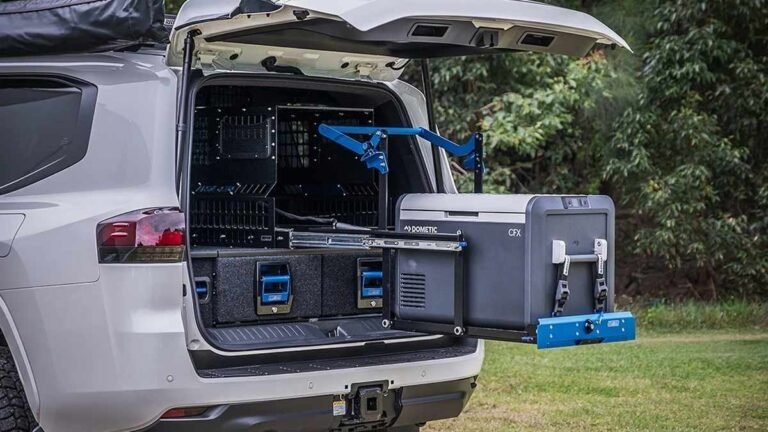
- Fridge: low, on a slide, accessible from the tailgate — it’s heavy (25–40kg loaded) and used constantly.
- Never put heavy items on the roof. Roof loads raise the centre of gravity, increase rollover risk, and most roof racks are rated to just 75–100kg dynamic (moving) load. The roof is for light, bulky things: swags, chairs, awnings, fishing rods.
2. Frequency zones
Pack by how often you touch things:
- Zone 1 (tailgate, immediate access): fridge, camp chairs, table, cooking gear, head torches, wet wipes. The first-hour-of-camp kit.
- Zone 2 (drawers, side access): tools, recovery gear, spares, pantry, clothes.
- Zone 3 (roof, buried): swags/spare tent, bulky light items, seasonal gear, the “might need” box.
3. The camp-setup sequence
Design your pack so arrival follows a natural sequence without unpacking everything to reach something:
- Park and level → awning out (roof-mounted, instant).
- Fridge slide out, chairs and table down (tailgate zone).
- Tent/swag deployment (roof or trailer).
- Kitchen setup (drawer zone).
- Everything else stays packed until needed.
A practised camp setup routine turns this arrival sequence into a 30-minute drill.
Drawers, Slides, and Cargo Systems
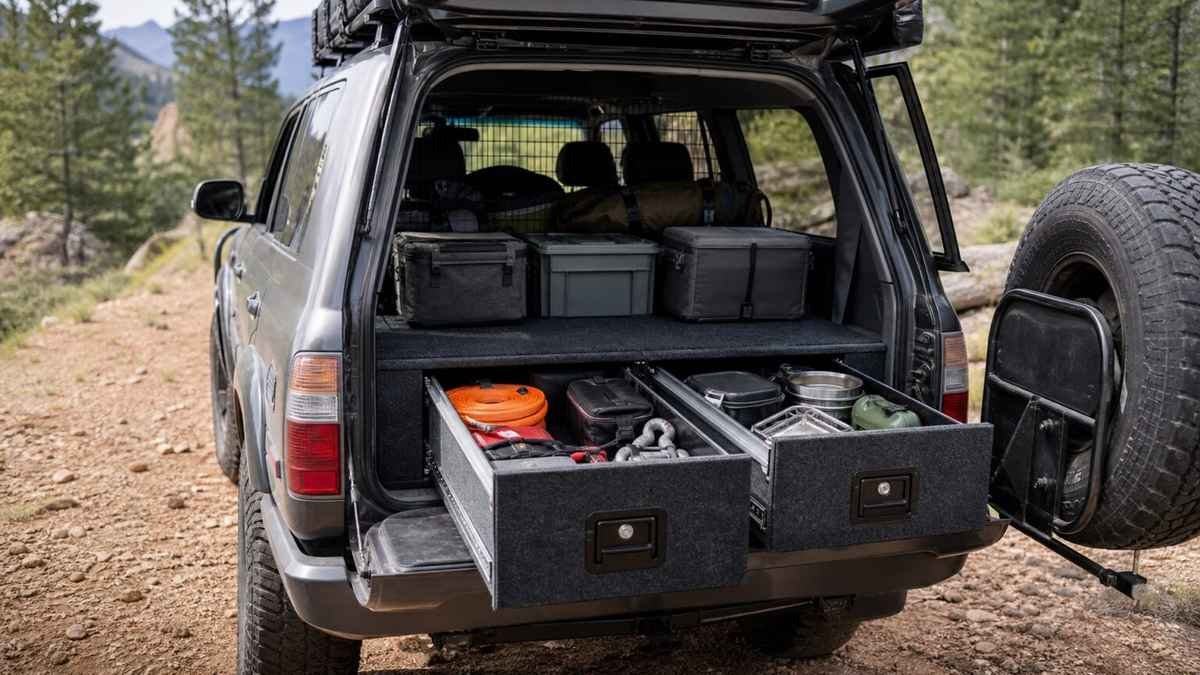
A drawer system is the single biggest packing upgrade for a wagon or ute with a canopy. It converts the chaos pit of a cargo area into organised, accessible storage — and the flat top becomes a sleeping platform or workbench. Quality systems (ARB’s drawer bundles are the benchmark, with configurations like their 1355mm drawer units) aren’t cheap, but they last the life of the vehicle.
The honest assessment of drawers:
- Pros: organisation, security, dust sealing, flat load surface, fast access.
- Cons: 60–100kg of their own weight (a real chunk of payload), cost, and reduced vertical space.
- DIY alternative: a plywood platform with plastic tubs achieves 70% of the benefit for a fraction of the cost and weight. Many experienced tourers prefer it.
Our fridge slides and drawer systems guide compares the options in detail, including when to skip them entirely.
Roof Loading: The Rules
- Know your dynamic rating. Most vehicle roofs and racks are rated 75–100kg dynamic (while driving). Static rating (parked, for rooftop tents with people in them) is much higher — but the driving rating is what matters for packing.
- Light and bulky only: swags, sleeping bags, chairs, awnings, fishing rods, empty jerry cans. If it’s heavy, it doesn’t go up top.
- Secure everything like it wants to kill someone — because at 100km/h on corrugations, it does. Ratchet straps, not occy straps. Check tension at every fuel stop.
- Wind noise and fuel use: a loaded roof rack costs 1–2L/100km. Over a Big Lap, that’s hundreds of dollars and many extra fuel stops.
Water and Fuel Placement
- Water: low and central. Under-floor or behind-seat tanks beat jerry cans on the roof (never put full water containers on the roof — 20L is 20kg up high, and it sloshes).
- Fuel: long-range tank first (weight low, between axles, no handling penalty). Jerry cans second choice — mount them low on a rear carrier, never on the roof, and never inside the cabin.
- Weight distribution check: after packing, look at the vehicle’s stance. Sagging rear with the nose high means too much weight behind the rear axle — redistribute forward or remove weight.
Common Packing Mistakes
- Packing for the apocalypse. The #1 mistake. You don’t need three of everything; Australia has shops. Pack for a week, resupply in towns.
- Heavy roof loads. The most dangerous common mistake — jerry cans and toolboxes on the roof destroy handling and invite rollovers.
- No weight audit. Never having visited a weighbridge. The most overloaded rigs belong to people who’ve never checked.
- Burying the frequently used. If setting up camp requires unpacking the entire vehicle, the layout has failed.
- Ignoring tow ball download. A 2,500kg trailer puts ~250kg on the tow ball — which comes straight off the vehicle’s payload. Many ute+caravan combos are illegal on this maths alone.
- Modifications without GVM upgrade. Bullbar, canopy, drawers, long-range tank, roof rack, second battery — the “standard” touring fit-out eats 300–400kg of payload before personal gear. Budget for a GVM upgrade or accept a minimalist setup.
The Weight-Saving Audit: Finding 200kg
Overweight? Almost everyone is. Here’s where the kilos hide — audit your setup against this list:
- Duplicate tools (10–20kg): you don’t need three shifters, two socket sets, and a drill. One quality set, plus the vehicle-specific essentials.
- “Just in case” spares (15–30kg): the spare alternator, the extra CV, the second fan belt. Carry what you can actually fit roadside; the rest is dead weight.
- Excessive water (20–60kg): carrying 140L for a weekend near towns is 100kg of unnecessary weight. Scale water to the trip — the water guide’s calculation, not the tank’s capacity.
- Full jerry cans “just because” (20–40kg): fuel for the actual distance plus reserve, not full cans out of habit. On sealed-road legs, half cans are fine.
- The roof (30–60kg): audit everything up top. The old tent you never use, the “spare” awning, the empty cargo box on a weekend trip. If it’s not for this trip, it’s not on the roof.
- Heavy drawer envy (40–60kg saving): commercial drawers vs DIY plywood is a 40–60kg decision. On a GVM-tight rig, that’s the difference between legal and not.
- Camp furniture excess (10–15kg): the second table, the four extra chairs, the outdoor mat the size of a tennis court. One table, chairs for your party, done.
- Food overstock (10–20kg): the pantry for a month on a two-week trip. Australia has shops; resupply is part of touring.
The audit method: unpack everything onto the driveway, weigh the piles with bathroom scales (or estimate honestly), and justify each item against the trip. Anything without a clear “this trip needs this” answer goes back in the shed. Most tourers find 150–250kg this way — often the difference between legal and overloaded.
Packing a Trailer or Camper Trailer
Towing changes the packing equation — you gain enormous capacity but add the trailer’s own weight logic:
- Tow ball download is payload. The 10% rule: a 2,000kg trailer puts ~200kg on the tow ball, which counts against the vehicle’s payload and rear axle load. This single factor makes many ute-plus-caravan combos technically overloaded — do the maths before buying the van.
- Heavy in the trailer, low and over the axles. Same principle as the vehicle: water tanks, tools, and dense gear low and centred over the trailer axles. Too much weight behind the trailer axles causes dangerous sway; too much forward overloads the tow ball.
- The 10% ball weight target: aim for tow ball download around 10% of the trailer’s loaded weight (8–12% is the acceptable range). Too light = sway; too heavy = overloaded tow vehicle. Bathroom scales and a jockey wheel do the job for measuring.
- What goes where: vehicle carries the daily-access gear (fridge, chairs, cooking, recovery); trailer carries the bulky/occasional gear (tents, bedding, water reserves, spares). The vehicle’s tailgate zone stays sacred — don’t bury daily items in the trailer.
- Trailer GVM matters too. Camper trailers and caravans have their own ATM (Aggregate Trailer Mass) — the maximum loaded weight. Overloading the trailer is just as illegal as overloading the vehicle, and trailer tyres/axles/bearings are the usual failure points.
- Pack the trailer once, properly. Unlike the vehicle (packed per trip), the trailer can stay loaded between trips — standardise the load, weigh it once at a weighbridge, and only adjust for the specific journey.
Frequently Asked Questions
How much payload does a typical dual-cab ute have?
Around 900–1,000kg (GVM minus tare mass). A full touring fit-out — bullbar, canopy, drawers, fridge, batteries, roof rack, water, fuel, two adults, and camping gear — routinely consumes all of it and more. A weighbridge visit is the only way to know your real figure.
What happens if I’m over GVM?
It’s illegal (fines and defect notices in every state), it voids aspects of your insurance in an accident, and it degrades handling, braking, and component life. The legitimate fixes are removing weight or a certified GVM upgrade.
Where should heavy gear go in a 4WD?
As low as possible and as close to between the axles as possible — water, tools, batteries, and recovery gear low in the cargo area. Never put heavy items on the roof; roof loads should be light and bulky only.
How much weight can I put on my roof rack?
Most vehicle roofs and racks are rated 75–100kg dynamic (while driving). Check your specific vehicle’s rating — it’s in the owner’s manual. Static ratings (parked, for rooftop tents) are much higher but irrelevant to packing while driving.
Does tow ball weight count against payload?
Yes. Tow ball download (typically ~10% of trailer weight) counts against the towing vehicle’s payload, not the trailer’s. A 2,500kg caravan puts roughly 250kg onto the ute’s payload — a common cause of illegal combinations.
← Back to our complete guide: Best Roof Racks for 4WD Touring Australia 2026