Best Camping Spots in Tasmania
Disclosure: We may earn a small commission if you purchase through our links, at no extra cost to you.
Tasmania is the state where camping feels easy again: short drives, a campground in almost every park, and scenery that changes completely every hundred kilometres. The best camping spots in Tasmania cover pink-granite beaches on the east coast, a car-free island of wombats and convict ruins, alpine lakes, and the southernmost road’s-end camp in Australia. One system runs most of it — a Tasmania Parks Pass for national park entry, with camping booked or paid through the Parks and Wildlife Service (PWS).
The honest warning first: Tasmanian weather does not respect seasons. Summer days can hit the high twenties and drop to single figures the same night, and the west and the highlands are wet in any month. Pack a real sleeping system and a waterproof layer as defaults, not extras, and Tasmania will reward you. The PWS Where to stay page is the official index of park campgrounds and the place to confirm which sites need bookings.
- A valid Parks Pass is required for every Tasmanian national park; buy the holiday or annual pass if you are visiting several.
- Freycinet, Maria Island and Narawntapu are the essential east and north camps; book ahead for summer.
- Weather turns fast in any season — pack for cold nights even in January.
Freycinet National Park: Richardsons Beach and Honeymoon Bay
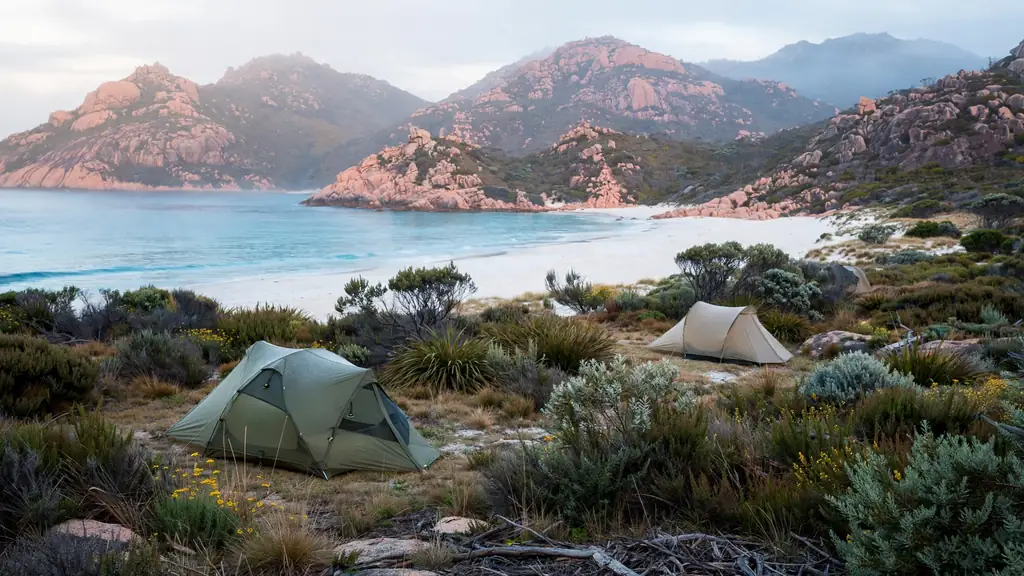
Freycinet is Tasmania’s postcard — the Hazards’ pink granite ridges behind a curve of white sand — and its main campground at Richardsons Beach, with Honeymoon Bay and Ranger Creek nearby, puts you inside the park at Coles Bay. Sites sit behind the beach in coastal scrub, the Wineglass Bay lookout walk starts from the car park up the road, and the whole east coast runs north from here. Freycinet is one of the campgrounds in the first stage of the PWS online booking rollout (bookings opening from November 2026 for selected fee-charging campgrounds), so the days of simply rolling up in January are ending — check the PWS site and book ahead for summer and Easter.
Maria Island National Park: Darlington and the free walker camps
Maria Island is the trip Tasmanians recommend to people they like. No cars, a ferry from Triabunna, and Darlington campground a short walk from the jetty, beside the convict-era settlement and under the Bishop and Clerk cliffs. Wombats graze the campground lawns at dusk like it is their job. Walkers can push on to the free campsites at Encampment Cove and Frenchs Farm for a quieter, carry-everything version of the island. You will need a Parks Pass, and everything — food, gear, rubbish — travels with you on the ferry.
Narawntapu National Park: Springlawn
On the north coast near Devonport, Narawntapu is the wildlife park: the Springlawn area’s open grasslands fill with Forester kangaroos, wallabies and wombats at dawn and dusk, and the campgrounds suit both tents and campervans, with powered sites available — a rarity in Tasmanian park camping. It is an easy first-night camp off the Spirit of Tasmania ferry, and the lagoons and coastal walks fill a couple of days without trying. Narawntapu is also in the first group of campgrounds moving to PWS online bookings.
Mount Field National Park
An hour from Hobart, Mount Field is the locals’ weekend park: a campground on the forested banks of the Tyenna River near the visitor centre, Russell Falls a short walk away (one of the most photographed waterfalls in the state), and alpine country up the Lake Dobson road for day walks among the ski fields and tarns. In autumn the fagus turns gold on the Tarn Shelf — Tasmania’s only deciduous native tree putting on the state’s best colour show. If you camp one inland park near Hobart, this is it.
Fortescue Bay, Tasman National Park
On the Tasman Peninsula, Fortescue Bay is where tall forest meets a sheltered bay — a large campground in the trees behind the beach, with the trailheads for the Cape Hauy and Bivouac Bay walks close by. It is the base camp for exploring the peninsula’s sea cliffs and the Port Arthur Historic Site is an easy drive. The bay is protected enough for kayaking and fishing when the swell is up outside. Book ahead in summer; this one fills with Hobart families for good reason.
Cockle Creek and the far south
Cockle Creek, at the end of the Huon Highway in Recherche Bay, is the southernmost campground you can drive to in Australia, and the gateway to the Southwest National Park’s South Coast Track. The camping is simple — scattered sites around the creek and bay — and the point is the setting: dolerite peaks across the water, whales passing in season, and the start (or finish) of one of the great multi-day walks. South Bruny National Park, back up the channel, makes the gentler alternative: beach campgrounds with easy access to the Neck and Cape Bruny lighthouse country.
Mount William National Park and the Bay of Fires
In the north-east, Mount William’s campgrounds sit behind the beaches at the southern end of the Bay of Fires coast — beachfront camping under the trees, granite boulders and orange lichen, and famously clear water. It is quieter than the St Helens end of the coast and better for it. Combine it with the conservation-area camping further up the Bay of Fires for a slow east-coast run back toward Freycinet. Cradle Mountain, the state’s other icon, has no public campground at the mountain itself: stay at the Waldheim Cabins inside the park or the private campgrounds near the visitor centre, and day-walk Dove Lake and the summit tracks.
Passes, booking and seasons
Every Tasmanian national park needs a valid Parks Pass — day, holiday (up to two months, all parks) and annual options are sold by PWS online and at visitor centres. Campground arrangements are in transition: PWS is rolling out an online booking system from November 2026, starting with ten campgrounds including Narawntapu, Freycinet, Maria Island, Mount Field, Fortescue Bay and South Bruny, while many other campgrounds remain free or self-register. Check the PWS page for your park before you go. Summer (December to March) is peak and driest on the east coast; winter is quiet, cold in the highlands, and the season locals keep for themselves. See how Tasmania stacks up nationally in our guide to the best camping spots in Australia, and match your sleep system to a Tasmanian night with our guide to the best sleeping bags in Australia.
Best camping spots in Tasmania on the west coast
The west is Tasmania’s other personality: wetter, wilder and far less visited than the east. The Arthur-Pieman Conservation Area, on the north-west coast, runs big, simple camping areas along a wild shoreline — the PWS lists it among its camping areas, and regulars return to the same family camps year after year for the surf fishing and the space. It is also one of the first areas in the PWS online booking rollout, so check arrangements before a summer trip. Further south, the trial harbour and Macquarie Harbour country around Strahan gives access to the Gordon River and the edge of the Southwest wilderness. West coast camping is weather-first camping: the Roaring Forties are not a metaphor, and a tent that shrugs off a horizontal night of rain is the entry ticket. Campers who accept that bargain get the island’s emptiest beaches and its most dramatic light.
Best camping spots in Tasmania for fuel-stove country
One Tasmanian rule surprises mainland campers: many PWS parks and reserves are Fuel Stove Only areas, where open fires are prohibited all year to protect fire-sensitive alpine and rainforest country. In practice that means your camp kitchen runs on a gas or liquid-fuel stove in much of the highlands and the west, and even where fireplaces exist, fire bans close them in summer. Pack cooking around the stove, and you will never have a trip rearranged by a fire rule. The same practicality applies to water and waste: outside the main campgrounds, treat all water, and carry rubbish out — Tasmania’s parks stay as clean as they are because campers hold up their end. Combine that with a layered sleep system and the island’s compact distances, and a two-week Tasmanian camping loop — east coast, highlands, one west-coast camp, Maria Island in the middle — is the best-value camping trip in Australia. It is also worth saying plainly: the best camping spots in Tasmania reward the campers who book the headline parks (Freycinet, Maria Island, Narawntapu) early and keep the rest of the itinerary loose enough to chase the weather from coast to coast.
A two-week Tasmanian camping loop
Tasmania’s size lets you do what the mainland never allows: the whole island in one trip, changing camp every two or three nights and never driving more than about three hours in a day. Off the ferry at Devonport, start at Narawntapu while you find your feet — wildlife, easy camping, nothing to organise. Run down the east coast next: a night around the Bay of Fires campgrounds at Mount William, then three nights at Freycinet as the trip’s centrepiece. Ferry out to Maria Island for two nights in the middle (book the Triabunna ferry with the park planning), then back through Hobart to Fortescue Bay for the Tasman Peninsula and Port Arthur. Finish inland at Mount Field for waterfalls and the drive back north, with Cockle Creek as the extension for anyone with two spare days and a taste for the end of the road. In summer, reverse nothing but book everything earlier; in winter, drop the west coast unless your tent and your temperament are both properly waterproof, and give the highlands their snow respect. However you order it, the loop is the argument for Tasmania in one itinerary: six distinct landscapes, one pass, and no day wasted in the car.
Wildlife at camp: the Tasmanian bonus
Nowhere else in Australia does the wildlife simply move into the campground, and it is part of what makes the best camping spots in Tasmania feel different to anywhere on the mainland. Tasmanian pademelons graze between the tents at most coastal camps, brushtail possums run a confident night shift (store every scrap of food in the car, not the tent), and Maria Island’s wombats are only the most famous residents — Narawntapu’s dawn lawns and the wallabies at Fortescue Bay run them close. Platypus live in the Tyenna River at Mount Field for the patient and quiet at dusk. None of it needs feeding, and all of it is harmed by it: the rule is watch, photograph, and let them be wild. It is also the practical reason for Tasmania’s hard food-storage discipline — a possum through your food box on night one is a lesson most campers only need once.
Frequently asked questions
What is the best camping spot in Tasmania?
Freycinet’s Richardsons Beach is the classic answer — granite peaks, white sand and the Wineglass Bay walk from camp. Maria Island runs it close for wildlife and atmosphere, and Narawntapu is the easiest great camp, an hour from the Devonport ferry.
Do I need a pass to camp in Tasmania?
Yes — a valid Tasmania Parks Pass is required to enter every national park, on top of any camping fees. A holiday pass covers all parks for up to two months and is the sensible buy for a touring trip. Some campgrounds are now booked online through PWS; others remain free or self-register.
When is the best time to camp in Tasmania?
Late spring to autumn (November to April) for the best odds of dry, mild weather, with February and March the most settled months. Winter camping is rewarding for prepared campers but expect cold nights, short days and wet weather in the west and highlands.
Can you camp at Cradle Mountain?
There is no public campground at Cradle Mountain itself. Options are the Waldheim Cabins inside the park, private campgrounds and caravan parks near the visitor centre, and walkers’ camps on the Overland Track for booked walkers in season.