Best Camping Near Melbourne: 10 Top Spots
Disclosure: We may earn a small commission if you purchase through our links, at no extra cost to you.
Melbourne is one of the easiest Australian cities to escape. Within an hour of the CBD you can be beside a creek in the Kinglake ranges or camped inside the crater of an extinct volcano; within three hours, on a surf beach in the Otways or at Wilsons Prom. The best camping near Melbourne is not one place — it is a ring of national parks, state forests, lakeside campgrounds and beach holiday parks, each with its own booking system and access rules.
Every campground below was checked against Parks Victoria pages or the park operators. Fees quoted are from the Parks Victoria 2026–27 fees schedule.
Best camping near Melbourne within 90 minutes
The closest real bush camps to the city. Two of the three cost nothing at all.
The Gums Campground, Kinglake National Park
The Gums is the closest bookable bush camp to Melbourne: Kinglake National Park sits 65 kilometres north-east of the city, and the campground is 10 kilometres north of the Kinglake township, about an hour’s drive from the CBD. It is a small, popular campground beside a mountain stream, with 15 campsites — six of them suitable for campervans and caravans. Book through Parks Victoria: 15 sites fill fast on weekends. One closure to plan around — the campground shuts each winter during the Victorian third school term.
Mount Franklin (Lalgambuk) Camping Area, Hepburn Regional Park
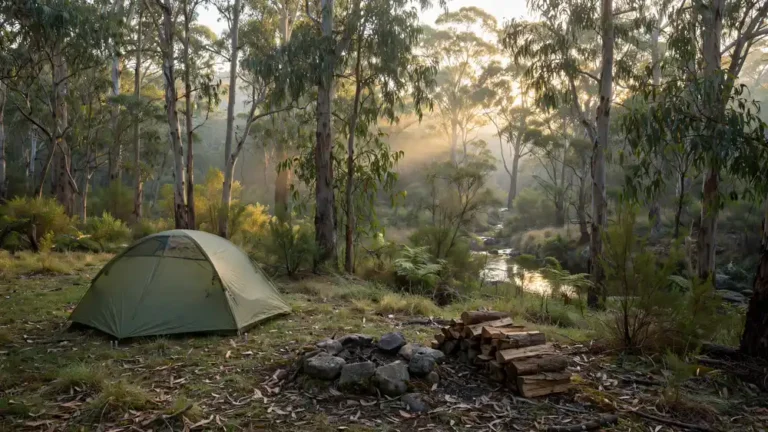
Mount Franklin is camping inside an extinct volcano — literally. Lalgambuk erupted around 470,000 years ago, and the campground sits in the crater, ten minutes outside Daylesford, roughly 90 minutes north-west of Melbourne. It is jointly managed with the Dja Dja Wurrung Clans Aboriginal Corporation and is a significant place for the Djaara people. Camping here is free and first-come, first-served: no fees, no bookings. The area suits tents, camper trailers, campervans and caravans, with a communal shelter and non-flushing toilets. Campfires are allowed in the steel fireplaces provided, so bring your own firewood — and bring all of your drinking water.
Lerderderg Campground, Wombat–Lerderderg National Park
About an hour west of Melbourne, near Bacchus Marsh, the Lerderderg River has cut a deep gorge through rugged bush. The campground sits on Upper Chadwick Track, five kilometres from O’Briens Crossing, in woodland with picnic tables, toilets and fireplaces. Like Mount Franklin, it is free and first-come, first-served — no fees and no bookings are taken. Two traps: O’Briens Crossing itself is a day visitor area only, with camping prohibited there since 2018, and the park’s other camp, Amblers Crossing, is 4WD or walk-in access only and reachable in dry weather only. Dogs are permitted on lead in specified areas of the park.
Camping near Melbourne in 90 minutes to two hours
Cooks Mill, Cathedral Range State Park
Cathedral Range is a seven-kilometre ridge of sharply upturned rock north-east of Melbourne, just under two hours’ drive, and Cooks Mill is its drive-in campground. It is a shady camp beside the Little River, with sites for tents, campervans and a small number of caravans, plus pit toilets, fireplaces, picnic tables and shelters. Camping fees apply and pre-booking is required — individual sites cannot be reserved. One hard rule: the park closes on Catastrophic fire danger days.
Neds Gully, Cathedral Range State Park
Neds Gully is the quieter of the park’s two camps, and the one to pick if you want to walk in and leave the car behind. It is reached on foot across a suspension bridge from the Neds Gully car park — there is no vehicle access, so it is tents only, with pit toilets and fireplaces. Like Cooks Mill, it needs a pre-booking and the standard camping fee applies. The track climbs to the Farmyard, the park’s only hike-in camp. It is a serious walk, with no facilities.
BIG4 Ingenia Holidays Phillip Island, Newhaven
Phillip Island is the comfort option on this list, and the only one with powered sites, a camp kitchen and a playground. The park sits at 24 Old Bridge Drive, Newhaven, near San Remo and Newhaven Beach — about 1 hour 45 minutes from the Melbourne CBD. Powered sites sleep up to seven guests; unpowered sites sleep up to four and suit tents, camper trailers and roof tents only, with no caravans or motorhomes on those sites. Facilities include beach access, a camp kitchen, barbecues, free Wi-Fi, a playground and a games room. Pets are welcome on selected cabins and camping sites, with a blackout from 24 December to 31 January and during the Easter school holidays.
Two to three hours: the coast and the lake
Fraser Camping Area, Lake Eildon National Park
Lake Eildon is the water-sports base of this list, about two and a half hours from Melbourne in the north-east. The Fraser camping area sits around Coller Bay and holds three campgrounds — Candlebark, Lakeside and Devil Cove — for tents and some caravans and campervans. Fees apply and bookings are required. The facilities changed in 2026: Parks Victoria finished upgrading the campgrounds in June 2026, and showers, drinking water, flushing toilets, barbecues and picnic tables are no longer available at any of the three. Bring your entire water supply. Fires changed too: the shared fireplaces were removed in late 2025, and until they are replaced you must not light any solid-fuel fires — bring a gas cooker instead. Devil Cove is closed seasonally and opens for peak periods only.
Cumberland River Holiday Park, Lorne
Cumberland River is the Great Ocean Road camp that feels most like real camping. The park sits seven kilometres south-west of Lorne, about two hours from Melbourne, in a lush valley where the Cumberland River runs through rock pools and sandy stretches to the Southern Ocean. It is off-grid — the park generates its own electricity — and that shapes the rules: more than 80 grassy unpowered sites, a maximum of four people per site or a family of six, one car per site, check-in from 1pm and a 10am check-out. Fires are allowed only in the fire bins provided, for a hire fee, and generators are not permitted. There is no mobile reception in the valley, and water is scarce, so showers are metered to five minutes. Book ahead — it fills on weekends.
Johanna Beach Campground, Great Otway National Park
Johanna Beach is the wild surf beach of this list, about three hours from Melbourne via the Great Ocean Road. The campground sits between coastal sand dunes, grassy hinterland and a prime surf beach, and it is one of the few national park campgrounds in Victoria where dogs are welcome on lead — keep the dog leashed. It is a Parks Victoria bookable campground, so the standard camping fee applies and you book online before you arrive. Go for the surf and the Great Ocean Walk, not a gentle swim.
Tidal River Campground, Wilsons Promontory National Park
Tidal River is the big one — the most popular and best-equipped campground in Wilsons Prom, about three hours south-east of Melbourne. There are 484 camping and caravan sites, only 20 of them powered, with a maximum of six people per site. You book a specific site number online, and for peak periods you need to be ready the moment bookings open: summer peak runs on a seven-night minimum between 20 December and 24 January, with Sunday arrival and departure, and minimum stays apply over Labour Day and Easter too. There is no fuel at Tidal River, so fill up before the park entrance. The general store reopened in May 2026 and stocks basics, bread, milk, ice and gas.
How to book camping near Melbourne
Most campgrounds in this guide run on the same system: Parks Victoria’s online booking service. Bookable sites need a booking made and paid in full online — you cannot buy a permit on arrival at campgrounds with no phone service, and peak dates sell out. The standard mid-category fee for 2026–27 is $16.00 to $17.80 per site per night, and that figure already includes the Victorian Government’s 50% camping discount, which runs until July 2027. Mount Franklin and Lerderderg need no booking at all — both are free and first-come, first-served — and the two private parks are booked direct with the park. For permits, fees and the full list of bookable campgrounds, start at the Parks Victoria camping near Melbourne page. To range wider, see the best national parks camping in Victoria.
Campfires, dogs and park rules
Campfire rules change from park to park, so check the individual park page on the day you travel. Fireplaces are provided at Cooks Mill, Neds Gully and Lerderderg, and Mount Franklin has limited steel fireplaces where you must bring your own firewood. At Lake Eildon’s Fraser campgrounds there are currently no solid-fuel fires at all until the fireplaces are replaced. Pets are not allowed in national parks as a rule — the exceptions are Johanna Beach, where dogs are welcome on lead, specified areas of Wombat–Lerderderg National Park, and selected sites at the Phillip Island holiday park, with summer and Easter blackouts. Cathedral Range State Park closes entirely on Catastrophic fire danger days. There are no bins at the bush campgrounds, so take all rubbish home.
When is the best time to camp near Melbourne?
Autumn, from March to May, and spring, from September to November, are the sweet spot for camping near Melbourne: mild days, cool nights and fewer crowds. Summer, from December to February, is hotter and busier, and it brings the hard booking rules: Tidal River’s seven-night summer minimum and campgrounds that sell out months ahead. Winter is quiet in the Otways and on the Prom, but The Gums shuts during the Victorian third school term. If you can only camp in summer, pick a site with shade and water and book the moment the dates open.
What to pack for a weekend near Melbourne
Pack for the access, not just the weather. Every Parks Victoria booking needs to be paid in full before you arrive. Bring all of your drinking water for Lake Eildon and Mount Franklin, your own firewood for the fireplaces, and a fuel stove as a backup — at Fraser, the stove is the only cooking option. Bring warm layers, sun protection and insect repellent, and check the fire danger rating on the morning you leave. Run through our full camping checklist for Australia before you load the car.
Best camping near Melbourne: FAQs
Do I need to book camping near Melbourne in advance?
Yes — for almost every site in this guide. Parks Victoria campgrounds need a booking made and paid in full online, and you cannot buy a permit on arrival at campgrounds with no phone service. Tidal River’s peak dates sell out months ahead, and summer carries minimum stays. The exceptions are Mount Franklin and Lerderderg Campground, which are free and first-come, first-served — so arrive early on a Friday. The private parks at Phillip Island and Cumberland River are booked direct.
What is the cheapest camping near Melbourne?
The cheapest camping near Melbourne is free: Mount Franklin (Lalgambuk) in the crater of an extinct volcano, and Lerderderg Campground in Wombat–Lerderderg National Park, both with no fees and no bookings, first-come first-served. The cheapest bookable sites are the Parks Victoria mid-category campgrounds — The Gums, Cooks Mill, Neds Gully and Johanna Beach — at $16.00 to $17.80 per site per night for 2026–27, with the Victorian Government’s 50% discount already included.
Can I take my dog camping near Melbourne?
It depends on the campground. Dogs are not allowed in national parks as a rule, which covers most of the sites in this guide. The exceptions are Johanna Beach Campground, where dogs are welcome on lead, specified areas of Wombat–Lerderderg National Park, and selected sites and cabins at the BIG4 Phillip Island holiday park — with pets not allowed there from 24 December to 31 January or during the Easter school holidays. Always confirm the pet policy before you book.
Where is the closest camping to Melbourne?
The Gums Campground in Kinglake National Park is the closest bookable bush camp to Melbourne, 65 kilometres north-east of the city and about an hour’s drive. Lerderderg Campground near Bacchus Marsh is about an hour west and is free. Both are genuine bush camps, not caravan parks on the city fringe — which is why they fill fast on weekends.
Can I have a campfire when camping near Melbourne?
It depends on the campground. Fireplaces are provided at Cooks Mill, Neds Gully and Lerderderg, and Mount Franklin has limited steel fireplaces — bring your own firewood, and never collect it inside a national park. At Lake Eildon’s Fraser campgrounds there are currently no solid-fuel fires at all until the fireplaces are replaced. Always check the fire danger rating and total fire ban status on the day you travel, and carry a fuel stove as a backup.
Start with the closest sites — The Gums, Mount Franklin or Lerderderg — and the whole ring opens up. Ready to range further? Our guide to the best camping spots in Australia picks up where this one leaves off.