How to Wash a Sleeping Bag (Down & Synthetic)
Disclosure: We may earn a small commission if you purchase through our links, at no extra cost to you.
Learning how to wash a sleeping bag properly is one of the highest-value skills in camping. A clean bag lofts better, insulates better, and lasts years longer — while a bag washed the wrong way can lose a season’s worth of warmth in a single cycle. The good news: it’s not difficult. It just requires the right soap, the right machine, and — most importantly — the right drying. This guide covers the complete process for both down and synthetic bags, the mistakes that destroy insulation, and how to know when your bag actually needs washing versus just airing out.
When Does a Sleeping Bag Actually Need Washing?
Less often than you think. Most bags only need a full wash once or twice a year even with regular use. Over-washing — especially down — breaks down insulation faster than dirt does. Wash your bag when:
- It smells musty or sour even after airing
- There are visible stains, especially around the hood and footbox
- The insulation looks flat and doesn’t loft up after shaking, even when clean and dry
- It’s been through something genuinely filthy (mud, food spills, a leaky tent in a dust storm)
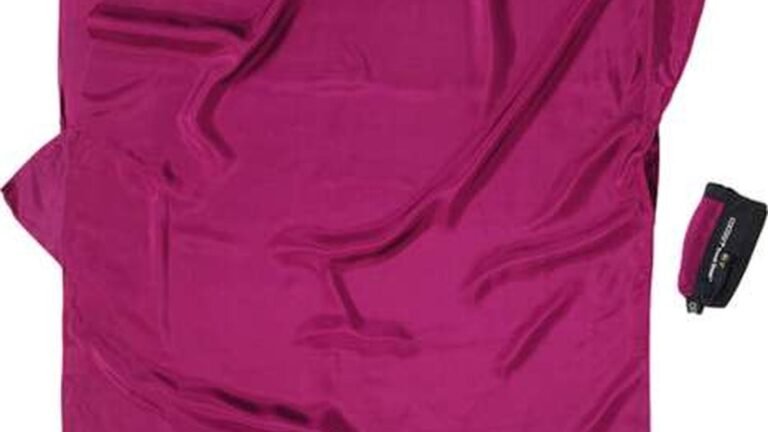
For everything else, airing is enough. After every trip, turn the bag inside out and hang it over a clothesline or chair for a few hours (out of harsh direct sun, which degrades nylon). A sleeping bag liner dramatically cuts washing frequency — wash the $50 liner regularly, wash the $400 bag rarely. Spot-clean small marks with a damp cloth and a dab of technical wash rather than running a full cycle.
Why Regular Detergent Ruins Sleeping Bags
This is the single most important thing in this guide. Standard laundry detergent contains surfactants, fragrances, optical brighteners, and fabric softeners designed for cotton clothes. On a sleeping bag they:
- Strip natural oils from down, making the plumules brittle and less able to loft — permanently reducing warmth
- Leave residues that attract moisture and cause down clusters to clump
- Coat synthetic fibres with a film that reduces their spring and traps odours
- Damage DWR coatings on the bag’s shell fabric
Use a proper technical wash instead. Nikwax Down Wash Direct (300ml, around $25 at Australian outdoor retailers) is the standard for down bags; Nikwax Tech Wash (300ml, around $20) suits synthetic bags and shells. These are soap-based, residue-free cleaners designed not to harm insulation or water-repellent coatings. One bottle handles multiple washes, so the per-wash cost is a few dollars — cheap insurance for a bag worth hundreds.
What You’ll Need
- Technical wash (down-specific for down bags, Tech Wash or similar for synthetic)
- A front-loading washing machine — top-loaders with a central agitator can tear baffles and redistribute fill. If you only have a top-loader, use a commercial laundromat’s front-loader (most have large ones that fit a bag easily)
- Clean tennis balls or dryer balls (3–4) for drying down bags
- A tumble dryer with low/no-heat setting, or a full day and a clothesline in the shade
- A bathtub as backup for hand-washing (see below)
How to Wash a Down Sleeping Bag: Step by Step
Step 1: Prep the bag
Close all zips, fasten any Velcro (it snags shell fabric), turn the bag inside out so the dirtiest surface — the lining — faces out, and check every pocket for forgotten tissues, snacks, and headlamp batteries. Shake out loose dirt outside.
Step 2: Load the machine
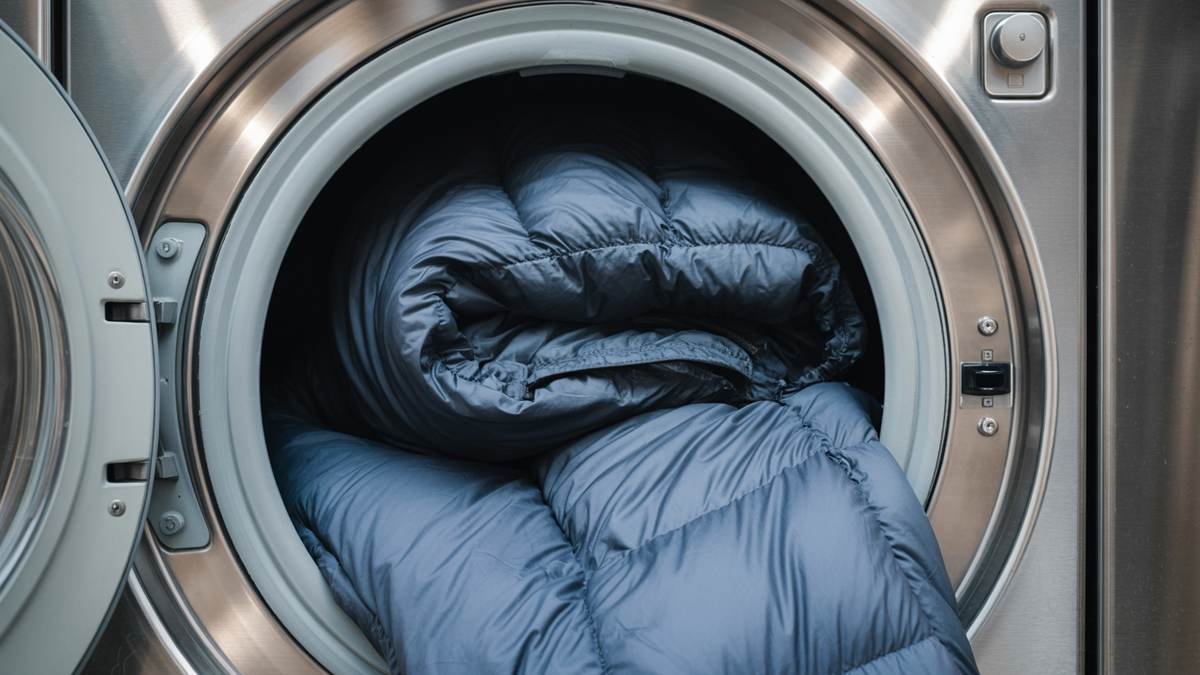
Place the bag loosely in a front-loader. Don’t cram — the bag needs room to move. Add the correct dose of down wash (check the bottle; usually one capful). Select a gentle or delicates cycle, cold or 30°C water, with an extra rinse if your machine offers it. Extra rinse matters: leftover soap is the enemy of loft.
Step 3: The critical drying stage
This is where down bags are won or lost. Down must be dried completely — any residual dampness leads to clumping, mildew, and that unmistakable wet-dog smell that never quite leaves.
Tumble dryer method (best): Transfer the bag to a large dryer on low heat. Add 3–4 clean tennis balls or dryer balls — they thump the bag as it tumbles, breaking up down clumps and restoring loft. Dry for 2–4 hours on low, stopping every 30–45 minutes to shake the bag out, feel for damp clumps (especially in the footbox and hood), and redistribute. It’s done when the bag feels uniformly puffy with zero clammy spots, and it lofts fully when shaken. When you think it’s done, give it another 30 minutes — under-dried down is the classic mistake.
Line dry method (slower): Lay the bag flat over several lines or a clean clothes rack — never hang a wet down bag by one end, as the waterlogged down will drag and tear baffles. Turn and fluff every few hours. In dry conditions this takes a full day or more. Finish with 20 minutes in a dryer on no-heat with tennis balls if you can, to fully restore loft.
Step 4: Storage
Once bone dry, store the bag in its large loose storage sack (the big cotton or mesh one), never the compression stuff sack. Hanging in a wardrobe works too. Compressed storage between trips is what slowly kills loft — the number one cause of “my bag isn’t as warm as it used to be.”
How to Wash a Synthetic Sleeping Bag: Step by Step
Synthetic bags are far more forgiving, which is one reason they’re the smart choice for kids’ bags and humid climates. The process is similar but simpler:
- Prep as above: zips closed, inside out, pockets emptied.
- Machine wash on gentle, cold/30°C, with Tech Wash or a small amount of pure soap. Synthetic fill tolerates a normal front-loader cycle well.
- Extra rinse to remove all soap residue.
- Dry on low heat in a tumble dryer — synthetic dries much faster than down, usually 1–2 hours. Tennis balls help but aren’t critical. Line drying works fine too; synthetic doesn’t clump the way down does.
- Check loft by shaking — it should puff up evenly. If flat spots persist, another 20 minutes with dryer balls usually fixes it.
- Store loose, same as down.
Most kids’ sleeping bags are synthetic and machine washable — check the care label, as a few novelty-print bags aren’t, which is worth knowing before biscuit crumbs happen.
Hand Washing in a Bathtub (When There’s No Suitable Machine)
Fill a clean bathtub with lukewarm water and the correct dose of technical wash. Submerge the bag, gently press (don’t wring or twist) to work the soapy water through, and let it soak for 30–60 minutes. Drain, refill with clean water, and press repeatedly to rinse — repeat until the water runs clear and no suds remain. Then press (don’t wring) out as much water as possible, roll the bag in clean towels to absorb more, and dry as per the machine method above. It’s labour-intensive but perfectly effective, and it’s the safest option for very old or delicate bags.
Restoring DWR and Reproofing
If water no longer beads on your bag’s shell fabric, the DWR (durable water repellent) coating has worn off. After washing, you can restore it: for down bags, Nikwax Down Proof (around $26) is a wash-in treatment that adds DWR to both the outer fabric and the down fill; for synthetic bags and shells, a spray-on or wash-in DWRproofer does the job. Wash first with Tech Wash, then run the proofing treatment. This is worth doing every few years on bags used in damp conditions — it keeps the shell from wetting out, which is what really chills you when condensation hits.
Wash Cheat Sheet: Down vs Synthetic at a Glance
| Step | Down bag | Synthetic bag |
|---|---|---|
| Soap | Down-specific wash (e.g. Nikwax Down Wash Direct, ~$25) | Technical wash (e.g. Nikwax Tech Wash, ~$20) |
| Machine | Front-loader only, gentle, cold/30°C | Front-loader, gentle, cold/30°C |
| Rinse | Extra rinse cycle essential | Extra rinse recommended |
| Dry | Tumble low 2–4 hrs with tennis balls; must be 100% dry | Tumble low 1–2 hrs; line drying fine |
| Biggest risk | Under-drying (clumping, mildew, smell) | Over-washing (fibre fatigue over time) |
| Wash frequency | 1–2x per year max | 2–3x per year if needed |
| Reproof | Wash-in down proofer every few years | Spray/wash-in DWR as needed |
Reproofing vs Washing: Know the Difference
Campers often wash a bag that’s actually suffering from DWR failure, not dirt. Here’s how to tell: sprinkle water on the shell fabric. If it beads and rolls off, the DWR is fine — wash only if the bag is dirty or smelly. If water soaks in and darkens the fabric (wetting out), the DWR has failed and the bag needs reproofing after washing. Wetting-out shells let condensation and tent-wall moisture soak toward the insulation, which is why a bag can feel colder each season even when it’s “clean.” The fix sequence is always wash first (with Tech Wash), then proof — proofing over dirt just seals the grime in. For down bags in humid Australian conditions, reproofing every 2–3 years is reasonable maintenance, not overkill.
7 Mistakes That Destroy Sleeping Bags
- Top-loader with agitator: the central post can rip baffles and bunch fill. Front-loader or laundromat only.
- Regular detergent or fabric softener: strips down oils, coats synthetic fibres, kills DWR. Never.
- Hot water or high heat: can melt or damage shell fabrics and delicate baffles. Cold/30°C wash, low dryer heat.
- Under-drying down: the classic killer. If in doubt, dry longer. Damp down = clumped down = cold bag.
- Wringing: twists and tears internal baffles. Press water out; never wring.
- Storing compressed: months in a stuff sack flattens insulation permanently. Store loose.
- Washing too often: every wash wears the bag slightly. Air and spot-clean between full washes; use a liner.
How Washing Relates to Temperature Ratings
A bag’s temperature rating assumes full loft. A bag that’s lost loft through compression storage, accumulated body oils, or clumped-down from bad drying can easily perform a full season colder than its rating — your “-5°C” bag becomes a “0°C” bag without you realising. If your bag feels colder than it used to, a proper wash and thorough dry often restores a surprising amount of warmth before you spend money on a replacement.
Drying: The Step Everyone Rushes
Washing gets the attention, but drying is where bags are actually destroyed — a damp bag stored even slightly moist grows mildew within days, and mildew in down is effectively permanent. The rules: dry completely, then dry some more. A bag that feels dry on the outside can hold moisture deep in the fill; keep going until it’s uniformly lofty and warm to the touch throughout.
Tumble drying on low with clean tennis balls (or dryer balls) is the best method for both down and synthetic — the balls break up clumps and restore loft far better than air drying. Expect 2–4 hours for a down bag, checking and re-fluffing every 30 minutes. Air drying works but takes days and requires constant turning and manual clump-breaking; never air-dry in direct Australian sun for extended periods, as UV degrades nylon shells. And the cardinal rule: never, ever store a bag — even briefly — until you’re certain it’s bone dry. When in doubt, give it another hour.
Frequently Asked Questions
Can I put my sleeping bag in a regular washing machine?
Yes, if it’s a front-loader. Top-loading machines with a central agitator can tear internal baffles and damage the bag — use a laundromat’s large front-loader instead. Always use a gentle cycle, cold or 30°C water, and a technical wash.
How often should I wash my sleeping bag?
Once or twice a year with regular use, or when it smells, looks dirty, or has lost loft. Air it after every trip and use a liner to extend the interval. Over-washing wears insulation faster than dirt does.
Can I use regular detergent on a down sleeping bag?
No. Regular detergent strips the natural oils from down, leaves residue that causes clumping, and damages DWR coatings. Use a down-specific technical wash like Nikwax Down Wash Direct.
Why does my sleeping bag smell after washing?
It’s under-dried. Damp down develops a musty smell quickly. Put it back in the dryer on low with tennis balls until it’s completely dry throughout — check the footbox and hood carefully, as these dry last.
Can I dry clean a sleeping bag?
Don’t. Dry cleaning solvents damage both down and synthetic insulation and strip DWR coatings. Machine or hand wash with technical products only.
← Back to our complete guide: Best Sleeping Bags Australia 2026