Camping for Beginners in Australia: Your Complete First-Trip Guide
Disclosure: We may earn a small commission if you purchase through our links, at no extra cost to you.
Here’s the honest truth about most camping for beginners Australia guides: they hand you a forty-item shopping list and send you off. But first trips don’t fail because of shopping lists. They fail on five or six decisions — the right first campsite, gear that does the job without emptying your wallet, a booking made before the good sites sell out, knowing the fire rules before you strike a match, and a simple routine on night one.
This camping for beginners Australia guide is for the absolute beginner: never slept in a tent, or not since school camp. Every section is Australia-specific — how our park bookings work, what a Total Fire Ban means for dinner, why our weather punishes the under-prepared, and the apps that keep you safe. Read it once before you buy a single thing.
Before You Spend a Cent: Borrow Your First Setup
The best advice in this whole camping for beginners Australia guide: don’t buy your first tent. Borrow one — or go with a mate who already owns the lot. You don’t know your camping style yet. Some people turn out to be swag-and-fire-pit minimalists; others discover they need a tent they can stand up in. You can’t know which camper you are until you’ve done a night or two, and buying beforehand is how you end up with expensive gear that doesn’t suit you.
A borrowed tent from an experienced camper is also field-tested — all its pegs present, someone who knows how it goes up. Ask around; nearly every Aussie knows someone with gear gathering dust in the shed. And if you do buy later, our roundup of the best camping tents in Australia covers beginner-friendly options that won’t punish a first-timer’s budget.
Whatever tent you end up with, practise pitching it at home first — in daylight, with the instructions, on the lawn. Your first setup should never be in the dark at an unfamiliar campground.
The Minimum Gear That Actually Matters
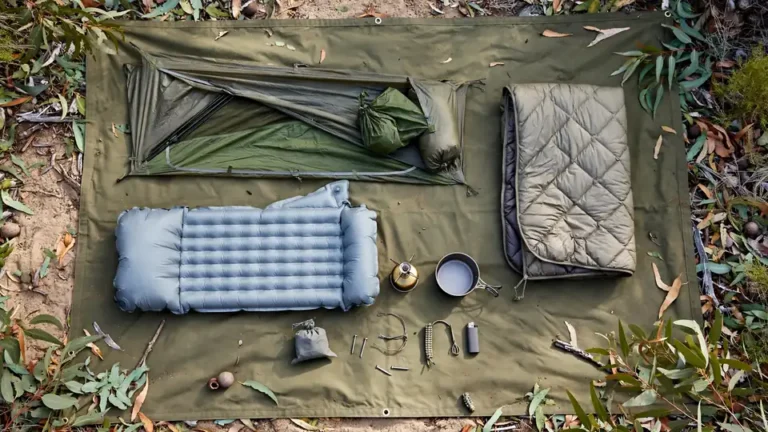
Strip a beginner kit to what a first trip genuinely needs and you get five categories: shelter, sleep, cook, light, and sit.
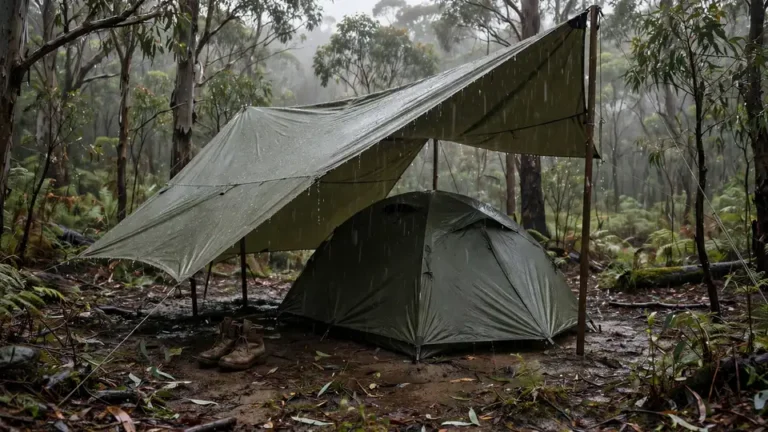
Shelter. A tent with a full-coverage fly — the waterproof outer layer that keeps rain off the inner tent — plus a groundsheet underneath to protect the floor from stones and damp ground.
Sleep. This is where beginners suffer most. An uninsulated air mattress on cold ground drains your body heat all night. What works: an insulated sleeping mat plus a bag rated for the coldest night you expect. Even summer nights in the high country and the desert get properly cold — bring the warm bag, and a real pillow from home.
Cook. A single-burner gas stove, a lighter plus a spare, a pot, a frypan, plates, mugs and cutlery. Gas matters more than beginners realise — on a Total Fire Ban day it’s your only legal cooking option. Pre-chop veg and marinate meat at home in zip-lock bags; camp cooking is 90 percent prep.
Light and sit. A headlamp each (not a phone torch) plus a lantern for the table — a campsite becomes a dark obstacle course fast after sunset. And a camp chair each; the ground gets old quickly, and tired backs make grumpy campers.
Beyond that: a sharp knife, chopping board, garbage bags, sunscreen, insect repellent, a basic first aid kit with a snake bandage, and a warm layer for the evening. For the full item-by-item version, our Australian camping checklist is the printable edition of this philosophy.
Camping for Beginners Australia: Picking Your First Campsite
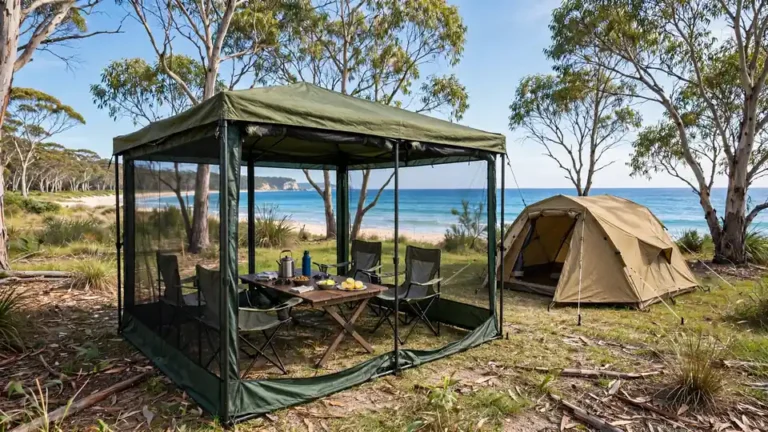
For trip number one, look for three things: proper amenities, proximity to home, and a site you can book in advance. Amenities first. Flushing toilets, a hot shower, and a camp kitchen with a sink transform a beginner’s experience — you can graduate to bush loos on trip three. Stay close: keep your first trip within about two hours of home, so a short drive home is a safety valve and you arrive with plenty of daylight. Bookable beats winging it: the prettiest campgrounds fill up on weekends, and “we’ll just find somewhere” can end with you driving between full campgrounds at dusk.
Good first-trip options include national park campgrounds with facilities, state forest camping areas, and holiday parks with unpowered tent sites. Our guide to the best camping spots in Australia includes beginner-friendly picks across the states.
Camping for Beginners Australia: Bookings and Park Passes
This is the section most beginner guides skip, and it causes the most grief. Australia doesn’t have one camping system — every state and territory runs its own parks authority, booking portal, and fee structure.
To camp in a national park, book through your state’s parks website: check availability, pay camping fees, and usually sort the vehicle entry pass at the same time. Some parks charge day-visit entry separately, so check both.
Two things catch beginners out. First, popular coastal and alpine campgrounds release sites on a rolling window and the good weekends sell out within hours — set a reminder for the release date and book that morning. Second, school holidays are a different universe; a regular weekend outside holidays gives you your pick of sites.
Free camping exists — many state forests and some council areas allow it, and apps like WikiCamps list thousands of sites. But camping where it isn’t permitted can earn you a fine, especially along the east coast tourist strips where rangers patrol. When in doubt, the campground with a booking is the campground where you’re welcome.
Fire Rules and Total Fire Bans
Few things define Australian camping like the campfire — and few things catch beginners out like our fire rules. Many parks allow fires only in provided pits, and firewood collection is banned in many national parks, so bring your own or buy it locally.
Then there’s the Total Fire Ban. On declared ban days — common through summer and in hot, windy weather — open fires of any kind are illegal, including campfires and solid-fuel barbecues. Your gas stove earns its keep here: gas cooking is generally still permitted on ban days.
Check the fire danger rating for your area before you go and re-check the morning of the trip. When you do have a fire: keep it small, never leave it unattended, and put it out properly with water — drowned, stirred, cold to the touch — not just buried under dirt.
What Australian Weather Does to Beginners
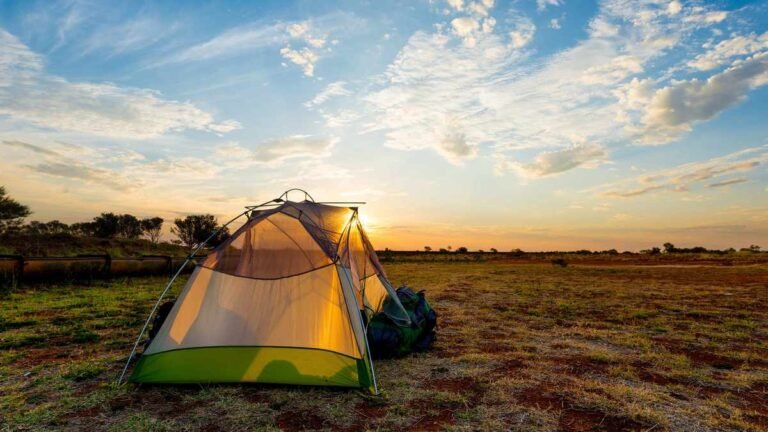
The desert and inland swing. Inland areas can be scorching by day and genuinely cold at night — the drop between afternoon and 3am surprises nearly every first-timer. This is why the warm sleeping bag matters.
The east-coast storm. Summer afternoons can go from blue sky to violent thunderstorm in an hour. In storm season, check the BOM forecast each morning, watch the sky in the afternoon, and never camp in a dry creek bed — they flash-flood from rain that fell kilometres away.
The southern cold snap. Victoria, Tasmania and the NSW high country deliver winter-grade nights outside winter. A forecast low at the nearest town can mean frost at your exposed site. Pack one layer warmer than the forecast suggests.
The tropical wet. The Top End and far north Queensland’s wet season brings downpours, humidity and road closures — first-timers are better off in the dry season, when the camping is easy. Whatever the region, check the BOM forecast the night before and the morning of departure.
Food and Water: Keep It Simple, Keep It Cold
Beginner camp cooking fails two ways: restaurant ambitions on a single burner, or nothing but servo pies. The sweet spot is simple food prepped at home — toasties, pasta, sausages, stir-fries, one-pot curries. Pre-chop veg, pre-marinate meat, freeze drinks and meat before leaving; they double as ice blocks in the esky.
Water deserves its own paragraph. Many campgrounds have no drinking water, and tanks run dry in busy periods. Never assume. Bring your own — a few litres per person per day as a baseline, more in heat — in proper containers. Check the park listing: “tank water — treat before drinking” means exactly what it says.
Manage the esky well: open it as little as possible, keep it in the shade. And keep all food packed away at night, sealed and off the ground — curious possums are charming until they’re inside your tucker box.
Your First-Night Setup Routine
Arrive with at least two hours of daylight. This is the golden rule of first trips; breaking it is the most common beginner mistake.
Walk the site first. Find the flattest patch for the tent, check what’s overhead (dead branches are a genuine hazard), note where water would flow if it rained, and locate the toilets while it’s still light.
Tent up first, everything else second. Groundsheet, peg the corners, raise the poles, fit the fly, tension the guy ropes. Guy ropes aren’t decoration — they hold the tent’s shape in wind and keep the fly off the inner tent, which is what keeps you dry.
Orient the door away from the wind so rain doesn’t drive in when you open it. On a slope, sleep with your head at the high end.
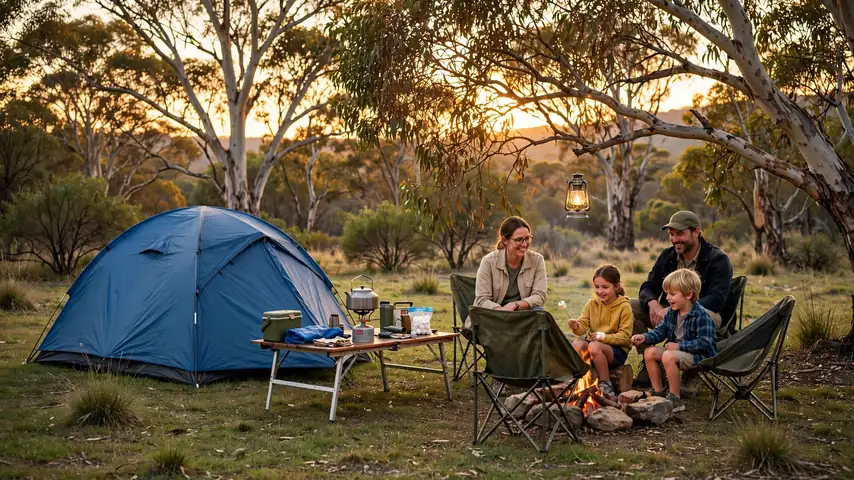
Then build camp around it. Kitchen area upwind and clear of the tent, sleeping gear laid out inside, lantern hung, headlamps where you’ll find them in the dark. Final check: tent zipped, food stored, rubbish bag hung. The whole routine takes about forty-five minutes once you’ve done it twice.
Mistakes That Ruin First Trips
Arriving after dark. Daylight is your friend; guard it.
Bringing cotton everything. Cotton soaks up sweat, rain and dew and holds it against your skin. Pack synthetics or wool, and keep one set of dry clothes sealed in a bag as your emergency reserve.
No warm layer. The evening temperature drop catches beginners every time. A fleece or puffer in the car “just in case” will get used. Missing tent parts — borrowed tents are wonderful until a pole is missing at 9pm. The at-home practise pitch exists to catch this.
Leaving food out overnight. You’ll meet the wildlife either way; better when they’re outside the tent. And trying to do too much — first trip: one or two nights, one campsite, no ambitious hikes. Learn the rhythm of camp life before adding anything else.
Staying Safe: The Short Version
Tell someone where you’re going and when you’ll be back — a text with the campground name and return date. Carry a first aid kit with a snake bandage; in snake country (roughly October to April in the south) wear enclosed shoes in long grass. No camping for beginners Australia trip should start without the Emergency+ app either — the national app built by Australia’s emergency services shows your phone’s GPS coordinates so you can read your exact location to a Triple Zero operator. The Queensland Government’s overview is a solid explainer: Emergency+ app — qld.gov.au.
Round it out with SPF 50+, a wide-brimmed hat, and drinking water on a schedule in heat. None of this is dramatic — it’s just what keeps a great trip great.
Frequently Asked Questions
What is the best first camping trip in Australia for a beginner?
A one or two-night stay at a bookable campground with toilets, showers and a camp kitchen, within about two hours of home. National park campgrounds with facilities and holiday parks with unpowered tent sites are ideal — the amenities remove most of the ways a first trip goes wrong.
Should I buy or borrow camping gear for my first trip?
Borrow. You don’t know your camping style yet, and a borrowed, field-tested tent comes with all its parts and someone who knows how it pitches. Buy your own gear after a trip or two.
How do I book a campsite in an Australian national park?
Through your state’s parks authority website — each state runs its own booking portal for availability, camping fees and vehicle entry passes. Popular sites release on a rolling window and sell out fast, so book early and check the park’s alerts page for closures before you leave.
Can I have a campfire on my first camping trip?
It depends on the park and the day. Many parks restrict fires to provided pits, and on Total Fire Ban days all open fires are illegal. Check the park’s rules when you book and the fire danger rating on the day; a gas stove is the reliable backup.
What should I do if it rains on my first camping trip?
Check the fly is tensioned and guy ropes pegged, keep the door zipped and gear off the tent floor, and cook under a tarp or shelter. If lightning or flash flooding threatens, shelter in your vehicle.
How much water should I bring camping?
Never assume a campground has drinking water — many don’t, and tanks run dry. Bring a few litres per person per day as a baseline, more in heat, in proper containers. Check the park listing for “no water” or “treat before drinking” notices.