Best Camping BBQs Australia 2026
Disclosure: We may earn a small commission if you purchase through our links, at no extra cost to you.
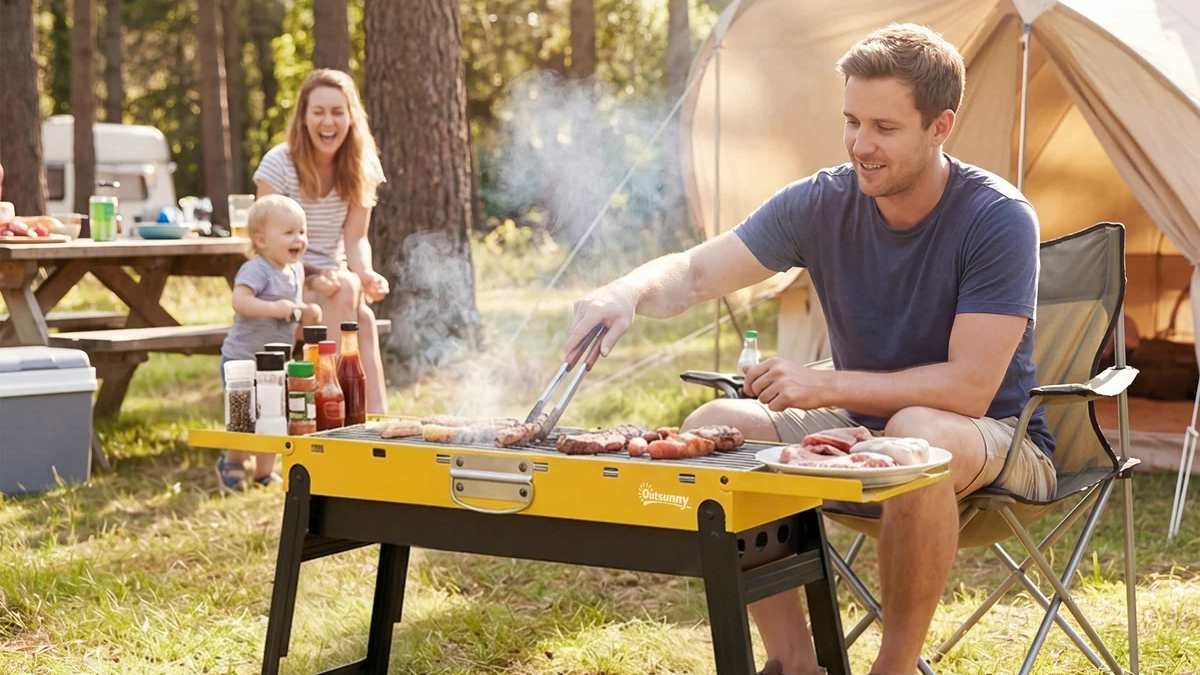
The barbecue is Australia’s national cooking appliance, and taking it camping is a natural instinct — but a portable BBQ is a different beast from the backyard 4-burner. The camping BBQs Australia has to offer range from $150 charcoal kettles to $750 wood-fired cookers, and the right choice depends on how you cook, how you travel, and how much weight you’ll tolerate. This guide compares portable gas, charcoal, and wood BBQs honestly — including the fire-ban rules that decide what you can actually use — with verified Australian prices.
Gas vs Charcoal vs Wood: The Fuel Decision
Portable gas BBQs
Pros: instant heat, precise control, no ash, allowed during most fire bans, easy cleanup. Cons: less smoky flavour, needs a gas bottle, more mechanical parts to fail. Best for: most campers — gas is the rational default for camp BBQs.
Charcoal BBQs
Pros: superior flavour, high searing heat, simple (nothing to break), cheap to buy. Cons: slow to light (20–30 min), ash to dispose of, temperature control is a skill, restricted during fire bans. Best for: flavour devotees, weekend trips where time isn’t pressing.
Wood-fired (Ozpig-style)
Pros: doubles as a camp heater, incredible versatility (BBQ, oven, heater in one), the full campfire experience in a contained unit. Cons: heavy, needs firewood, definitely restricted in fire bans, most expensive. Best for: winter camping, base camps, and the “camp kitchen as lifestyle” crowd.
Fire Bans: What You Can Actually Use
This decides more purchases than any feature list. In most Australian states, during a Total Fire Ban: gas BBQs are generally permitted (they’re not an open fire), while charcoal and wood BBQs are generally prohibited (they are). But — and this is critical — specific declarations vary by state, and some parks ban all solid-fuel cooking year-round. Always check the current fire authority advice (CFA, RFS, DFES depending on state) before the trip, not at the campsite. If you camp through summer in fire-prone areas, a gas BBQ isn’t just convenient — it’s the only BBQ you’ll legally use for months.
What to Look For in a Portable BBQ
- Weight and packed size: “portable” ranges from 9kg to 41kg. Be honest about what you’ll actually lift in and out of the car. Under 12kg is genuinely portable; over 20kg is “transportable.”
- Hood: a hooded BBQ roasts, bakes, and cooks indirectly — it doubles your menu. Hoodless is grilling only. For camping versatility, a hood is worth the weight.
- Cooking area: measure in burgers, not centimetres — “fits 9 burgers” (Baby Q) tells you more than 1,290cm². For a family of four, you want 6+ burger capacity.
- Fuel connection: small disposable cylinders vs 9kg bottle with adapter. Bottles are far cheaper per cook; cylinders are convenient but wasteful.
- Wind performance: camp BBQs live in wind. Deep lids, heavy construction, and windshields matter more than BTU ratings.
- Cleaning: removable grease trays, porcelain-coated grills, and accessible fireboxes. You’ll clean it at camp with limited water — design matters.
The Best Camping BBQs in Australia for 2026
Weber Baby Q Q1000N — the Australian classic
Around $389 at BCF (checked Oct 2026), the Baby Q is the default camp BBQ for a generation of Australians: cast-iron grill, hooded for roasting (with a trivet), runs on a small cylinder or 9kg bottle with adapter, ~11–13kg, and a parts-and-accessories ecosystem that’s unmatched. One burner means no true indirect zone without the trivet, and it’s small for more than 3–4 people — but for couples and small families, it’s the safe, proven, resellable choice. The 5-year limited warranty and nationwide service back it up.
Weber Baby Q Premium Q1200N — the upgraded classic
Around $399, the Premium adds higher lid, thermometer, and refined details over the standard Q1000N. Ten dollars more for meaningful upgrades — if you’re buying a Baby Q, buy the Premium. See independent lab assessments at CHOICE’s Baby Q review.
Weber Q2000N — best for families
Around $539, the bigger Q2000N solves the Baby Q’s capacity limit — proper family-size cooking area with the same Weber quality and hood-roasting ability. If the Baby Q feels small, this is the step up, not a different brand.
Weber Go-Anywhere — best charcoal portable
Around $149.99 at BCF, the Go-Anywhere is the charcoal purist’s camp BBQ: porcelain-enamelled bowl and lid, 10-year warranty, legs that lock the lid for transport. Genuine Weber quality at a third of the Baby Q’s price — the trade is convenience (charcoal takes time) and fire-ban usability.
Dometic Portable Gas BBQ CPB101 — best compact gas
Around $289, the Dometic (formerly Waeco) portable offers gas convenience in a compact 9.2kg package. A solid alternative to the Baby Q for smaller budgets — less refined, but hundreds cheaper.
Gasmate Voyager — best budget gas
The Gasmate Voyager is the budget camp BBQ that gets recommended in every forum: grill + hotplate combo, compact, does the job. Flimsier than Weber and struggles in wind (the lid isn’t airtight), but at its price it’s the “try camp BBQing without commitment” option.
Ozpig Big Pig — best wood-fired all-rounder
Around $749 at Snowys, the Ozpig is an Australian icon: wood-fired cooker, heater, and oven in one 41kg unit. For winter base camps it’s transformative — cooking plus warmth from one fire. But it’s heavy, needs firewood, and is fire-ban restricted. This is a lifestyle purchase, not a casual one — buy it when you know you want it.
Weber Traveler — best premium portable gas
Around $699 at BCF, the Traveler is Weber’s purpose-built portable: folding cart, one-hand setup, proper grilling. For campers who BBQ constantly and want the best portable gas experience, it’s the flagship — at flagship money.
Camping BBQs Compared
| BBQ | Fuel | Weight | Hood | Price (AU) | Best for |
|---|---|---|---|---|---|
| Weber Baby Q Q1000N | Gas | ~11–13kg | Yes | ~$389 | The safe classic |
| Weber Baby Q Premium Q1200N | Gas | ~11kg | Yes | ~$399 | Upgraded classic |
| Weber Q2000N | Gas | Heavier | Yes | ~$539 | Families |
| Weber Go-Anywhere | Charcoal | Light | Yes | ~$149.99 | Charcoal flavour |
| Dometic CPB101 | Gas | 9.2kg | Yes | ~$289 | Compact budget gas |
| Gasmate Voyager | Gas | 9kg | Yes | Budget | First camp BBQ |
| Ozpig Big Pig | Wood | 41kg | Yes | ~$749 | Winter base camps |
| Weber Traveler | Gas | 28kg | Yes | ~$699 | Premium portable |
The One-Burner Reality
Most portable gas BBQs have a single burner — including the Baby Q. This means no true indirect cooking zone (the technique for roasting and low-and-slow), which is the main limitation versus backyard multi-burner BBQs. Workarounds: a trivet to lift food off direct heat, lower flame with the hood down (approximates an oven), and accepting that portable BBQing is direct-heat cooking plus hood-roasting. If indirect low-and-slow is your thing, that’s what the camp oven is for — the two complement each other perfectly.
BBQ vs Camp Stove vs Camp Oven: Which Cooks What?
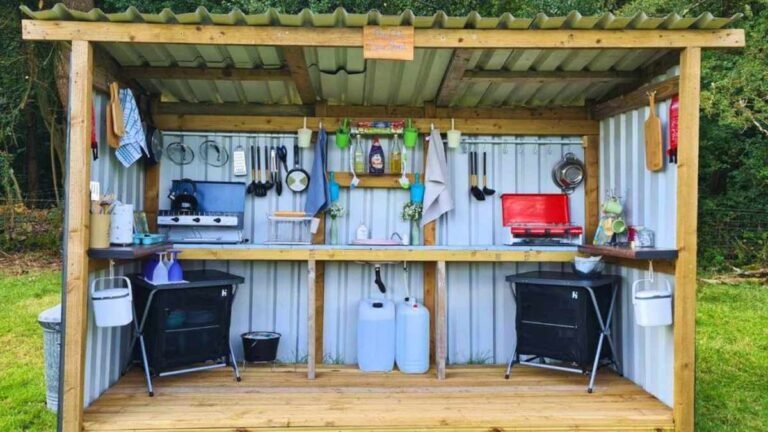
The camp kitchen trinity, each with its lane: the BBQ grills and roasts (snags, steaks, roast chook); the camp stove boils and fries (pasta, stir-fry, eggs — see our stove guide); the camp oven bakes and slow-cooks (damper, stews, bread). Most well-equipped camp kitchens have two of the three; the full trinity is for base camps and enthusiasts. If you’re choosing one: the stove is the most versatile solo piece, the BBQ is the most social, the oven is the most capable.
Cleaning and Maintenance
- Burn off after cooking: run the BBQ hot with the hood down for 10 minutes — carbonises residue.
- Brush while warm: a brass brush on warm grills is ten times more effective than cold scrubbing.
- Empty grease trays before transport — a tray of liquid fat in a hot car is a disaster.
- Oil cast-iron grills lightly after cleaning to prevent rust.
- Cover it: a $30 cover doubles a BBQ’s life by keeping rain off.
- Check gas connections annually — soapy water test, replace perished hoses.
BBQ Cooking Techniques for Camp
A camp BBQ rewards different techniques than the backyard:
Two-zone thinking on one burner: pile the heat (or coals) on one side and leave the other cooler — sear over the hot side, finish over the cool side with the hood down. It’s the closest a single-burner portable gets to indirect cooking.
Hood-down roasting: the Baby Q’s party trick — with a trivet and the hood down, it roasts a chicken in about an hour. Preheat fully, keep the hood closed (every peek adds 10 minutes), and trust the thermometer, not the clock.
Rest everything: meat rested 5–10 minutes under foil is juicier than meat served immediately — the same rule as home, more important at camp where carryover cooking continues in the heat.
Vegetables first: corn, capsicum, zucchini and mushrooms grill brilliantly and hold heat while meat rests — sequence the cook so everything lands together.
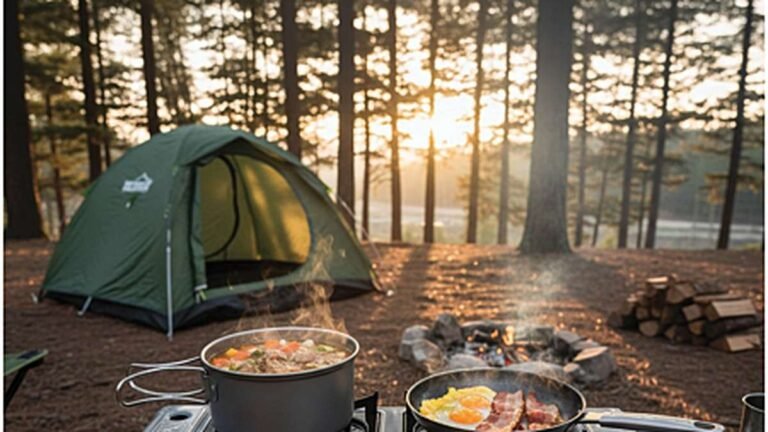
Breakfast on the hotplate: the flat-plate side of a combo BBQ does full fry-ups — bacon, eggs, tomato, mushrooms — for the camp. Preheat the plate properly; cold plates stick and tear.
Transporting and Storing a Camp BBQ
The unglamorous reality: a BBQ has to live in your car. Tips from long-term tourers: empty and clean before packing (grease in a hot car is a smell you’ll never remove); bag it — a canvas bag or even an old doona cover contains soot and grease; secure it — a 13kg Baby Q becomes a projectile in a sudden stop, strap it down; carry the gas separately — bottles upright, ventilated, never in a sealed boot on a hot day; and store covered at home — a BBQ left in the weather rusts regardless of brand promises. The campers whose BBQs last decades are the ones who cover and clean, not the ones who bought the most expensive model.
BBQ Fuel: Gas Bottles, Charcoal, and Wood
The BBQ is only as good as its fuel supply. Gas: a 9kg bottle lasts months of BBQing; refills ~$25–$35 at servos and hardware stores. Keep a spare for long trips — nothing ends a BBQ like an empty bottle at 6pm on Sunday. Check the bottle’s test date stamp — out-of-date bottles can’t be refilled. Charcoal/heat beads: a 4kg bag of heat beads does 2–3 BBQ sessions; buy from hardware stores, not the overpriced servo bags. Store dry — damp beads won’t light. Wood: for Ozpig-style cookers, hardwood (ironbark, box, redgum) burns longest and hottest; never burn treated timber, painted wood, or driftwood (salt + chemicals). In many parks you must bring firewood in — collecting from the bush is prohibited.
BBQ Accessories Worth Having
The extras that earn their place: a trivet (turns the Baby Q into a roaster), a hotplate (full fry-ups need flat cooking), a cover ($30 that doubles the BBQ’s life), a brass brush (camp cleaning essential), welding gloves (handling hot grills and charcoal), and a spare gas hose/regulator on long trips (the part most likely to fail, cheapest to carry). Weber’s accessory ecosystem is unmatched — another reason the Baby Q holds its value.
Frequently Asked Questions
Can you use a portable BBQ during a total fire ban?
Gas BBQs are generally permitted during total fire bans; charcoal and wood BBQs are generally prohibited as open fires. Rules vary by state and specific declarations — always check your fire authority’s current advice.
Weber Baby Q vs Q2000N: which should I buy?
Baby Q (~$389) for couples and small families — compact, proven, resellable. Q2000N (~$539) when the Baby Q’s cooking area feels small — proper family capacity with the same quality. The Premium Q1200N (~$399) is the sweet spot if the standard Baby Q size works.
Is the Ozpig worth it?
For winter base camps — absolutely; it’s a heater, oven, and BBQ in one. For casual summer camping — no; it’s 41kg, needs firewood, and sits idle in fire bans. It’s a lifestyle purchase for dedicated cold-weather campers.
Gas or charcoal BBQ for camping?
Gas for convenience, control, and fire-ban compliance — the rational default. Charcoal for flavour and simplicity at the cost of time and fire-ban restrictions. Many enthusiasts own both: gas for weeknights, charcoal for weekends.
How do you clean a portable BBQ at camp?
Burn off hot with the hood down, brush while warm, empty the grease tray before packing. A brass brush and a spray bottle of water handle 90% of camp cleaning — save the deep clean for home.
← Back to our complete guide: Best Camping Stoves Australia 2026