Best Camping Coffee Makers Australia
Disclosure: We may earn a small commission if you purchase through our links, at no extra cost to you.
For many campers, the day doesn’t start until the coffee’s made — and bad camp coffee is a daily misery multiplier. The good news: excellent camp coffee is easy and cheap. The camping coffee makers Australia has on offer range from $15 pour-over drippers to $95 portable espresso machines, and the best choice depends less on budget than on how you camp, how many you brew for, and how much ritual you want. This guide matches brewers to campers, explains the technique that matters more than the gear, and gives verified Australian prices.
The Brewer Types, Matched to Campers
Immersion (AeroPress, French press)
Coffee steeps in hot water, then separates. Forgiving, consistent, easy to clean. Best for: most campers — immersion is the most foolproof path to great coffee.
Pour-over (V60, dripper cones)
Water poured through grounds in a filter. Clean, bright cup; demands technique (pour control, grind size). Best for: coffee enthusiasts who enjoy the ritual.
Percolator / stovetop (Moka pot)
Steam pressure pushes water through grounds. Strong, intense coffee; easy to over-extract into bitterness. Best for: groups (big pots), traditionalists, and those who like it strong.
Portable espresso (hand-pump)
Manual pressure extraction. Real espresso crema at camp; fiddly, small servings, demands fine grind. Best for: espresso devotees who can’t compromise.
Cowboy / billy
Grounds boiled in the billy, settled, poured. Zero extra gear; variable results. Best for: minimalists and emergencies.
The Best Camping Coffee Makers in Australia
AeroPress Go — best overall
Around $44.50–$55 at camping retailers (see Camping Australia’s listing), the AeroPress Go is the camp coffee default for good reason: compact (mug nests inside), tough, makes excellent coffee with minimal technique, and cleans in seconds (eject the puck, rinse). The included mug means it’s a complete system. If you buy one coffee maker for camping, buy this.
AeroPress Original — best for home-and-camp
Around $79.90 (RRP $89.95), the full-size Original makes more coffee per press and shares the Go’s virtues. Better if you also want it for home use or brew for two. The Go wins on packability; the Original on capacity.
Wacaco Minipresso — best portable espresso
Around $65 at Tentworld, the hand-pump Minipresso produces genuine espresso with crema — no batteries, no pods. Small servings (single/double shot), and you’ll want pre-ground fine coffee or a good hand grinder. For the espresso-or-nothing camper, it’s the only portable option that delivers.
GSI Outdoors espresso maker — best stovetop espresso
Around $95 at Snowys, GSI’s stovetop espresso maker brings moka-pot-style brewing in a camp-tough package. Bigger servings than the Minipresso, simpler technique, classic strong coffee. The group-friendly espresso option.
JetBoil Grande coffee press — best for JetBoil owners
Around $45 at Tentworld, this press fits JetBoil systems, turning your hiking stove into a French press. If you already carry a JetBoil, it’s a no-brainer — negligible extra weight for proper press coffee on the trail.
Pour-over dripper — best ultralight/cheap
A plastic V60-style dripper costs ~$15, weighs nothing, and makes superb coffee — if your technique is good. The cheapest path to excellent coffee and the lightest. The catch: it demands a controlled pour (a gooseneck kettle helps enormously) and the right grind. Enthusiast’s choice, not beginner’s.
Percolator — best for groups
A 9–12 cup stovetop percolator brews for the whole camp in one go — the social coffee solution. Technique matters (low heat, don’t over-perk), but for feeding six campers at dawn, nothing beats it. Cheap, indestructible, classic.
Camping Coffee Makers Australia Compared
| Maker | Type | Serves | Skill needed | Price (AU) | Best for |
|---|---|---|---|---|---|
| AeroPress Go | Immersion | 1 | Low | ~$44.50–$55 | Best overall |
| AeroPress Original | Immersion | 1–2 | Low | ~$79.90 | Home + camp |
| Wacaco Minipresso | Espresso | 1 shot | Medium | ~$65 | Espresso lovers |
| GSI espresso | Stovetop | 2–4 | Low | ~$95 | Group espresso |
| JetBoil press | French press | 1–2 | Low | ~$45 | JetBoil owners |
| Pour-over dripper | Pour-over | 1 | High | ~$15 | Ultralight/enthusiasts |
| Percolator 12-cup | Percolator | 6+ | Medium | Budget | Groups |
The Technique That Matters More Than the Gear
A $15 dripper with good technique beats a $95 espresso maker with bad technique. The fundamentals:
Water temperature: just off the boil — around 92–96°C. Boiling water scalds grounds (bitterness); lukewarm under-extracts (sourness). At camp, boil the kettle, wait 30–60 seconds. That’s it — no thermometer needed.
Grind: match to brewer — coarse for French press/percolator, medium for AeroPress/drip, fine for espresso/moka. Pre-ground “espresso” from the supermarket is too fine for most camp brewers (it’ll choke an AeroPress); “filter” or “plunger” grind suits AeroPress and pour-over. A $40 hand grinder transforms camp coffee more than any brewer upgrade.
Ratio: start at 1:15 (coffee to water) — about 15g coffee per 250ml water, roughly 2 tablespoons per mug. Adjust to taste; most camp coffee is under-dosed (weak) rather than over.
Freshness: beans stale in 2–4 weeks after roasting; ground coffee stales in days. For a weekend trip, grind the morning you leave and store airtight — the single biggest quality lever after technique.
Milk at Camp: The Real Challenge
Black coffee is easy; milky coffee at camp takes planning:
- UHT milk: no refrigeration needed until opened — the tourer’s solution. Taste is fine in coffee.
- Powdered milk: lightest option, and better than its reputation in strong coffee.
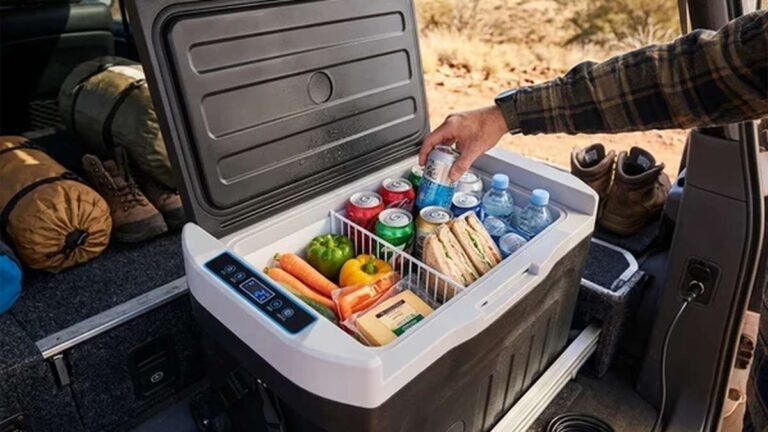
- Fresh milk in the fridge: if you run a 12V fridge, fresh milk is trivial — one more reason fridges change camp life.
- Frothing: a $10 battery milk frother makes genuinely decent microfoam. The hand-pump Bellman-style frothers work too. Or embrace the flat white’s absence — camp lattes are a luxury, not a right.
- Long-life cream: small UHT cream portions for the uncompromising.
The Instant Coffee Tier: Honest Talk
Instant coffee has improved enormously — specialty instant (Sachets from quality roasters) is genuinely good, not just tolerable. For hikers counting grams, early starts, or the “coffee before consciousness” first cup, instant is rational: zero gear, zero cleanup, 30 seconds. There’s no shame in it — the best camp coffee is the one you’ll actually make at 5:30am. Keep sachets as backup even if you carry a brewer; some mornings demand simplicity.
Brewing for Groups: Scaling Up
One AeroPress for six people is a 20-minute production line. Group solutions: a big percolator (one brew, everyone served), multiple AeroPresses (parallel brewing — campers love a press each), or a large French press (1L presses serve 3–4). The social move: make coffee-making part of the morning ritual, not a chore — the camp kitchen gathering around the brews is half the pleasure. And always boil more water than you think — someone always wants a second cup.
Cleaning and Packing
AeroPress: eject puck, rinse — 10 seconds. French press: the mesh traps grounds — wipe out with a paper towel before rinsing (grounds in the camp sink are a Leave No Trace issue; pack them out or scatter widely away from water). Moka/percolator: rinse, never soap the aluminium (it seasons like cast iron, lightly). Store everything dry — coffee oils go rancid and taint the next brew. A dedicated dry bag keeps coffee gear together and grounds out of everything else.
The Camp Coffee Station: Setup and Workflow
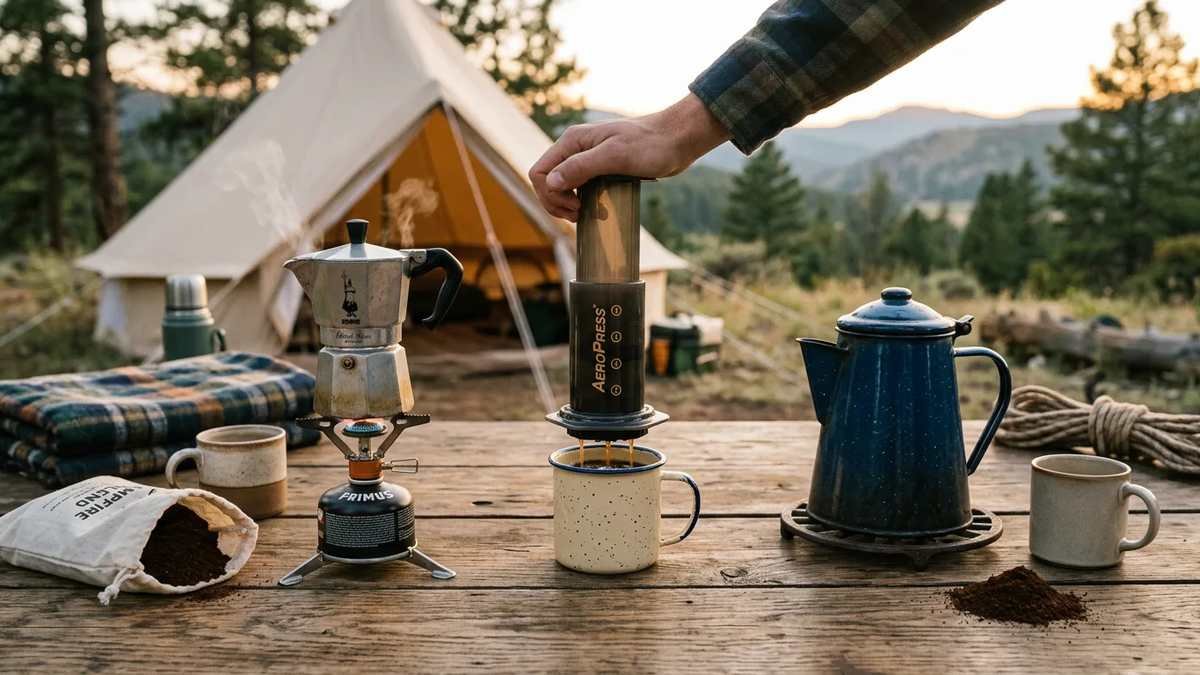
Great camp coffee is a system, not just a brewer. The station: stove (your camp stove or hiking burner), kettle (dedicated, 1L is the sweet spot), brewer (AeroPress, dripper, etc.), coffee (pre-ground, airtight), mugs (insulated — camp coffee cools fast in the morning air), and water (more than you think). Keep it all in one dry bag or box — the “coffee kit” — so mornings start with grabbing one bag, not hunting through the camp box half-awake.
The workflow: water on first (it takes longest), grind or measure coffee while it heats, brew when the water’s ready (remember: 30–60 seconds off the boil), and clean immediately while the kettle’s still warm — dried coffee grounds are miserable to remove later. Total time: under 5 minutes with practice. The campers with the best coffee aren’t the ones with the best gear; they’re the ones with the smoothest routine.
Coffee Grinders for Camp: Worth It?
A hand grinder ($40–$80 for a decent one) is the single biggest coffee-quality upgrade after technique — fresh-ground beats pre-ground noticeably, and you can dial grind size to your brewer. The costs: weight (~400–600g), time (1–2 minutes of cranking per cup), and noise (hand grinders are loud — your camp neighbours at 6am will have opinions). For coffee enthusiasts, absolutely worth it. For everyone else, grinding fresh the morning you leave and storing airtight captures 80% of the benefit with none of the dawn cranking. Never bring an electric grinder camping — the power draw is absurd for the result.
Tea Drinkers: You’re Not Forgotten
Not everyone wants coffee. Camp tea is simpler: a kettle, good tea bags (or a teapot with loose leaf for the devoted), and the same just-off-boil water. Chai lattes work brilliantly at camp — simmer spices and tea in milk (or UHT) on the stove. And hot chocolate for the kids (and honest adults) is a camp-morning essential — the sachets weigh nothing and the morale value is enormous. The coffee station doubles as the hot-drinks station; stock for everyone’s preference.
Cold Brew at Camp: The Overnight Method
For hot mornings when nobody wants to wait for the kettle: cold brew. Coarse grounds + cold water in a sealed container overnight (12+ hours), strained in the morning — smooth, low-acid, refreshing over ice. No heat, no gear beyond a jar and a strainer. Make it the night before in the esky; wake up to ready coffee. It’s the lowest-effort great coffee in camping, and in a heatwave it’s the only coffee anyone wants. Dilute 1:1 with water or milk; it keeps 2–3 days refrigerated.
Decaf and Alternatives at Camp
Not everyone wants caffeine at 9pm. Decaf instant sachets weigh nothing and save the “I want the ritual without the buzz” crowd. Herbal teas (peppermint, chamomile) are campfire-friendly wind-down drinks. And for the kids, hot chocolate is non-negotiable — pack extra; it doubles as a bribe, a reward, and a warmth-restorer on cold mornings. The well-stocked camp drinks box has something for every person and every hour — coffee for dawn, tea for afternoon, cocoa for night.
Coffee and the Camp Morning Routine
The best camp coffee fits a morning routine, not the other way around. Night before: fill the kettle, set out the brewer and coffee, position the coffee kit by the stove. Morning: kettle on the moment you emerge, brew while the tent airs and the day plans form. The whole ritual takes 10 minutes and sets the tone — rushed, fumbling coffee mornings cascade into rushed days. Campers who nail the coffee routine report better trips, and it’s not the caffeine talking — it’s the calm, deliberate start. Protect the ritual; it’s the cheapest luxury in camping.
Frequently Asked Questions
What’s the best coffee maker for camping?
The AeroPress Go (~$44.50–$55) for most campers — compact, tough, foolproof, easy to clean. Espresso devotees: Wacaco Minipresso (~$65). Groups: a stovetop percolator. Hikers: pour-over dripper (~$15) or instant.
How do you make good coffee while camping without power?
None of the best camp brewers need power — just hot water from a camp stove. The AeroPress, pour-over, moka pot, and percolator are all manual. Technique (water just off boil, right grind, correct ratio) matters more than electricity.
What grind of coffee for AeroPress camping?
Medium-fine — like raw sugar. Supermarket “filter/plunger” grind works; “espresso” grind is too fine and chokes the press. Grinding fresh the morning you leave is the biggest quality upgrade.
How do you keep milk cold while camping?
UHT milk needs no refrigeration until opened — the simplest solution. With a 12V fridge, fresh milk is easy. Powdered milk is the ultralight backup. See our esky vs fridge guide for the full cold-chain picture.
Is instant coffee okay for camping?
Absolutely — specialty instant is genuinely good now, and for early starts or hiking, the zero-gear convenience wins. Keep sachets as backup even with a brewer; some mornings demand simplicity.
← Back to our complete guide: Best Camping Stoves Australia 2026