Best Headlamps Australia 2026 (Top Picks)
Disclosure: We may earn a small commission if you purchase through our links, at no extra cost to you.
Best headlamps Australia: this guide compares the top picks for 2026. If you buy one piece of lighting gear, make it a headlamp. The best headlamps in Australia aren’t just for hikers — they’re the most-used light in any camp kit, full stop. Cooking after dark, finding the amenities block, reading in the tent, dealing with a midnight tent emergency: a headlamp puts light exactly where you’re looking with both hands free. This guide covers what matters (beam pattern more than lumens, battery economics, comfort), and the standout models available in Australia for 2026.
Your headlamp is the task light; lanterns handle area lighting. Our camping lighting guide explains how the pieces fit together.
Lumens Aren’t the Story: Beam Pattern Is
Headlamp marketing screams lumens, but beam pattern decides usefulness. Flood (wide) beams spread light over a broad area — perfect for camp tasks, cooking, reading, anything within a few metres. Spot (narrow) beams throw light far — for trail finding, spotting markers, checking what’s making that noise. The best headlamps offer both, or a good hybrid beam that’s wide enough for camp and punchy enough for the track.
As for lumens: 100–200 is plenty for camp life. 300–400 covers night hiking comfortably. 600+ is for trail running, search and rescue, or showing off. More lumens also means more battery drain and more blinding your campmates — the social cost of a 1000-lumen headlamp at a shared dinner table is real. Buy the modes you’ll use, not the max number on the box. And note that most headlamps can’t sustain their maximum output for more than a few minutes before heat forces them to step down — the “sustained” brightness on medium is the number that actually describes your night.
Red Light Mode: Why It Exists
Nearly every decent headlamp has a red LED mode, and it’s not a gimmick. Red light preserves your night vision — your eyes stay adapted to the dark, so you can switch the light off and still see the stars, the track, the tent guy-ropes. It’s also far less disruptive to others: reading in a shared tent, moving around camp while others sleep, or wildlife watching without spooking everything within fifty metres. Use red as your default around camp after dark; save white for tasks that need it. Your campmates will like you more.
Battery: Rechargeable vs AAA
Rechargeable (built-in or proprietary): Cheaper over time, less waste, and modern USB-C charging is convenient — top up from a power bank at camp. Downside: when it’s flat, it’s flat until you recharge. Carry a power bank and this is a non-issue.
AAA (disposable or NiMH rechargeable): Swappable in seconds — carry spare batteries and you’re never dark. But disposables are expensive and wasteful over a headlamp’s lifetime; if you go AAA, use rechargeable NiMH AAs/AAAs and a small charger.
Dual-fuel (both): The best of both worlds — a rechargeable pack for daily use, AAA compatibility as backup. Black Diamond’s dual-fuel models popularised this, and it’s the smartest battery strategy for remote trips. Our pick for most campers.
Comfort and Fit: The Forgotten Spec
A headlamp that hurts doesn’t get worn. Look for: a wide, soft headband (narrow elastic digs in after an hour); a top strap on heavier models (stops it sliding down when you look down); balanced weight (front-heavy lamps bounce when walking); and easy controls you can operate with gloves. If you wear glasses, check the lamp sits comfortably above them without pressing the frames into your temples. Try it on in the store, tilt your head down, shake gently — if it migrates, keep shopping.
Best headlamps Australia: Top Picks for 2026
Black Diamond Spot 400 — Best All-Rounder
The Spot 400 is the default recommendation for good reason: 400 lumens, dual-fuel (rechargeable BD 1500 battery or 3xAAA), PowerTap instant-dimming, red night-vision mode, IPX8 waterproofing, and a compact 86-gram body. It does everything well — camp tasks on flood, trail on spot, red for tent life — at a price that doesn’t sting.
At $84.99 on sale ($99.99 RRP) from Black Diamond Australia, it’s the value king of the serious headlamp category. If you only buy one headlamp, buy this one.
For the latest, see Black Diamond Australia.
Petzl Actik / Actik Core — Best for Versatility
Petzl’s Actik series is the European counterpart to the Spot: ~450 lumens, hybrid beam, red mode, and the Core version’s rechargeable battery (also AAA-compatible). Petzl’s build quality and headband comfort are superb — the Actik sits beautifully for hours. Slightly pricier than the Spot in Australia, but the comfort and the excellent flood beam for close work justify it for those who wear a headlamp nightly.
Ledlenser MH5 — Best for Simplicity
Ledlener’s MH5 strips it back: a simple, tough, focusable headlamp with their excellent Advanced Focus System (twist to go from flood to spot — genuinely useful). Magnetic charging on the rechargeable version, solid German build, intuitive enough to hand to a kid or a grandparent. Less feature-dense than the Spot or Actik, but what it does, it does brilliantly. Check Australian retailers for current pricing.
Black Diamond Storm 500-R — Best for Bad Weather
If your adventures involve serious rain, snow or sea spray, the Storm 500-R’s IP67 dustproof/waterproof sealing (submersible to 1m for 30 minutes) is a step above the IPX8-but-not-dustproof competition. 500 lumens, rechargeable, PowerTap dimming. It’s the headlamp for alpine starts, tropical downpours and kayakers. Overkill for fair-weather car camping; essential for the rest.
Budget Pick: Anaconda/BCF House Brands — Best Cheap
For the glovebox, the kids, or the “I keep losing them” crowd: house-brand headlamps from BCF and Anaconda (often $15–30) are perfectly serviceable for basic camp tasks. They won’t match the beam quality, waterproofing or battery life of the premium models, but as a second or third headlamp scattered around the kit, they’re great value. Buy the good one for yourself; buy these for everyone else.
Headlamp Etiquette (Yes, It’s a Thing)
A headlamp on full beam pointed at someone’s face is the camping equivalent of high-beams in traffic. Rules: use red or low mode around camp; never shine white light into tents; tilt the lamp down when talking to people; and turn it off rather than leaving it blazing on the table. In huts and crowded campgrounds, your headlamp discipline is noticed and appreciated. The best headlamp users are the ones you never notice.
Maintenance and Battery Care
Remove batteries (or check charge) between trips — a headlamp left on in a gear box will be flat when you need it, and leaking alkalines destroy contacts. Clean the contacts with a pencil eraser if they corrode. Store with the lock mode engaged (most decent headlamps have one) so it can’t switch on in transit. For rechargeable models, top up every few months in storage; lithium batteries left flat degrade. And keep a spare — the cheapest insurance in your kit is a $20 backup headlamp in the glovebox.
Headlamps for Kids
Kids and headlamps are a perfect match — with the right model. Look for: simple controls (one button, no complex mode cycling), low maximum brightness (200 lumens is plenty and less likely to blind siblings), a comfortable headband that fits small heads, and toughness (it will be dropped, thrown, and left on in a stuff sack). The Black Diamond Wiz is designed for kids with a child-safe screw closure on the battery door; budget BCF/Anaconda kids’ models are fine too. Teach two rules early: red mode around camp, and never shine it in anyone’s face. Enforce the second one ruthlessly — it’s the foundation of all headlamp etiquette.
Night Running, Riding and Adventure Sports
If your headlamp pulls double duty for trail running or mountain biking, priorities shift: higher lumens (400+ for running, 800+ for riding), a secure fit that doesn’t bounce (top strap essential), and good battery life on medium-high. Runners should look at Petzl’s Swift RL or Black Diamond’s Sprinter series — reactive lighting that adjusts automatically is genuinely useful when your hands are busy. For riding, a headlamp supplements (not replaces) a proper handlebar light. And whatever the sport, carry a backup — a $20 spare in the pack weighs nothing and has saved many a night mission.
The Perfect Lighting Trio
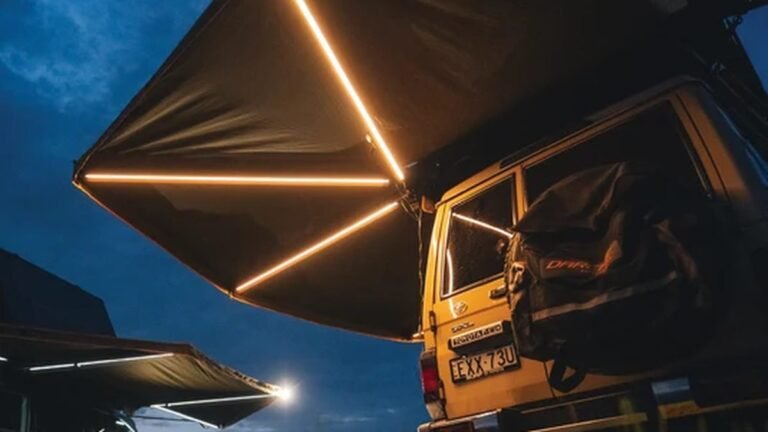
For most campers, the ideal setup is three pieces: a headlamp (task light, always on you), a lantern (area light for the table/kitchen), and a small backup (a cheap headlamp or keychain light in the glovebox). That trio covers 99% of situations for under $150 total if you shop smart (Spot 400 + Moji + budget backup). Add LED strips for awning ambience if you’re feeling fancy. Resist the urge to buy seven lights — three good ones beat a box of mediocre ones.
Troubleshooting Common Headlamp Issues
- Dims quickly then dies: Usually dying batteries, not a faulty lamp. Cold also reduces battery performance significantly — keep spares in a warm pocket in winter.
- Flickering: Dirty or corroded contacts. Clean with a pencil eraser or fine sandpaper, check the battery compartment spring tension.
- Won’t turn on after storage: Check the lock mode isn’t engaged (hold the button 3–4 seconds on most models). Then check batteries — alkalines left in storage often leak.
- Water inside the lens: Dry thoroughly, check the O-ring seal for damage or grit. A tiny smear of silicone grease on the O-ring restores the seal.
- Headband stretched out: Hand-wash in warm soapy water and air dry — elastic often recovers. Replacement headbands are cheap for major brands.
What the Pros Use (And Why)
Ask guides, search-and-rescue volunteers and outdoor instructors what they wear and you’ll hear the same names: Petzl and Black Diamond, overwhelmingly. Not because of sponsorships — because when your light failing means a real problem, you buy the thing with the best reliability record. Pros prioritise: proven waterproofing, simple controls that work with gloves and cold fingers, dual-fuel or swappable batteries, and a lock mode that actually locks. They almost universally carry a backup. The lesson for the rest of us: buy the boring reliable one, not the exciting new one with fourteen modes you’ll never use.
Features Worth Paying For (And Gimmicks That Aren’t)
Worth it: reactive/auto-dimming lighting (adjusts to conditions, saves battery), good lock mode, battery level indicator, tilt adjustment with real detents, USB-C charging.
Marketing fluff: Bluetooth app control (fiddling with your phone to change brightness is worse than a button), SOS strobe modes you’ll never use correctly, “2000 lumens!” on a lamp that sustains it for 90 seconds before thermal throttling, and touch-sensitive controls (useless with gloves, oversensitive in rain).
The best headlamp is the one whose controls you can operate half-asleep, with gloves, in the rain. Everything else is secondary.
The Bottom Line
A headlamp is the highest use-per-dollar item in your lighting kit — possibly in your entire camp kit. Spend the $85–100 on a Black Diamond Spot 400 or Petzl Actik once, and you’ll use it hundreds of nights across a decade. Add a cheap backup, learn the red-mode habit, and practice the etiquette. It’s a small, unglamorous purchase that quietly improves every single trip. And the next time you’re cooking dinner under the stars with both hands free while everyone else fumbles with phone torches, you’ll wonder why you ever waited.
FAQs
How many lumens do I need in a headlamp?
100–200 lumens covers camp tasks; 300–400 suits night hiking; 600+ is for trail running or search use. Beam pattern matters more than the lumen number — look for a good flood/spot balance.
Why do headlamps have a red light mode?
Red light preserves your night vision and disturbs others less. Use it as your default around camp after dark — for reading, moving around, and wildlife watching.
Are rechargeable headlamps better than battery ones?
Rechargeable is cheaper and less wasteful for regular use. Dual-fuel models (rechargeable + AAA backup) are the smartest choice for remote trips where recharging isn’t guaranteed.
Can I use a headlamp in the rain?
Yes — look for IPX7/IPX8 (submersion) or IP67 (dust + submersion) ratings. The Black Diamond Spot 400 (IPX8) handles heavy rain; the Storm 500-R (IP67) adds dustproofing for desert and beach use.
← Back to our complete guide: Best Solar Panels for Camping Australia 2026