Campsite Power Audit
Disclosure: We may earn a small commission if you purchase through our links, at no extra cost to you.
Here’s the scenario that plays out at campgrounds all over Australia: someone spends $2,000 on a lithium battery and solar setup, then discovers on night two that it doesn’t cover their actual usage. Or the opposite — someone overbuys massively, lugging 200Ah of battery to run a fridge and two phone chargers. Both mistakes come from the same place: guessing instead of measuring. A campsite power audit takes thirty minutes with a notebook and replaces every guess with a number.
This guide teaches you the watt-hour method — the same approach electricians use, minus the jargon. By the end you’ll know exactly how much energy your camp uses per day, what size battery you need, and how much solar it takes to replace it. If you’ve already read our fridge solar sizing guide, this extends the same maths to your entire camp.
Why Watt-Hours (Not Amp-Hours)
Campers usually talk in amp-hours (Ah), but amp-hours only make sense at a fixed voltage. Your phone charger runs on 5V USB, your laptop on 19V, your fridge on 12V, your kettle (via inverter) on 240V. You can’t add amp-hours across different voltages — it’s like adding apples and fuel litres.
Watt-hours (Wh) work at every voltage. The formula is simple:
Watt-hours = Watts × Hours of use
A 10W LED light run for 5 hours uses 50Wh. A 60W laptop charger run for 2 hours uses 120Wh. Add up the watt-hours for everything, and you have your daily energy budget — one number that tells you everything. (To convert back to amp-hours at 12V for battery sizing, just divide by 12: 500Wh ÷ 12 = ~42Ah.)
Step 1: List Everything That Uses Power
Walk through a typical camp day mentally — or better, on your last trip — and write down every electrical device. Be thorough; the small stuff adds up. Here’s a realistic list for a couple touring with a 4WD and a fridge:
| Device | Watts | Hours/day | Wh/day |
|---|---|---|---|
| 60L fridge/freezer (dual zone) | ~45 avg | 24 (cycling) | 600 |
| LED camp lights (2 strings) | 15 | 5 | 75 |
| Phones × 2 (charging) | 15 | 2 | 60 |
| Laptop (charging/working) | 60 | 2 | 120 |
| 12V water pump | 60 | 0.25 | 15 |
| Diesel heater fan | 25 | 8 | 200 |
| UHF radio (standby + use) | 8 | 10 | 80 |
| Camera batteries, misc USB | 10 | 2 | 20 |
| Total | ~1,170Wh |
A few notes on getting honest numbers:
- Fridges: don’t use the rated wattage on the sticker — that’s maximum draw. Use average daily consumption: ~25–35Ah/day (300–420Wh) for a 40–50L fridge, ~40–60Ah/day (480–720Wh) for a 60L dual-zone in warm weather. Our fridge sizing guide has the full breakdown.
- Diesel heaters surprise everyone. The fan and glow plug draw modest power, but they run for hours — 8 hours at 25W is 200Wh, nearly as much as a small fridge. In winter touring, the heater can be your second-biggest load.
- Inverters waste power. Add 10–15% to anything running through an inverter (laptop chargers, kettles) for conversion losses. A 60W laptop actually pulls ~70W from the battery.
- Standby loads are real. UHF radios, battery monitors, USB outlets with indicator LEDs, and inverters left switched on all sip power 24/7. Individually trivial, collectively meaningful.
Step 2: Convert to Battery Size
Take your daily watt-hours and work out the battery:
Daily Ah at 12V = Daily Wh ÷ 12
Our example: 1,170Wh ÷ 12 = ~98Ah per day
Battery rule: usable capacity should be 1.5–2× your daily use. For 98Ah/day:
- Minimum: 150Ah usable
- Comfortable: 200Ah usable
With lithium (100% usable), that’s a 150–200Ah LiFePO4 battery — or two 100–120Ah units in parallel, which is how most serious tourers end up configured. With AGM (50% usable), you’d need 300–400Ah of rated capacity — which is why hardly anyone tours on AGM anymore. The weight and space penalty is brutal: 300Ah of AGM weighs roughly 90kg versus ~20kg for 200Ah of lithium.
Don’t forget: your battery also needs to cover consecutive cloudy days. The 1.5–2× rule gives you roughly one full day of reserve with no charging. If you base-camp for days without driving, consider 2.5–3× daily use, or plan on a generator or extra solar.
Step 3: Convert to Solar Size
Solar has to replace your daily usage. The formula:
Panel watts = Daily Wh ÷ (peak sun hours × 0.75 efficiency)
Our example: 1,170Wh ÷ (4 × 0.75) = 390W
So this camp needs ~400W of solar for indefinite self-sufficiency in average conditions. That’s a 200W fixed rooftop panel plus a 200W portable — a very standard touring configuration. In winter (3 sun hours), the same camp needs 520W, which is why southern winter tourers either carry more panel or drive more.
And don’t forget the other charging source: driving. A 25A DC-DC charger running for 3 hours delivers ~75Ah (900Wh) — nearly a full day’s power for our example camp. If you drive most days, you can get away with less solar. If you base-camp for a week, you can’t.
Step 4: Sanity-Check Against Reality
Before spending money, pressure-test your audit:
- Did you count everything? The most commonly forgotten loads: diesel heater fans, Starlink/satellite internet (~50–100W continuous — a massive 600–1200Wh/day if run all day), 12V fans, electric blankets, and CPAP machines (~30–60W all night = 240–480Wh).
- Are your hours honest? “I’ll only use the laptop for an hour” has a way of becoming three hours. Pad every estimate by 20%.
- What about the worst day? Size for a hot, cloudy, stationary day — not a mild, sunny, driving day. If the system works on the worst day, it works every day.
- Can you shed load? The cheapest amp-hour is the one you don’t use. Switching the fridge from freezer to fridge mode, turning the diesel heater down a notch, and charging devices while driving all shrink the system you need to buy.
The Five-Minute Shortcut
If the full audit feels like homework, here’s the shortcut that gets most campers 90% of the way there:
- Fridge only, weekends: 100–120Ah lithium + 200W solar. Done.
- Fridge + lights + devices, week-long touring: 120–200Ah lithium + 300–400W solar + 25A DC-DC charger. Done.
- Everything including diesel heater or Starlink: 200–300Ah lithium + 400–600W solar + 40A DC-DC charger. Done.
These shortcuts work because camping power usage clusters tightly — most couples with a 4WD land in band 2. But if you’re running unusual loads (CPAP, Starlink all day, electric cooking), do the full audit. A CPAP machine alone can add 300–500Wh/night, which shifts you up a full band.
Verify With a Shunt Monitor
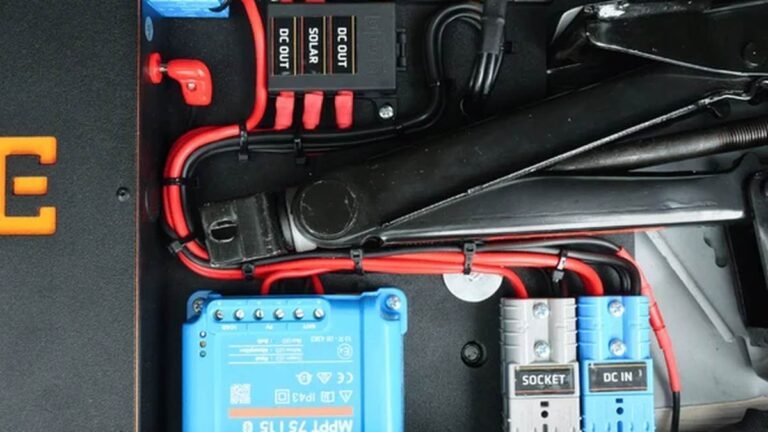
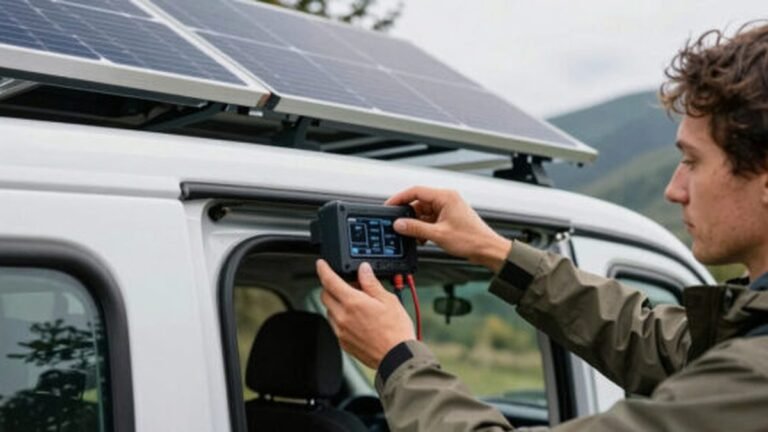
The ultimate power audit isn’t done on paper — it’s done with a battery shunt monitor (Victron SmartShunt, Renogy monitor, or similar, ~$100–$200 AUD). A shunt measures actual current flowing in and out of your battery and shows you real state of charge, real daily consumption, and real solar harvest.
Install one, camp for a weekend, and read the numbers. You’ll discover two things: which of your estimates were wrong (the diesel heater is always worse than you think), and how much margin your system actually has. It’s the best $150 you can spend on a 12V setup, and it turns every future trip into a live audit. Renogy’s battery monitor bundles and similar units pair with the lithium batteries most campers already run.
For the battery itself, make sure you’re following safe practices — our lithium battery safety guide covers charging profiles, temperature limits, and secure mounting. And if you’re deciding between a standalone inverter and a power station for your 240V needs, our portable inverter guide breaks down that decision.
Three Worked Audits: From Weekend to Off-Grid
Scenario 1: Weekend couple, powered site hopping
- 60L fridge (35W avg, 40% duty): 336Wh
- 2 phones + 1 tablet: 40Wh
- LED camp lighting (3 hrs): 30Wh
- Daily total: ~406Wh (~34Ah)
- Verdict: a 100Ah lithium battery alone covers 2+ days with margin. Solar optional; the DC-DC charger tops up between camps. This is the setup most weekenders actually need — not the 200Ah + 400W solar rigs the forums recommend.
Scenario 2: Week-long free camping, couple
- 60L fridge: 336Wh
- Phones, tablets, camera batteries: 60Wh
- LED lighting + 12V fan: 60Wh
- Diesel heater (winter, 6 hrs): 180Wh
- Water pump, misc: 30Wh
- Daily total: ~666Wh (~55Ah)
- Verdict: needs ~70Ah/day of charging input. A 200W solar panel (600–800Wh summer, 300–400Wh winter) plus a DC-DC charger for driving days. Battery: 120–150Ah lithium for 2 days of autonomy. Winter needs the driving top-up — solar alone won’t do it.
Scenario 3: Family of four, two weeks remote
- 80L fridge + 40L freezer: 700Wh
- 4 phones, 2 tablets, laptops: 150Wh
- Lighting, fans, pumps: 100Wh
- Hot water system ignition + pump: 40Wh
- Starlink (4 hrs): 200Wh
- Daily total: ~1,190Wh (~100Ah)
- Verdict: serious system territory — 200Ah+ lithium, 400W solar minimum, and a 40A DC-DC charger. This is where the audit pays for itself: without it, most families in this scenario either massively overspend or chronically run flat.
The pattern: most campers overestimate by 50–100% before auditing and land in Scenario 1 or 2 — where the gear is far cheaper than feared. Do the audit before buying anything.
Monitoring Tools Worth Buying
An audit done once on paper is good; live monitoring is better. The tools that turn estimates into measurements:
- Battery monitor with shunt (~$100–$200): the single most useful 12V instrument you can own. A shunt-based monitor measures actual current in and out of the battery, giving you real state-of-charge, live consumption in watts/amps, and daily totals. Guessing battery percentage from voltage is unreliable with lithium (the voltage curve is nearly flat) — a shunt monitor is the only accurate method. Install it, camp for a weekend, and read the numbers: you’ll discover which estimates were wrong and how much margin your system really has.
- DC clamp meter ($50–$100): for spot-checking individual devices — clamp around a cable and read the actual draw. Invaluable when auditing a new appliance or chasing a phantom drain.
- Plug-in power meter ($25–$40): for 240V appliances run through an inverter — measures the real consumption of that laptop charger or camera battery dock over a full charge cycle, not the misleading number on the label.
- Bluetooth battery apps: many modern lithium batteries (iTechworld, Renogy, KickAss smart models) include Bluetooth BMS with state-of-charge, cycle count, and temperature in the app. If your battery has it, use it — it’s a free battery monitor.
The weekend audit method: install a shunt monitor, camp normally for two days, and record the morning battery percentage. If you start at 100% and wake to 60% with no charging, you used 40% of capacity — scale from there. Two weekends of this beats any spreadsheet, because it captures your real behaviour: the heater you run longer than planned, the fridge door the kids open forty times a day.
Frequently Asked Questions
How many watt-hours does the average camp use per day?
A couple with a 50–60L fridge, LED lights, and device charging typically uses 600–900Wh per day. Add a diesel heater in winter (+200Wh) or Starlink (+600–1200Wh) and the figure climbs fast. The only way to know your number is to audit your own gear.
What size battery do I need for camping?
Take your daily watt-hour usage, divide by 12 for amp-hours, and multiply by 1.5–2 for reserve. A typical fridge-based camp (600–900Wh/day) needs 100–150Ah of usable capacity — which means a 100–150Ah lithium battery, since lithium is ~100% usable.
How much solar do I need to replace my daily usage?
Divide your daily watt-hours by (peak sun hours × 0.75). For 800Wh/day in average Australian conditions (4 sun hours), that’s about 270W — so a 300W array. Remember that driving with a DC-DC charger also contributes significantly.
Should I audit in amp-hours or watt-hours?
Watt-hours. Amp-hours only work at one voltage, and a modern camp mixes 5V USB, 12V, 19V laptop, and 240V inverter loads. Watt-hours handle all of them. Convert to amp-hours at 12V (divide by 12) only at the final battery-sizing step.
What’s the most commonly underestimated camp load?
Diesel heater fans in winter and satellite internet (Starlink) year-round. Both run for many hours at moderate wattage, which multiplies into hundreds of watt-hours per day — often rivalling the fridge. Always audit these separately rather than guessing.
← Back to our complete guide: Best Solar Panels for Camping Australia 2026
Run Your Own Numbers
You have just done this audit on paper — now check it in two minutes. Enter your appliances, battery and solar to see your daily draw, how many days your battery lasts, and the panel size that actually covers you.