Esky vs Portable Fridge
Disclosure: We may earn a small commission if you purchase through our links, at no extra cost to you.
It’s the great Australian camp-kitchen debate: the humble esky — cheap, simple, no batteries — versus the 12V portable fridge — precise, ice-free, expensive. Ask around a campground and you’ll get passionate advocates for both, usually arguing from the price tag alone. But the esky vs portable fridge decision isn’t about the purchase price; it’s about five years of ice runs, battery systems, spoiled food, and the kind of camping you actually do. This guide runs the real numbers, compares food safety honestly, and gives you the decision framework — including the hybrid answer most experienced campers land on.
The Contenders, Fairly Stated
The esky’s case
A quality esky costs $50–$450 (a basic 47L from $50; a YETI Tundra 35 around $425 at BCF, Tundra 45 around $450). No power needed, no moving parts, silent, and it doubles as a seat, table, and casting platform. Premium rotomoulded eskies (YETI, Pelican, Dometic Patrol) hold ice for 5–7 days in good conditions — genuinely impressive. The esky is also bombproof: drop it, sit on it, leave it in the sun — it doesn’t care.
The fridge’s case
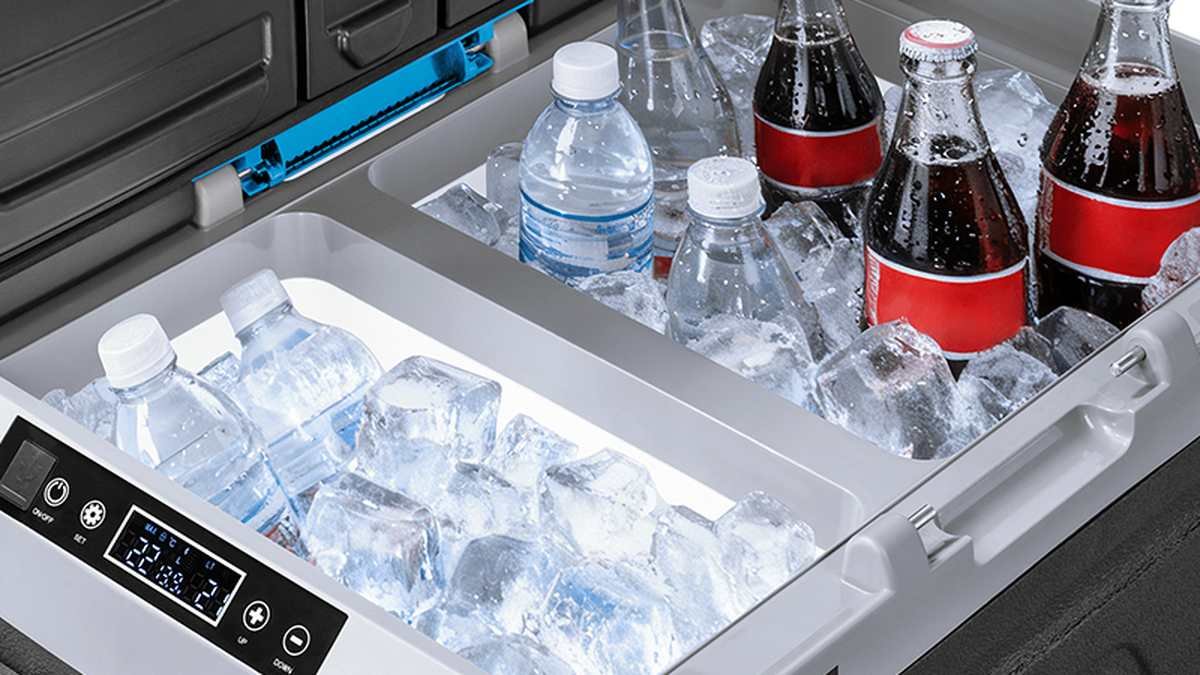
A 12V compressor fridge costs $350–$1,400+ (see our portable fridge guide for the full comparison). It holds an exact temperature — 3°C for the fridge, -18°C for the freezer — regardless of ambient heat, with no ice, no meltwater, no soggy food. Open it on day seven and the chicken is at 3°C, not floating in lukewarm water. The cost: the fridge plus a power system (battery, DC-DC charger, solar) that roughly doubles the investment.
The 5-Year Cost Comparison
This is where the debate gets honest. Assumptions: a family camping 20 nights a year.
Esky path: $150 quality esky + ice at ~$8 per trip (two bags per long weekend) x ~10 trips/year x 5 years = $150 + $400 = ~$550. Add $100–$200 for food spoiled over five years (conservative) = ~$650–$750.
Fridge path (budget): $589 fridge + $550 power system (battery, DC-DC, solar) = ~$1,140 upfront, then near-zero running costs. Five-year total: ~$1,140–$1,300 (allowing a battery replacement).
Fridge path (premium): $1,349 fridge + $1,050 power system = ~$2,400 upfront. Five-year total: ~$2,400–$2,600.
The esky wins on pure cost at every tier — it’s not close. The fridge’s case was never about saving money; it’s about food safety, convenience, and capability. Anyone telling you a fridge “pays for itself” is doing creative accounting — unless you’re comparing against a premium $450 esky plus constant ice plus regular spoilage, in which case the budget fridge path roughly breaks even. For real owner experiences across brands, ProductReview’s portable fridge category is worth reading before you buy.
Food Safety: Where the Fridge Actually Wins
Here’s the honest food-safety comparison, because this is the fridge’s real argument:
Temperature stability: a fridge holds 3°C all day, every day. An esky starts at 0°C (ice) and warms steadily — by day 3–4 in summer, the interior may be 5–8°C even in a good esky, drifting into the danger zone (5–60°C per FSANZ) where bacteria multiply. Premium eskies delay this; they don’t prevent it.
Raw meat: the highest-risk item. In a fridge at 3°C, raw chicken is safe for 1–2 days. In an esky on day 3 of a summer trip, you’re gambling — and food poisoning 200km from a hospital is not a story you want.
Meltwater cross-contamination: esky meltwater pools at the bottom, and anything sitting in it — meat packaging with a pinhole leak, vegetables, cheese — is compromised. Fridges have no meltwater. This alone converts many esky users.
Freezing: only a fridge (or a very good esky packed with dry ice, briefly) freezes. For trips beyond a week, frozen food is the difference between eating well and eating tinned.
The verdict: for weekend trips in mild weather with good ice management, an esky is food-safe. For long trips, hot weather, raw meat beyond day 2–3, or anyone feeding kids, the fridge is meaningfully safer. Our food safety guide covers the danger zone in detail.
Ice Management: The Esky Skill Guide
A good esky with bad technique loses to a cheap esky with good technique. The skills:
- Pre-chill everything: a warm esky melts its first ice load just cooling itself down. Pre-chill the esky overnight with sacrificial ice or frozen water bottles.
- Block ice beats cubes: block ice melts far slower than cubes or party ice. Freeze water in old juice bottles — free, slow-melting, and the meltwater is drinking water.
- Layer properly: ice on the bottom, food in the middle, more ice on top (cold sinks). Keep raw meat in sealed containers on the bottom, away from ready-to-eat food.
- Keep it shut: every opening dumps cold air. Organise so drinks (frequent access) are in a separate esky from food (rare access) — the two-esky system is the pro move.
- Shade and insulation: keep the esky shaded and throw a wet towel or blanket over it — evaporative cooling measurably extends ice life.
- Drain meltwater: water conducts heat 25x better than air — food sitting in meltwater warms faster. Drain regularly (but keep the cold water for washing up).
- Don’t open to “check”: trust the system. Every check costs ice.
When the Esky Wins
- Occasional campers (a few trips a year): the fridge’s upfront cost never pays back in convenience.
- Short trips (1–3 days): a pre-chilled esky with block ice is flawless for a weekend.
- Power-limited setups: hikers, kayakers, motorbike tourers — anywhere a battery system is impractical.
- Drinks duty: even fridge owners keep an esky for drinks — frequent opening kills fridge efficiency.
- Backup: a $50 esky as backup to a fridge covers power failures and overflow.
- Budget: if the choice is esky vs no camping, the esky wins every time.
When the Fridge Wins
- Long trips (5+ days): ice logistics become the trip’s organising principle; the fridge removes them.
- Hot weather: 40°C days are where eskies struggle and fridges shrug.
- Families with kids: food safety margins matter more, and the convenience (cold milk at 6am, no ice runs with toddlers) is transformative.
- Touring: moving daily means a DC-DC charger keeps the battery topped up — the fridge’s ideal use case.
- Medical needs: medications requiring refrigeration leave no room for esky temperature drift.
- Fishers and hunters: preserving the catch properly needs freezer temperatures.
The Hybrid Answer (What Experienced Campers Actually Do)
Here’s the secret the debate misses: it’s not either/or. The most capable camp kitchen is a fridge for food plus an esky for drinks. The fridge stays shut and efficient, holding food at safe temperatures; the esky takes the abuse of constant drink access with cheap ice. Total cost: a budget fridge setup plus a $80 esky — less than the premium fridge alone, more capable than either solo.
The other hybrid: a premium rotomoulded esky (YETI Tundra 35 ~$425) for the occasional camper who wants near-fridge ice retention without the power system. At that price you’re halfway to a Brass Monkey 22L (~$349) — which is exactly the comparison to make: $425 esky vs $349 fridge. The fridge needs power; the esky needs ice. There is no free lunch, only different lunches.
The Decision Framework
Answer three questions:
1. How many nights a year do you camp? Under 10: esky. 10–30: either — decide on trip length. 30+: fridge; the convenience compounds.
2. What’s your longest typical trip? Under 4 days: esky is flawless. 4–7 days: fridge starts winning, especially in summer. 7+: fridge, no contest.
3. Can you support the power system? If you have (or will build) a dual-battery setup, the fridge is natural. If you’re not ready for batteries, chargers, and solar, the esky is the honest choice — a fridge on an inadequate power system is worse than an esky.
And the budget reality check: if buying a fridge means going into debt, buy the esky and go camping. The best food storage is the one that gets you outdoors. Debt for gear is never worth it — the esky has kept Australian food cold for generations, and it’ll keep yours cold too.
Esky Types Explained: From $30 to $450
Not all eskies are equal, and the price spread reflects real engineering:
Basic poly eskies ($30–$80): thin walls, minimal insulation, loose lids. Fine for a day at the beach or a single overnight — ice lasts 1–2 days. The 47L size is the family standard. Buy one as a drinks esky even if you own a fridge.
Mid-range insulated ($80–$200): thicker insulation, better seals, sturdier latches. Ice retention of 3–5 days with good technique. The sweet spot for most campers — genuine multi-day capability without the premium price.
Rotomoulded premium ($300–$450+): YETI Tundra, Pelican, Dometic Patrol. Seamless rotomoulded construction, inches of pressure-injected insulation, freezer-grade gaskets, bear-proof latches. Ice for 5–7+ days, near-indestructible, doubles as a casting platform or seat rated to 200kg+. The YETI Tundra 35 (~$425 at BCF) is the icon; the Tundra 45 (~$450) adds family-trip capacity.
The value question: a $400 rotomoulded esky holds ice roughly twice as long as a $80 mid-range esky — but costs five times more. For most campers, the mid-range plus good technique (pre-chill, block ice, shade) delivers 80% of the performance for 20% of the price. Buy premium when you need the durability (commercial use, boats, utes) or the week-long ice retention for remote trips.
The Environmental Angle
Worth considering honestly: eskies consume ice — manufactured, bagged in plastic, transported — every trip. A family using 4 bags per trip over 10 trips a year goes through 40 plastic ice bags annually. Fridges consume electricity (ideally solar) and contain refrigerants, but use no consumables per trip. Over years of regular camping, the fridge is arguably the lower-waste option — though manufacturing a fridge and lithium battery has its own footprint. There’s no zero-impact choice; there’s only awareness. Reusable ice bricks and frozen water bottles (zero waste, and the meltwater is drinkable) are the esky user’s best environmental move.
Secondhand and Longevity: The Hidden Economics
One factor the 5-year maths misses: resale. A quality esky (YETI especially) holds value well — a $425 Tundra sells secondhand for $250+ years later. Premium fridges (Engel, Dometic) similarly retain 50–70% of their value. Budget fridges depreciate faster. Factor resale in and the premium options cost less than they appear — you’re renting, not buying.
Longevity also differs: a rotomoulded esky lasts decades with zero maintenance; a fridge lasts 10–15 years with care (compressor dependent). Over a camping lifetime, you might buy two fridges or one esky — but you’ll buy hundreds of bags of ice. The lifetime maths keeps favouring the esky on cost and the fridge on capability, which is why the debate never ends: they’re optimising for different things. The wisest campers stop arguing and own both — the fridge for food, the esky for drinks, each doing what it does best.
Frequently Asked Questions
Is a portable fridge worth it over an esky?
For long trips, hot weather, families, and touring — yes, for food safety and convenience. For occasional weekends, an esky with good ice management is cheaper and entirely adequate. The fridge never wins on pure cost; it wins on capability.
How long does ice last in a YETI esky?
In good conditions (pre-chilled, block ice, shade, minimal openings), a YETI Tundra holds ice 5–7 days. In 40°C heat with frequent openings, expect 2–3 days. Technique matters as much as the esky.
Can I run a portable fridge without a second battery?
Not safely for long — a fridge will drain a starter battery overnight, leaving you stranded. Minimum viable setup is a dedicated deep-cycle battery; add a DC-DC charger and solar for multi-day stops.
What’s better for drinks: esky or fridge?
Esky, almost always — even fridge owners use one. Drinks mean constant opening, which destroys fridge efficiency. A cheap esky full of ice is the perfect drinks station.
Do I still need ice with a portable fridge?
No — that’s the point. A compressor fridge needs no ice at all. Keep a bag of ice in the freezer compartment if you like ice in drinks, but the fridge itself is ice-free.
← Back to our complete guide: Best Camping Stoves Australia 2026