Camping Food Storage
Disclosure: We may earn a small commission if you purchase through our links, at no extra cost to you.
Australian camping and heat go together — and heat plus food is where good trips go bad. Food poisoning 300km from the nearest hospital isn’t just unpleasant; in remote country it can be dangerous. Getting camping food storage heat safety right isn’t complicated, but it does require understanding the science: the temperature danger zone, how long food survives in it, and which foods are riskiest. This guide covers the FSANZ rules, practical esky and fridge strategies for 40°C days, high-risk foods, water safety, and the outback resupply mindset.
The Danger Zone: 5°C to 60°C
Food Standards Australia New Zealand (FSANZ) defines the temperature danger zone as 5°C to 60°C — the range where bacteria multiply rapidly. Below 5°C, bacterial growth slows dramatically; above 60°C, most pathogens are killed. Your entire food-safety strategy is keeping perishable food out of that zone: cold food below 5°C, hot food above 60°C, and minimising time in between. See FSANZ’s official guidance on temperature control.
Why it matters more at camp: at home, the fridge holds 4°C effortlessly. At camp in 38°C heat, every part of your cold chain is under assault — the esky warming, the fridge working overtime, food sitting out during meal prep. The margin for error shrinks exactly when the consequences grow.
The 2-Hour / 4-Hour Rule
FSANZ’s rule for perishable food in the danger zone:
- Under 2 hours: safe to refrigerate and use later.
- 2 to 4 hours: use immediately — don’t refrigerate for later.
- Over 4 hours: throw it out.
At camp, this rule governs everything: the meat thawing for dinner (thaw in the fridge/esky, not on the table), the leftovers after lunch (back in the cold within 2 hours, not “after we finish swimming”), the cheese platter at 4pm (delicious at hour one, risky at hour five). Set a mental timer — in camp’s relaxed timelessness, food sits out far longer than you think.
High-Risk Foods, Ranked
Not all foods are equal. Highest risk at camp:
- Raw chicken and poultry: the number one culprit. Campylobacter and salmonella thrive in the danger zone. Keep raw chicken sealed, on the bottom (so drips can’t contaminate), and cold — always.
- Raw and undercooked meat: mince is riskier than whole cuts (more surface area); sausages need thorough cooking (see the CHOICE testing that found undercooked snags a real risk).
- Seafood: spoils faster than meat in heat. Eat it the day you catch/buy it, or keep it properly frozen.
- Dairy and eggs: milk, soft cheese, and eggs need consistent cold. Hard cheeses and UHT milk are far more forgiving.
- Cooked rice and pasta: the surprise entry — Bacillus cereus in cooked rice causes “fried rice syndrome.” Cool leftovers quickly and refrigerate; don’t leave the rice cooker sitting for hours.
- Leftovers generally: reheat to steaming (above 60°C throughout), only once.
Lower-risk camp staples: canned food (until opened), dried goods, hard cheeses, UHT milk, fresh whole fruit and vegetables (wash them), bread, peanut butter. Build your menu around low-risk foods for the hottest days and longest remote stretches.
Cold Chain Strategies: Esky and Fridge
Esky strategy: pre-chill, block ice, two-esky system (drinks separate from food), shade, drain meltwater, minimal openings. Our esky vs fridge guide covers ice management in detail. In 40°C+ heat, even a premium esky needs daily ice top-ups — plan resupply points.
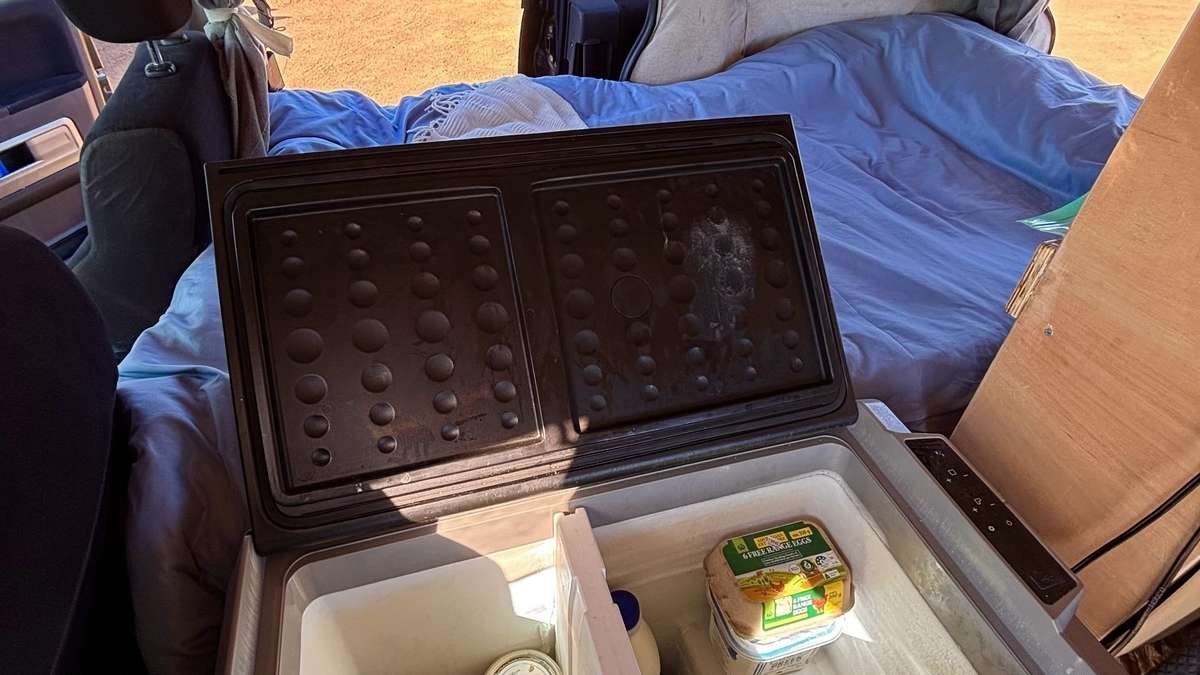
Fridge strategy: pre-cool at home, pre-chill all food, set 3–4°C (not colder — wasted battery), keep it full (thermal mass), shade and ventilate, minimise openings. A 12V fridge at a stable 3°C is the gold standard — the only camp option that truly replicates home food safety.
The thermometer: a $10 fridge thermometer removes all guesswork. If your esky is reading 7°C on day three, you know the raw chicken needs cooking tonight, not tomorrow. This tiny tool is the highest-value food-safety purchase in camp.
Meal Planning for Heat and Remoteness
Smart menu design is food safety:
- Front-load perishables: eat raw meat, seafood, and dairy in the first 2–3 days; shift to canned, dried, and UHT for later days.
- Freeze strategically: freeze meat before the trip — it acts as ice in the esky for day one and thaws safely for day two-three cooking. Frozen water bottles do double duty.
- Plan the thaw: move tomorrow’s meat from freezer to fridge section each evening — controlled thawing, never on the bench.
- Cook once, eat twice — carefully: deliberate leftovers (extra stew) cooled quickly and refrigerated within 2 hours are safer than food that’s sat out.
- Remote resupply: on outback trips, plan food buys around towns — fresh meat in, rubbish out. Don’t carry raw chicken for a week without freezing capability.
Water Safety at Camp
Food safety’s neglected sibling. Rules:
- Town water: safe. Tank/bore/river water: treat it — boil (rolling boil 1 minute), filter, or chemical treatment. Giardia doesn’t care how clear the creek looks.
- Store water shaded: hot water containers grow things; keep them cool and clean them between trips.
- Separate drinking and washing water when sources are questionable.
- Ice: made from safe water only — freezing doesn’t kill all pathogens.
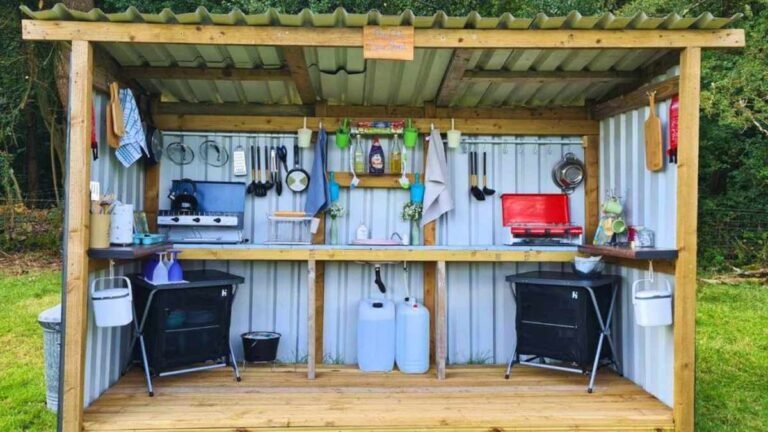
- Hand washing: the most underrated food-safety tool. A water container with a tap, soap, and a towel at the kitchen — non-negotiable before food prep.
Kitchen Hygiene Without a Kitchen
- Separate boards/knives for raw meat and ready-to-eat food — or wash thoroughly between uses.
- Wash up promptly: dirty dishes breed bacteria fast in heat. Hot water, detergent, air dry.
- Seal everything: flies are vectors — covered food, sealed bins, no open rubbish.
- Bin management: double-bag, seal, store away from camp (and never where dingoes/bears… well, dingoes… roam). Take it all home.
- Wash fruit and veg in safe water — outback dust carries more than dust.
- Cook meat thoroughly: chicken 75°C internal, mince 70°C+, sausages cooked through (no pink). A probe thermometer ends arguments.
Recognising and Handling Food Poisoning
Symptoms (nausea, vomiting, diarrhoea, cramps) typically hit 6–72 hours after the bad meal — which means the culprit was yesterday’s lunch, not last night’s dinner. At camp: hydrate aggressively (oral rehydration salts in the first-aid kit), rest, and don’t “tough it out” in remote areas — dehydration in heat escalates fast. Seek medical help for: bloody stools, high fever, signs of dehydration (dizziness, dark urine, confusion), symptoms beyond 48 hours, or any illness in young children, elderly, or pregnant campers. Prevention beats treatment — every rule above exists so you never need this section.
Outback-Specific Rules
Remote travel amplifies everything: carry more water than you think (food safety fails without wash water); plan resupply points before leaving — know where the next fresh food is; carry a fridge thermometer and oral rehydration salts as standard kit; tell someone your route (if illness strands you, rescue needs to know where); and build menu redundancy — if the fridge dies on day 4 of 10, you need a canned/dried fallback plan, not hope. The outback forgives many mistakes; food and water aren’t among them. And remember that remote clinics are few — prevention isn’t just comfort, it’s the only medical system you’ve got.
Packing the Camp Pantry: What Goes Where
Organisation is food safety: a chaotic camp box means perishables forgotten in the sun and raw chicken dripping on the cheese. The system:
- Fridge/esky: perishables only — meat (bottom, sealed), dairy, eggs, opened condiments, leftovers. Nothing else; every non-perishable in the cold is wasted cold.
- Dry box: canned goods, pasta, rice, UHT milk, snacks, bread, spreads — sealed against ants and mice (hard containers, not just bags).
- Spice/condiment kit: salt, pepper, oil, sauces in small bottles — the difference between bland and good camp food.
- Day bag: that day’s snacks and lunch — so the main stores stay shut and cold.
- Rubbish system: separate bags for general, recyclables, and food scraps; sealed, shaded, and away from sleeping areas (dingoes investigate).
Label everything with masking tape and a marker — in a shared camp kitchen, “is this still good?” is a question best answered by a date, not a sniff test.
Feeding Kids Safely at Camp
Children are more vulnerable to foodborne illness and less tolerant of dehydration — the stakes are higher. Rules: stricter cold chain (kids’ milk and yoghurt below 5°C, no exceptions); cook children’s meat thoroughly (no rare burgers for under-5s); hand washing enforced (kids touch everything); safe water only for drinking and teeth-brushing; and watch the 2-hour rule ruthlessly — the half-eaten sausage left on the picnic table is the classic culprit. Pack oral rehydration salts in the kids’ kit specifically; small bodies dehydrate fast in heat.
The Cooler Bag Myth
A quick warning: soft cooler bags are not eskies. They’re fine for transporting cold groceries home (an hour), but they lack the insulation for multi-day camp use — ice melts in hours, not days. Campers who pack a week’s food in a cooler bag and wonder why everything’s warm by day two have confused transport with storage. For camp, it’s a proper esky or a fridge; the cooler bag is for the drive there.
The Camp Kitchen First-Aid Kit (Food Edition)
Beyond the standard first-aid kit, the food-safety extras: oral rehydration salts (the single most important item — dehydration from gastro in heat is the real danger), a probe thermometer (ends all “is it cooked?” debates), antiseptic hand gel (backup for when the wash station isn’t handy), sealed containers for isolating suspect food, and extra water — always more than the menu needs. If someone shows gastro symptoms, isolate their food and utensils, hydrate aggressively, and don’t wait too long to seek help in remote areas — heat plus vomiting dehydrates dangerously fast.
Food Safety Myths That Cause Illness
“The sniffer test works.” Pathogenic bacteria don’t always smell — food can be dangerous while smelling fine. When in doubt, throw it out isn’t wasteful; it’s the rule.
“Alcohol kills germs in food.” Cooking with wine doesn’t sterilise questionable meat — the alcohol cooks off long before it sanitises anything.
“If it was frozen, it’s safe.” Freezing pauses bacterial growth; it doesn’t reset the clock. Food that spent 6 hours in the danger zone before freezing is still unsafe after thawing.
“Vegetarians don’t get food poisoning.” Cooked rice, salads, and dairy cause plenty of camp gastro — Bacillus cereus and Listeria don’t care about your diet.
“A little dirt never hurt.” Outback dust carries animal faeces and worse — wash produce, cover food, and keep the kitchen clean. The old saying predates microbiology.
When to Throw Food Out: The Non-Negotiables
Some situations have no judgment call — discard the food: raw meat above 5°C for unknown time (if you can’t verify the cold chain, it’s gone); anything in a flooded esky where meltwater contacted ready-to-eat food; bulging or damaged cans (botulism risk); leftovers reheated more than once; dairy left out overnight; and anything you’re unsure about after a fridge failure — the $15 of food isn’t worth the risk. The money is already spent; the illness is optional. Experienced outback travellers develop a ruthless streak about this, and it keeps them healthy.
Frequently Asked Questions
What is the food danger zone temperature in Australia?
5°C to 60°C per FSANZ — keep cold food below 5°C and hot food above 60°C. The 2-hour/4-hour rule governs time in the zone: under 2 hours refrigerate, 2–4 hours use immediately, over 4 hours discard.
How do you keep food cold camping without a fridge?
Pre-chill the esky, use block ice (frozen bottles), two-esky system (drinks/food separate), shade, drain meltwater, minimal openings. A fridge thermometer ($10) tells you when the cold chain is failing.
How long does meat last in an esky?
Raw meat is safe 1–2 days in a well-managed esky below 5°C. Beyond that — or if the esky reads above 5°C — cook it or lose it. Freeze meat before the trip to extend safe time.
Can you get food poisoning from cooked rice at camp?
Yes — Bacillus cereus (“fried rice syndrome”) grows in cooked rice left warm. Cool leftovers quickly, refrigerate within 2 hours, reheat to steaming, and don’t leave the rice sitting out.
Is it safe to drink tank water when camping?
Treat it first — boil (rolling boil 1 minute), filter, or chemical treatment. Clear-looking creek or tank water can carry Giardia and other pathogens. When in doubt, treat it.
← Back to our complete guide: Best Camping Stoves Australia 2026