Best Camping Spots in the Northern Territory
Disclosure: We may earn a small commission if you purchase through our links, at no extra cost to you.
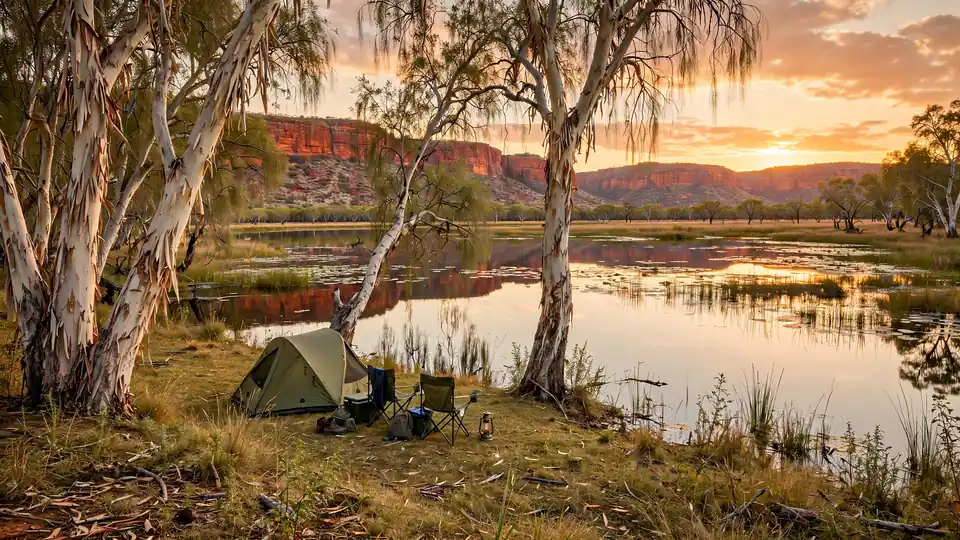
The Territory does camping at a scale the rest of the country can’t match. The best camping spots in the Northern Territory are dry-season places — May to October, when the floodwaters have dropped, the nights are cool and every road on the map is open. This guide covers the Top End’s waterfall parks, the Red Centre’s gorge country, the pass systems (there are three, and they don’t overlap), and the crocodile rules that decide where you can and can’t swim.
First, the pass puzzle, because it trips everyone up. NT-managed parks use the NT Parks Pass, sold through the NT parks booking site, and NT residents are exempt from the pass but still book and pay for camping. Kakadu and Uluru-Kata Tjuta are Commonwealth parks run by Parks Australia with their own separate passes — the NT pass does not cover them, and theirs don’t cover NT parks. Buy each through the official channel for that park: the NT Government’s NT parks passes and bookings page is the starting point for the Territory-managed system.
- Go in the dry season, roughly May to October; much of the Top End is inaccessible or brutally hot in the wet.
- Three pass systems: NT Parks Pass for Territory parks, separate Parks Australia passes for Kakadu and Uluru-Kata Tjuta.
- Be Crocwise: only swim where signs say you can, and treat every Top End waterway as crocodile habitat.
Kakadu National Park
Kakadu is the biggest name in Territory camping and it earns it: a park the size of a small country, with escarpment lookouts at Ubirr and Burrungkuy (Nourlangie), wetlands at Yellow Water, and camping areas spread across several regions so you base yourself in one corner at a time. Merl campground, near Ubirr, and Muirella Park are two of the established managed campgrounds; other areas like Karnamarr, near Jim Jim Falls, open seasonally once the dry takes hold and access roads dry out. Parks Australia publishes a daily access report in season — check it every day, because which tracks and falls are open changes with water levels. A Kakadu park pass is required (valid for a set period from purchase; buy it online before you arrive to save time at the park). Saltwater crocodiles live throughout Kakadu’s waterways: swim only at the specific places Parks Australia signs as managed swimming areas, and take the croc warnings seriously.
Litchfield National Park
Litchfield is the Top End’s easy win — about 90 minutes south of Darwin on sealed roads, with the NT’s most swimmable waterfalls. Wangi Falls has a campground at its base and a big plunge pool (which closes when crocodile risk rises, typically in the wet), Florence Falls and Buley Rockhole are the other swimming anchors, and the magnetic termite mounds near the eastern entrance are a roadside stop everyone makes. Litchfield is an NT park, so the NT Parks Pass and camping bookings apply, and it gets busy with Darwin weekenders — book ahead in the June–July peak. If you have a 4WD and extra days, the Reynolds Track opens up the park’s quieter southern camps later in the dry.
Nitmiluk National Park (Katherine Gorge)
Three hours south-east of Darwin, Nitmiluk is a system of gorges cut through sandstone by the Katherine River. The campground near the visitor centre is the base for gorge cruises, canoe hire in the dry and the start of the multi-day Jatbula Trail for walkers. Swimming in the gorge system is seasonal and managed — the park declares swimming areas open only when crocodile risk allows, so follow the signage on the day, not a blog post (including this one). Katherine township is close for supplies, and most travellers pair Nitmiluk with a run further south or west.
Tjoritja / West MacDonnell Ranges
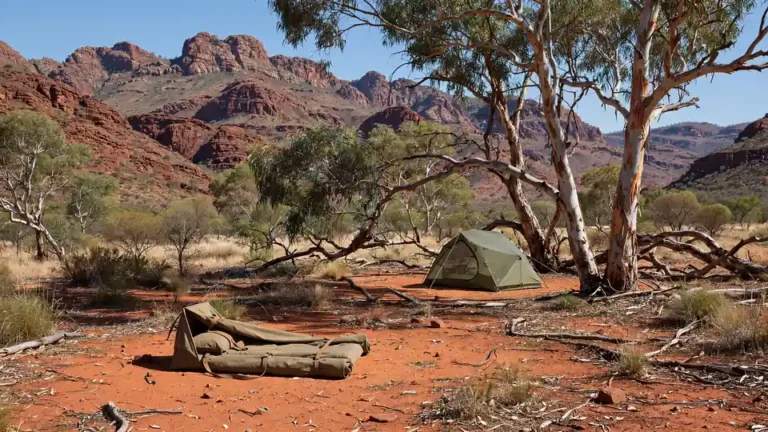
West of Alice Springs, the West MacDonnells string a line of gorges and waterholes along a sealed road: Ormiston Gorge, with a campground and one of the great outback swimming holes; Ellery Creek Big Hole, a cold, deep waterhole between red walls; and Redbank Gorge at the far end for campers who like it quieter. This is Central Australian camping at its most accessible — no crocodiles this far south, but the water is cold even in winter sunshine, and winter nights drop below freezing, so pack for both. The NT Parks Pass covers these parks; camping is booked through the same NT system.
Watarrka National Park (Kings Canyon) and Uluru-Kata Tjuta
The Red Centre’s two icons take planning. At Watarrka, the Kings Canyon rim walk is the main event — start early, carry water, and note the walk closes in extreme heat; camping is at commercial campgrounds outside the park near the canyon, which also makes them the convenient base. At Uluru-Kata Tjuta, there is no camping inside the park: everyone stays at the Ayers Rock Resort campground at Yulara, just outside the boundary, and enters on a Parks Australia park pass. Kata Tjuta’s Valley of the Winds walk and an Uluru sunrise from the campground’s own lookout are the reasons to stay several nights rather than one.
Karlu Karlu / Devils Marbles and Elsey National Park
Two stops turn the Stuart Highway drive into a trip. Karlu Karlu, the Devils Marbles, has a small campground among the granite boulders — arrive before sunset, because the rock colour show at dusk is the whole point. Further north, Elsey National Park at Mataranka offers spring-fed thermal pools in a palm forest and the Jalmurark campground on the Roper River; the springs are the swim, the river is crocodile country and stays look-only. Both are NT parks on the pass system.
Planning a Territory camping trip
Distances are the trap: Darwin to Kakadu is a few hours, Darwin to Uluru is the better part of two days of driving. Most campers pick one end — Top End or Red Centre — and do it properly. Fuel, water and food stops thin out fast outside the towns, and Telstra coverage is the only network worth counting on beyond them. Our national guide to the best camping spots in Australia shows how the NT fits a full lap, and our roof rack guide for 4WD touring covers carrying the extra water and gear Territory distances demand.
Best camping spots in the Northern Territory for the East MacDonnells
Alice Springs travellers who only look west miss half the ranges. The East MacDonnell Ranges run the other way — quieter, less visited, and with two of the Centre’s best camps. Trephina Gorge is the base locals choose: a campground in the gorge country with walks to the waterhole and up to the bluffs, and a resident population of black-footed rock wallabies in the cliffs at dusk. Further east, Ruby Gap — where prospectors once mistook garnets for rubies — is 4WD-only gorge camping on the Hale River for campers who want the Centre to themselves. Both are NT parks on the pass system. If you have a week in Alice, split it: three nights west (Ormiston and Ellery), two east (Trephina), and day trips in between, rather than changing camp every night.
Best camping spots in the Northern Territory take planning: distance, fuel and the wet
Three planning rules govern everything in the Territory, and they apply to all the best camping spots in the Northern Territory, not just the famous ones. First, distance: the Stuart Highway is a sealed thread through country where services are towns apart — Jabiru for Kakadu, Katherine for Nitmiluk, and long empty stretches between the highway roadhouses in between. Carry fuel margins, not fuel hopes. Second, water and heat: from September the build-up makes Top End camping a test of endurance, and Red Centre summer days close walks like the Kings Canyon rim for a reason. Third, the wet season is not a cheaper version of the dry — it is a different country, with Top End roads and campgrounds closed for months and access reports, not itineraries, deciding what is possible. The campers who love the NT plan around the dry, book the pass-covered campgrounds early for June and July, and leave slack days in the itinerary for the access report to change their plans. Build that slack in from the start and the Territory is the best camping in the country; skip it, and the Territory will teach the same lesson less gently.
Judbarra / Gregory National Park and the Victoria River country
Between Katherine and the WA border, the Victoria River country is the Top End’s sleeper region: boab trees, red escarpments and big river bars along the highway west of Timber Creek. Judbarra / Gregory National Park protects a huge stretch of it, with camping areas serving the Victoria River access points and the park’s walking tracks. It is crocodile country in the fullest sense — the fishing is famous and the swimming is simply not done — and it breaks the Katherine–Kununurra drive into something worth remembering. Like the rest of the NT system it runs on the Parks Pass, and like everything in the west of the Territory it empties out completely outside the dry.
How many nights does each place deserve?
The most common NT mistake is one-night stands. Kakadu needs three nights minimum to justify the pass and the distances — one for the Ubirr/Nourlangie east, one for the Yellow Water wetlands country, one in reserve for whichever track the access report opens. Litchfield works as a long weekend from Darwin (two nights) and rewards a third. The West MacDonnells want two to three nights based in one camp rather than a new waterhole every evening, and Uluru-Kata Tjuta repays three: Kata Tjuta, the base walk, and the breathing room to see the rock in more than one light. Build the itinerary around those anchors and use the highway camps — Karlu Karlu, Mataranka — as the connective tissue between them. The Territory is not a place to hurry; its distances punish rushing and its evenings reward anyone still sitting outside when the light goes.
Camping culture: stations, roadhouses and town shows
Not all Territory camping is in parks, and several of the best camping spots in the Northern Territory are not parks at all. Station stays on working cattle properties, roadhouse campgrounds along the highways and showground camping in the towns fill the gaps between the national parks — and often provide the powered site, the laundry and the first shower in days. They run on cash-and-courtesy rules rather than booking systems: check in at the bar or the homestead, ask where to set up, and buy your dinner where you sleep when you can. The mix is the Territory’s real system: parks for the icons, stations and roadhouses for the road between them. Travellers who plan only the parks end up driving past the territory’s daily life; the ones who mix both come home with the better stories and, usually, the better night’s sleep between the headline stops.
Frequently asked questions
What is the best camping spot in the Northern Territory?
Kakadu is the flagship for scale and culture, but Litchfield is the one most campers enjoy most per day spent — swimmable waterfalls, easy access from Darwin and good campgrounds. In the Red Centre, Ormiston Gorge in Tjoritja / West MacDonnell National Park is the standout single camp.
Do I need a pass to camp in NT national parks?
Yes. NT-managed parks require an NT Parks Pass for visitors (NT residents are exempt from the pass but still pay camping fees), bought through the NT parks booking site. Kakadu and Uluru-Kata Tjuta are separate: each needs its own Parks Australia pass, and neither NT nor Parks Australia passes cover the other’s parks.
When is the best time to camp in the Northern Territory?
The dry season, roughly May to October. Top End roads, falls and campgrounds progressively open as waters fall in May–June, and by November the build-up heat and wet-season closures make most Top End camping impractical. The Red Centre is best April to September.
Can you swim at NT camping spots?
Only where signs say so. Saltwater crocodiles live in Top End waterways including Kakadu and the Katherine River system; parks open specific managed swimming areas seasonally when risk allows. Litchfield’s popular falls, the MacDonnell Ranges waterholes and Mataranka’s thermal springs are the well-known swimmable spots — always obey the day’s signage.