Best Portable Power Stations Australia 2026
Disclosure: We may earn a small commission if you purchase through our links, at no extra cost to you.
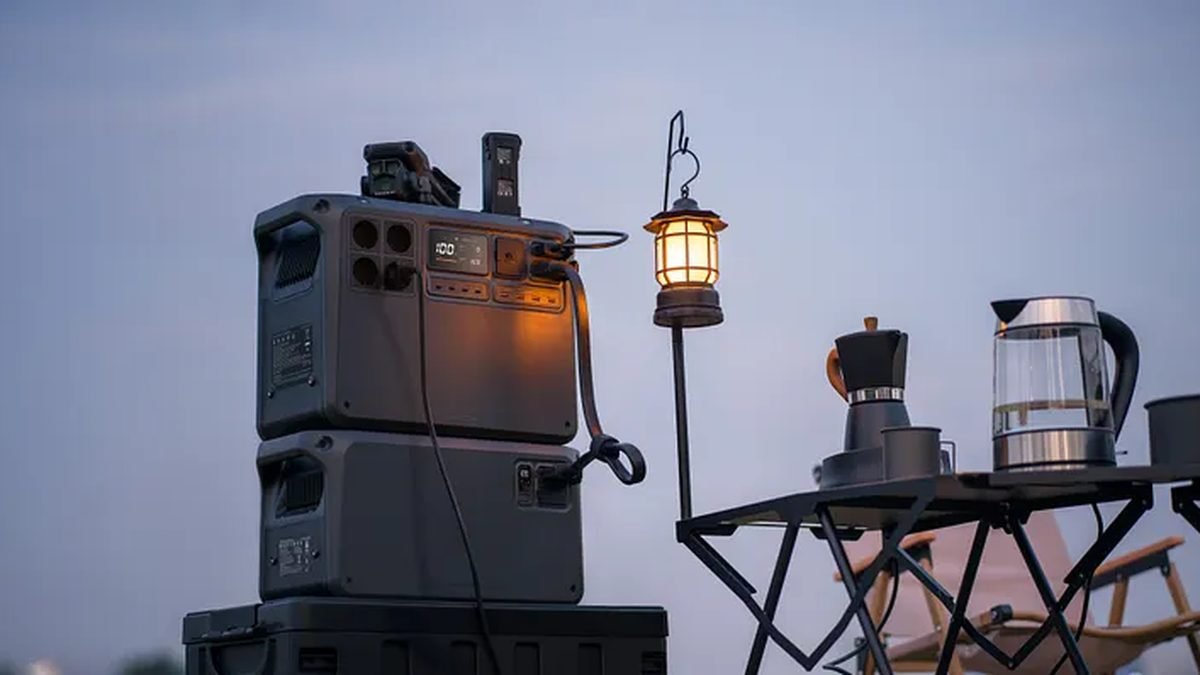
A portable power station is essentially a big lithium battery with an inverter, solar controller and a bunch of outlets built into one grab-and-go box. No fuel, no fumes, no noise — just silent 240V and USB power wherever you put it down. In the last few years they’ve gone from niche gadget to mainstream camp essential, and for good reason: they run fridges, charge everything, power lights and fans, and recharge from solar panels during the day. This guide covers the best portable power stations in Australia for 2026, what the sizes actually mean in practice, and which one suits your camping.
Two companion reads: our solar sizing guide for the maths behind matching capacity to your gear, and power station vs generator if you’re weighing the two approaches. For smaller needs, power banks cover phones and tablets.
What the Numbers Mean: Capacity vs Output
Two specs matter, and beginners constantly confuse them:
Capacity (Wh — watt-hours) is the size of the fuel tank. A 1,024Wh station holds roughly twice the energy of a 512Wh one. This determines how long things run.
Output (W — watts) is how much power it can deliver at once. A 1,800W output runs a kettle; a 300W output doesn’t. This determines what you can run.
You need both to be adequate. A huge-capacity station with low output runs phones for a week but can’t boil a kettle. A high-output station with tiny capacity boils the kettle twice then dies. Match both to your gear — the table below translates this into real camping scenarios.
What Each Size Actually Runs at Camp
| Capacity | Example use | Realistic runtime |
|---|---|---|
| ~256Wh (small) | Phones, tablets, camera batteries, LED lights | 2–3 days of device charging for two people |
| ~512Wh (medium) | Above + laptop, 12V fan, small 12V fridge top-up | A long weekend of moderate use |
| ~768Wh–1,024Wh (large) | Above + 12V fridge for 1–2 days, power tools charging | 3–5 days with solar top-up |
| 2,000Wh+ (XL) | Above + extended fridge runtime, high-draw appliances | A week+ with solar; home backup capable |
These assume solar top-up during the day — without it, halve the runtimes. A 12V compressor fridge (drawing ~30–40W average) consumes roughly 700–900Wh per day, which is why fridge owners need 1,000Wh+ or daily solar input. The maths is unforgiving but simple: add up your devices’ watt-hours per day, and buy capacity to cover 1.5–2x that with solar refilling the gap.
Battery Chemistry: Why LiFePO4 Won
Older power stations used standard lithium-ion (NMC) cells — decent, but with 500–800 cycle lifespans. The current generation uses LiFePO4 (lithium iron phosphate): 3,000+ cycles to 80% capacity, better thermal stability, and safer chemistry. At one cycle per weekend trip, that’s decades of use versus a few years. Every station worth buying in 2026 uses LiFePO4 — if you see NMC, it’s old stock or a bargain-bin unit. Check the cycle rating in the specs; it’s the clearest quality signal after brand reputation.
The Best Portable Power Stations in Australia for 2026
EcoFlow DELTA 2 (1,024Wh) — Best All-Rounder
The DELTA 2 is the default recommendation for a reason: 1,024Wh of LiFePO4 capacity, 1,800W AC output (2,400W with X-Boost for stubborn appliances), 3,000 cycles to 80%, and 1-hour fast AC charging that genuinely changes how you use it — top up from a powered site or generator in the time it takes to have lunch. It runs a 12V fridge for a day-plus on its own, handles power tools, laptops and everything else simultaneously, and expands with extra batteries if your needs grow.
At $1,259 from EcoFlow Australia (often bundled with a 160W panel), it’s the price-to-capability sweet spot for serious campers. This is the one buy if you want a single station that covers long weekends and touring without compromise.
EcoFlow RIVER 2 Pro (768Wh) — Best Mid-Size
The RIVER 2 Pro hits the middle ground: 768Wh, 800W output (1,600W X-Boost), same LiFePO4 chemistry and 1-hour charging, in a lighter, more portable package. It won’t run a fridge as long as the DELTA 2, but for couples doing long weekends — devices, lights, fan, laptop, fridge top-up — it’s plenty. At $999 bundled with a 160W panel from EcoFlow Australia, and with the RIVER 2 series starting from $649 for the base 256Wh model, there’s a RIVER for every budget. The base RIVER 2 (256Wh) is the perfect “first power station” for device-only campers.
Bluetti (BCF Range) — Best Retail Availability
Bluetti’s presence at BCF — from a $349 compact unit up to $1,499 ($1,399 Club Price) for larger models — makes it the easiest brand to buy in person in Australia. Walk in, compare sizes side by side, walk out with one. Bluetti’s specs compete directly with EcoFlow (LiFePO4, solid outputs, app control), and BCF’s Club pricing plus easy returns make it the low-risk choice. If you want to see before you buy rather than ordering online, start here.
KickAss Power Stations — Best for 12V Natives
KickAss’s power stations (like the KickCharge 2400W, often on deal around $1,999 bundled with panels) are designed for the Australian 12V touring crowd — Anderson plug native, built for harsh conditions, and backed by local support that actually answers the phone. If your whole setup is already Anderson-terminated and you live in the KickAss ecosystem, staying in it simplifies everything.
What to Check Before Buying
- True sine wave inverter: Non-negotiable. Modified sine wave can damage sensitive electronics and makes some appliances buzz or run hot. Every reputable station in 2026 is pure sine wave — verify it.
- Solar input specs: Check max solar watts and voltage range. A station that only accepts 200W solar will bottleneck a 400W panel array. Bigger solar input = faster off-grid recovery.
- Pass-through / UPS mode: Can it charge and discharge simultaneously? Can it switch fast enough to protect a CPAP or computer in a blackout? Matters for home backup use.
- Weight: A 1,024Wh station weighs ~12 kg; 2,000Wh+ units hit 23 kg. Fine for car camping, relevant if you’re carrying it any distance.
- App and display: A clear onboard display showing watts in/out and time remaining is genuinely useful at camp. Apps add remote monitoring — nice, not essential.
- Warranty and local support: 2–5 years is standard from the big brands. Grey imports save money until something fails — buy from Australian stock with local warranty.
Power Station + Solar: The Off-Grid Combo
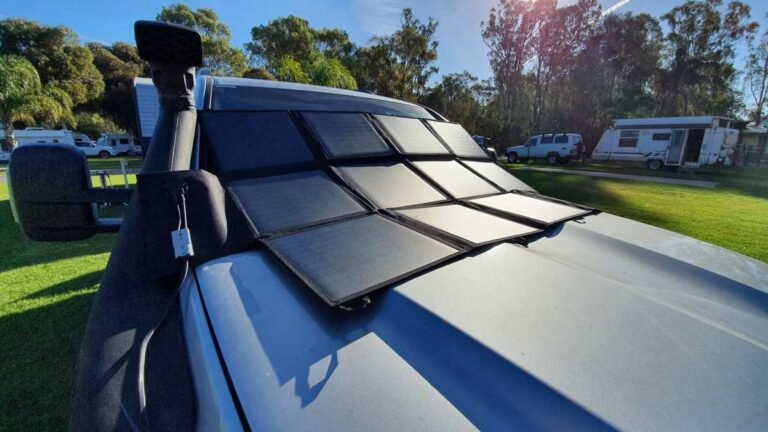
A power station without solar is a battery you have to find mains power to refill — fine for weekends, limiting for touring. Paired with 200–400W of solar panels, a 1,000Wh station becomes a near-indefinite off-grid system for moderate use: solar refills daytime consumption, the battery carries you through the night. Size the panel to your daily use (see the sizing guide), and remember that winter sun and cloudy stretches mean oversizing the panel, not the battery, is usually the smarter money.
The Real Cost: What Else You’ll Buy
The station’s sticker price isn’t the total. Budget for: solar panels (200W of portable folding panels runs $270–430 — the station is half a system without them), cables and adapters (Anderson leads, MC4 adapters, extension cables — $50–100 to do it properly), and possibly a protective case or cover for dusty touring. All up, a $1,259 DELTA 2 becomes a ~$1,700 off-grid system once panelled and cabled. That’s still excellent value against a dual-battery installation (which runs $2,000+ fitted), but go in with eyes open.
Power Stations for CPAP Users
This deserves its own section because it’s genuinely life-changing: a portable power station is the best off-grid CPAP solution ever made. A typical CPAP draws 30–60W (less without the humidifier — turn it off to halve consumption); over 8 hours that’s 240–480Wh. A 512Wh station covers a night with margin; a 1,024Wh station covers two. Silent, no fumes, no generator running all night annoying the entire campground. If you use a CPAP, size the station for two nights (in case of cloudy days), test the runtime at home before relying on it remote, and carry the 12V car charger as backup. This single use case justifies the purchase for many campers.
When a Power Station Isn’t Enough
Honesty matters: power stations aren’t the answer to everything. High-draw heating appliances (electric kettles at 2,000W+, toasters, hair dryers) drain even large stations fast — a 2kW kettle empties a 1,024Wh station in about 25 minutes of cumulative use. Gas remains the sensible choice for heating water and cooking. Air conditioning is beyond portable stations for any meaningful runtime — that’s generator or mains territory. And long grey-weather stretches with no solar input will eventually flatten any battery; that’s when a generator as backup earns its keep. The sweet spot for power stations is everything except resistive heating and cooling — which, happily, is most of camp life.
Buying Secondhand: Worth It?
Used power stations appear regularly as people upgrade sizes. They’re a reasonable buy with caveats: lithium batteries degrade with cycles, and you can’t easily verify remaining capacity without testing. Ask for the cycle count (many apps show it), check the manufacture date, test every outlet, and confirm it charges from all inputs (AC, solar, car). Discount should reflect the unknowns — 30–40% off retail for a lightly used unit is fair; less than that and you might as well buy new with warranty. Avoid anything with physical damage, swelling, or error messages. And never buy a no-name brand secondhand — without manufacturer support, a fault is a paperweight.
The 5-Year View: Total Cost of Ownership
Sticker prices mislead; five-year costs tell the truth. A $1,259 DELTA 2 plus $400 of panels and cables = ~$1,700 all-in, with zero running costs — solar is free, and LiFePO4 needs no maintenance. Over five years of regular camping, the per-trip cost drops below $10. Compare a generator: $950–2,100 purchase plus fuel (a few dollars per running day), oil changes, spark plugs, and eventual servicing — easily $2,500–3,500 over five years of moderate use. The power station wins on running costs decisively; the generator wins only where its unique capability (high sustained output, fast refuelling) is actually needed. For most campers’ actual use — devices, lights, fridge, fans — the power station is both cheaper and more pleasant over its lifetime. Buy the capability you need, not the capability that impresses the neighbours.
Storage and Transport: Looking After the Investment
A power station is a $1,000+ box of sophisticated electronics — treat it accordingly. Transport it secured and upright-ish (they’re fine on their side briefly, but upright is best), never loose where it can become a projectile. Keep it out of extreme heat — don’t leave it baking in a closed car in summer if you can avoid it; lithium batteries age faster when hot. In use, give it ventilation — the inverter and charging circuitry generate heat, and blocking the vents on a 40°C day is asking for thermal throttling. For long-term storage between seasons, leave it at 50–80% charge (not full, not empty) and top it up every 3–6 months. LiFePO4 is forgiving, but a battery left flat for a year may not wake up.
FAQs
What size power station do I need for camping?
256Wh covers devices for 2–3 days; 512–768Wh handles a long weekend with laptop and fan; 1,024Wh+ is needed for 12V fridge use. Add 50% headroom and pair with solar for touring.
Can a portable power station run a camping fridge?
Yes — a 12V compressor fridge draws ~30–40W average (~700–900Wh/day). A 1,024Wh station runs it about a day solo; with 200W+ solar input, indefinitely in good sun.
How long do portable power stations last?
LiFePO4 models are rated 3,000+ cycles to 80% capacity — at one full cycle per weekend trip, that’s decades. The electronics will likely age out before the cells do.
Are portable power stations allowed on flights?
No — anything over 100Wh is prohibited in carry-on and checked luggage on commercial flights (with rare airline-specific exceptions up to 160Wh). Power stations are strictly a drive-camping proposition.
← Back to our complete guide: Best Solar Panels for Camping Australia 2026
Check A Power Station Against Your Loads
Every station in this list is just a battery with a number on it. Enter your appliances and the station’s capacity to see exactly how many days it runs your setup before you buy.